


How Much Power Does a Battery Hold? Demystifying Capacity for Your Energy Needs
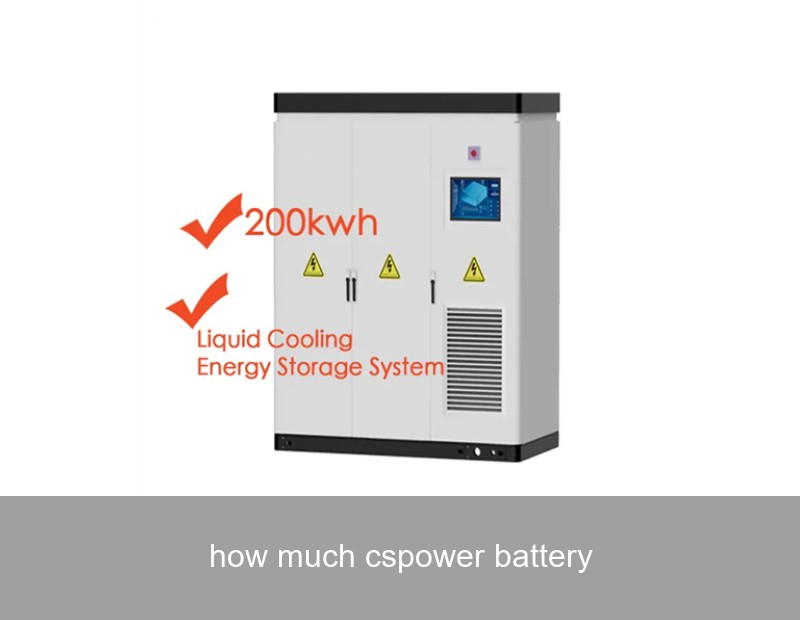
You're considering a battery storage system for your home or business. The sales brochures are full of terms like kilowatt-hours (kWh), kilowatts (kW), and depth of discharge. It's easy to ask, "how much power does a battery actually hold?" and feel overwhelmed. The answer isn't a single number; it's the key to unlocking true energy independence. Let's break down this critical question, moving from the basic phenomenon to real-world data, so you can make an informed decision for your unique power needs.
Table of Contents
The Core Question: Power vs. Energy – The Gas Tank Analogy
First, we must clarify a common point of confusion. When people ask "how much power does a battery hold," they usually mean energy. In technical terms:
- Power (kW) is the rate at which energy is delivered or used. Think of it as the size of the hose filling or draining a pool. A 5 kW inverter can deliver a flow of 5 kilowatts at any moment.
- Energy (kWh) is the total amount stored or consumed. This is the size of the pool itself. A 10 kWh battery can supply 10 kilowatts of power for one hour, or 1 kilowatt for 10 hours.
So, a battery's capacity is measured in kWh. This is its "gas tank" size. But just like a car's actual range depends on driving conditions, the usable energy from a battery depends on several factors.
Key Factors That Determine "How Much" You Really Get
Not all 10 kWh battery systems are created equal. Here are the critical elements that affect the real-world answer to "how much power does a battery" provide:
| Factor | What It Means | Impact on Usable Energy |
|---|---|---|
| Depth of Discharge (DoD) | The percentage of the battery's capacity that is safely usable. | A 10 kWh battery with 90% DoD gives you 9 kWh of usable energy. Draining a battery completely (100% DoD) drastically shortens its lifespan. |
| Round-Trip Efficiency | Energy lost during the charge/discharge cycle (inverter, thermal management). | If you put 10 kWh in, a system with 95% efficiency delivers only 9.5 kWh out. High-quality systems minimize this loss. |
| Battery Chemistry | The materials used (e.g., Lithium Iron Phosphate - LFP, NMC). | LFP chemistry, used in Highjoule's residential and commercial systems, offers superior cycle life, safety, and stable capacity over time compared to older chemistries. |
| Temperature & Environment | Batteries perform best within a specific temperature range. | Extreme cold or heat can temporarily reduce available capacity. Advanced systems include climate management. |
| System Configuration & Scalability | How batteries are stacked or combined. | Modular systems, like Highjoule's H-Stack series, allow you to start with a base capacity (e.g., 5 kWh) and add modules over time, tailoring "how much power" you hold to your evolving needs. |
A Real-World Case Study: From Theory to Practice
Let's look at a concrete example from a Highjoule commercial installation in Bavaria, Germany. A mid-sized dairy farm with a 50 kW rooftop solar array faced two problems: high evening energy costs and unreliable grid power during storms.
The Goal: Maximize self-consumption of solar energy and provide backup power for critical cooling systems.
The Solution: A Highjoule Industrial Energy Hub with a nominal capacity of 120 kWh. Considering a DoD of 95% and a round-trip efficiency of 96%, the realistically usable energy was:
120 kWh x 0.95 (DoD) x 0.96 (Efficiency) = ~109 kWh
The Data-Driven Outcome: The system was monitored over 12 months. It enabled the farm to increase its solar self-consumption from 35% to over 80%, slashing grid energy purchases. During a 6-hour grid outage, the battery seamlessly powered the essential loads, preventing spoilage of thousands of liters of milk. The project's payback period, aided by regional energy storage incentives, was calculated at under 7 years—well within the system's 15-year warranty period.

Image: A modern battery storage installation in an agricultural setting. (Source: Unsplash)
Beyond the Battery: The System Makes the Difference
Asking "how much power does a battery hold" is like asking how fast a car can go. The engine (battery) is crucial, but the transmission, tires, and aerodynamics (the complete system) are equally important. At Highjoule, we design integrated power solutions where the battery is the heart, but the brain is the intelligent energy management system (EMS).
Our Helios EMS uses predictive algorithms based on weather forecasts and usage patterns to decide:
- When to charge from solar or the grid (leveraging low off-peak rates).
- When to discharge to avoid peak tariffs.
- How to maintain the battery in its optimal health state for the longest possible life.
This intelligence ensures you extract the maximum possible value from every kilowatt-hour your battery holds, far beyond just its raw capacity number.
Choosing the Right Capacity for Your Home or Business
So, how do you determine the right size? Follow this logical阶梯:
1. Analyze Your Load Profile.
Look at your utility bill. Identify your base load (always-on appliances) and peak load (when AC, oven, machinery all run). The power (kW) rating of your system must cover critical peaks.
2. Define Your Energy Goals (kWh).
What do you want to achieve?
- Backup for Essentials: Calculate the kWh needed to run critical loads (fridge, lights, well pump) for your desired backup duration (e.g., 4 hours, 12 hours).
- Maximizing Solar Self-Consumption: Analyze your solar production vs. consumption curve. How much excess solar (in kWh) do you typically produce in the afternoon that you want to shift to the evening?
- Demand Charge Management (for businesses): This requires a system with sufficient power (kW) to shave peak grid draws. The National Renewable Energy Laboratory (NREL) has extensive studies on this application.
3. Consider Future Needs.
Planning for an EV? A heat pump? A business expansion? Modular systems are future-proof. A Highjoule H-Stack system can be expanded in the field, ensuring the answer to "how much power does your battery hold" can evolve with you.

Image: A clean, integrated residential battery storage and monitoring system. (Source: Unsplash)
Highjoule: Your Partner in Defining Your Capacity
Since 2005, Highjoule has been at the forefront of answering the "how much power does a battery" question for thousands of customers across Europe and North America. We don't just sell battery modules; we provide a complete intelligent, efficient, and sustainable power solution. From our robust H-Residential series for homes to our scalable H-Stack for commercial and Industrial Energy Hubs, every system is backed by our cloud-based Helios platform for lifetime performance optimization and monitoring.
Ready to move beyond the generic specs and discover the optimal battery capacity that will deliver real resilience and savings for your specific situation? What's the first energy goal you'd want a battery system to tackle for you?
 Inquiry
 Online Chat