


How Much Storage Systems Do You Really Need? A Practical Guide
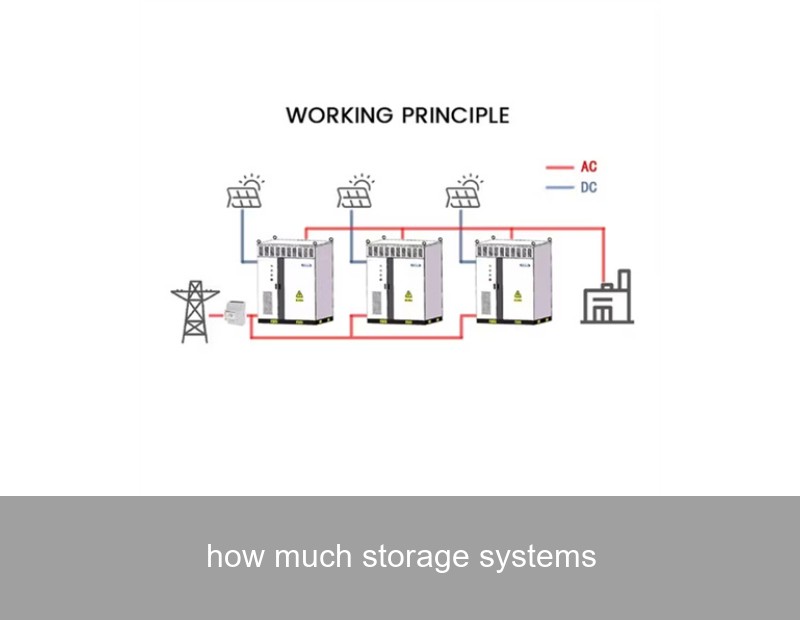
As a homeowner or business leader exploring energy independence, you've likely asked the pivotal question: "How much storage systems capacity is right for me?" It's not just about the kilowatt-hours (kWh) on a spec sheet. The right answer balances your energy goals, consumption patterns, and the unique capabilities of modern battery technology. This guide will demystify the sizing process, moving from basic concepts to real-world applications, helping you make an informed decision for a resilient and cost-effective energy future.
The Sizing Puzzle: More Than Just a Number
Think of a storage system like a water tank. The question "how big?" depends entirely on what you need it for. Are you storing rainwater for garden use during dry spells, or do you need a full household supply for a week without rain? Similarly, energy storage needs vary dramatically. A common pitfall is focusing solely on total capacity (the size of the tank) while overlooking critical factors like power output (how fast the water flows out) and system intelligence (how efficiently it manages the water).
Key Factors Determining Your Storage Needs
Let's break down the core elements that shape the answer to "how much storage systems" capacity you require.
1. Your Primary Energy Goals
Your objective is the most important driver. Systems are typically sized for one or more of the following:
- Self-Consumption Maximization: Storing excess solar for use at night. Needs are often moderate, based on evening/nightly loads.
- Backup Power (Resilience): Keeping critical loads running during grid outages. Size is determined by what you need to power and for how long.
- Load Shifting & Arbitrage: Charging with cheap grid power to discharge during expensive peak rates. Requires analysis of your utility rate structure and daily consumption peaks.
- Grid Services & Participation: For larger commercial systems, providing services like frequency regulation. This is a more complex, revenue-driven calculation.
2. Your Energy Consumption Profile
You can't size a solution without understanding the problem. Look at your utility bills or energy monitor data. Key metrics are:
| Metric | What It Tells You | Impact on Storage Size |
|---|---|---|
| Daily kWh Usage | Total energy consumed in a day. | Sets the overall scale of the system. |
| Peak kW Demand | Maximum instantaneous power draw. | Determines the required power output (in kW) of the inverter. |
| Time-of-Use Pattern | When you use energy most. | Identifies the duration (hours) storage must discharge to cover high-rate periods. |
3. Solar Production & Climate
If you have solar PV, your storage needs are directly tied to its production pattern. A system in sunny Southern California will have a different excess generation profile than one in Northern Germany. You must account for seasonal variations—your storage should help smooth out daily imbalances, but sizing for complete winter energy independence via storage alone is often cost-prohibitive.

Image: A typical residential solar-plus-storage setup. Source: Unsplash
A Simple Calculation Framework
For a basic backup power scenario, you can start with this simplified approach:
- List Critical Loads: Identify appliances you must power during an outage (e.g., refrigerator, lights, modem, furnace fan). Find their power ratings (in watts).
- Calculate Daily Energy Need: Estimate how many hours each will run. (Watts * Hours / 1000 = kWh). Sum these for total daily kWh needed.
- Determine Desired Backup Duration: How many days of autonomy do you want? A common starting point is 1 full day.
- Apply a Safety Factor: Account for battery depth of discharge (DoD) and inverter efficiency. A rough formula: Required Battery Capacity (kWh) = (Daily kWh Need * Days of Autonomy) / (DoD * Efficiency).
Example: If your critical loads need 10 kWh per day, you want 1 day of backup, with a battery DoD of 90% and system efficiency of 95%, you'd need: (10 kWh * 1) / (0.90 * 0.95) ≈ 11.7 kWh of usable storage capacity.
Case Study: A German Mittelstand Business
Let's examine a real-world application to see how these factors converge. A mid-sized bakery in Bavaria, Germany, faced rising electricity costs and sought to optimize its self-consumption of an existing 100 kWp solar array and ensure backup power for its cold storage facilities.
- Goal: Maximize solar self-consumption, reduce peak grid demand, provide 8-hour backup for cold storage.
- Challenge: High daytime solar production, but energy-intensive baking and cooling operations extended into the evening when solar was unavailable.
- Solution & Sizing: An analysis of their load profile revealed an evening energy shortfall of approximately 120 kWh and a peak power requirement of 50 kW. They were not looking to cover 100% of this load, but to shave the peak and cover the critical cooling for 8 hours.
- Implementation: The bakery partnered with Highjoule to install a 150 kWh / 75 kW modular battery storage system. The system's intelligent energy management software was programmed to prioritize charging from midday solar excess and discharging during the high evening tariff period and any grid outages.
- Result: Within the first year, the bakery increased its solar self-consumption by 35%, reduced its grid peak demand charges by 22%, and achieved its resilience goal. The system's modular design allows for future capacity expansion if needs change. (Fraunhofer ISE studies often highlight similar commercial storage benefits).
Beyond Raw Capacity: The Highjoule Advantage
As our case study shows, answering "how much storage systems" is not just about kWh. The intelligence behind the storage is paramount. This is where Highjoule's expertise as a global leader since 2005 truly shines. Our H-Series Commercial & Industrial (C&I) systems and Residential Energy Hub are built with this holistic philosophy.
We don't just sell battery modules; we deliver integrated solutions featuring:
- Adaptive Power Management: Our proprietary software dynamically adjusts to your consumption, weather forecasts, and utility rates, extracting maximum value from every kilowatt-hour stored.
- Scalable & Modular Architecture: Start with what you need today. Our systems are designed for straightforward capacity expansion, protecting your investment as your energy goals evolve.
- Unmatched Safety & Durability: Built with high-grade lithium-iron-phosphate (LFP) chemistry and multi-layered safety systems, our units are engineered for reliable, long-term performance in diverse climates across Europe and North America.

Image: A containerized utility-scale battery storage system. Source: Unsplash
Making the Right Choice for Your Needs
So, where do you begin? Start by clearly defining your number one priority. Is it bill savings, resilience, or sustainability? Then, gather 12 months of your electricity bills—this data is gold. For businesses, a professional energy audit is highly recommended. Reputable providers, like Highjoule, offer detailed feasibility studies that model different scenarios, taking the guesswork out of sizing.
Remember, the most cost-effective system is often one perfectly tailored to your most critical needs, not necessarily the largest possible one. The technology has matured to the point where a smart, well-sized system can deliver a compelling return on investment. The U.S. Department of Energy provides extensive resources on the benefits of solar-plus-storage.
Given the variables at play—from your energy goals to local incentives—what would you say is the single biggest hurdle preventing you from moving forward with a detailed assessment of your storage needs?
 Inquiry
 Online Chat