


How Much Sun Does a 10kW Solar System Need? Understanding Your SG04LP3 Array's Potential
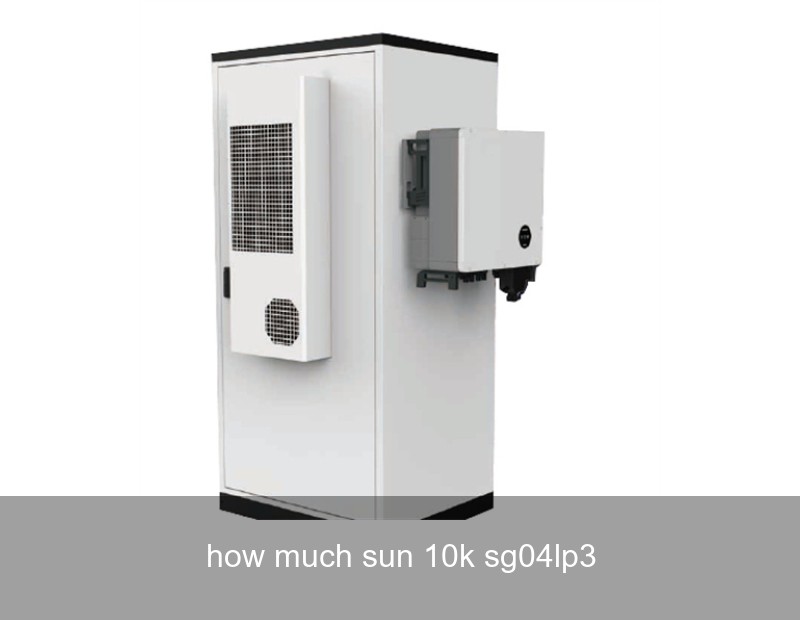
So, you're considering a 10kW solar system – a popular and powerful choice for energy-independent homes and businesses. A common question we hear at Highjoule is, "How much sun does a 10kW system *actually* need to be worthwhile?" It's a brilliant starting point. The answer isn't just about hours of daylight; it's about understanding solar irradiance, system efficiency, and how pairing with smart storage, like our solutions, unlocks true energy freedom. Let's demystify the factors, using a typical setup like an array of SG04LP3 high-efficiency panels, and explore what this means for your power generation.
Table of Contents
The Core Metric: It's Not Just "Sun Hours"
First, let's move beyond "sunny days." The key metric is peak sun hours. This isn't the number of hours between sunrise and sunset. Instead, one peak sun hour equals one hour where the sunlight intensity (solar irradiance) averages 1,000 watts per square meter. It's the standardized yardstick for comparing solar potential across different locations.
For a 10kW system (like one configured with high-performance SG04LP3 panels), its rated "10kW" output is the power it would produce under these ideal laboratory conditions. Your location determines how many of these equivalent peak hours you get.
- Sunny U.S. Southwest (e.g., Arizona): 5.5 - 6.5 peak sun hours daily on average.
- Central Europe (e.g., Germany): 2.5 - 3.5 peak sun hours daily.
- Pacific Northwest (e.g., Seattle): 3.0 - 4.0 peak sun hours daily.
As you can see, geography is destiny for solar. But efficiency matters tremendously. High-efficiency modules, such as the SG04LP3 class, capture more energy per square meter during those peak hours, making them particularly valuable for areas with moderate irradiance or roofs with limited space.
Calculating Your 10kW System's Potential Output
Here’s a simplified formula to estimate daily energy production:
System Size (kW) × Peak Sun Hours × System Efficiency Factor = Daily kWh
The "System Efficiency Factor" (typically 0.75-0.85) accounts for real-world losses: inverter efficiency, dust on panels, wiring losses, and temperature. High-quality components and professional installation minimize these losses.
| Location (Avg. Peak Sun Hrs) | Daily Estimate (10kW System) | Annual Estimate |
|---|---|---|
| Los Angeles, USA (~5.8 hrs) | ~48 kWh (10 * 5.8 * 0.83) | ~17,520 kWh |
| Munich, Germany (~3.0 hrs) | ~25 kWh (10 * 3.0 * 0.83) | ~9,125 kWh |
| Florida, USA (~4.8 hrs) | ~40 kWh (10 * 4.8 * 0.83) | ~14,600 kWh |
These numbers illustrate the range. A system in Munich still produces significant power—enough to cover a large portion of a typical household's needs—proving solar is viable far beyond the sunniest deserts. For precise planning, tools like NREL's PVWatts Calculator are invaluable.

Image: A well-installed residential solar array. Credit: Unsplash
From Theory to Reality: A Real-World Case Study
Let's look at a commercial case from Southern Spain (a market with high solar potential similar to parts of California). A medium-sized winery installed a 10.2kW ground-mounted system using panels similar to the SG04LP3 in efficiency. Their goal: offset daytime cooling and irrigation pump costs.
- Location Data: Average of 5.4 peak sun hours.
- Measured Output: First-year production averaged 16,200 kWh.
- Financial Impact: This reduced their grid energy draw by over 65% during operational hours, leading to an annual savings of approximately €2,800. The system paid for itself in under 7 years.
This case highlights a crucial insight: alignment between production and consumption is key. The winery used most power when the sun shone. But what happens when your consumption peaks after sunset? This is where the modern solar equation evolves.
Beyond the Panels: The Highjoule Advantage with Storage
Asking "how much sun do I need?" is the first step. The more progressive question is, "How can I use every kilowatt-hour my system generates, regardless of the time?" This is the challenge of intermittency. Your 10kW system might overproduce at noon, sending excess to the grid for low feed-in tariffs, but leave you buying expensive power at night.
This is Highjoule's expertise. We don't just think about generation; we engineer complete, intelligent storage solutions. By integrating your solar array with a Highjoule battery energy storage system (BESS), you effectively capture that midday surplus for use in the evening. This dramatically increases your self-consumption rate—sometimes from 30-40% to 70-80% or more.
For our clients with 10kW systems, we often recommend our Highjoule HES Series for residential and commercial applications. Its scalable capacity (from 10kWh to 30kWh+) and high round-trip efficiency ensure you get the most from your SG04LP3 panels. Coupled with our AI-driven energy management system, it learns your usage patterns, automatically optimizing when to store, use, or (if beneficial) export energy.

Image: A modern home battery storage unit. Credit: Unsplash
Maximizing Your Solar Investment
To truly maximize a 10kW solar investment, consider this integrated approach:
- Quality Components: Start with high-efficiency panels and a reliable inverter.
- Professional Design & Installation: Correct angle, orientation, and shading analysis are non-negotiable. Resources like the U.S. DOE's Homeowner's Guide offer great tips.
- Integrate Storage from the Start: Designing your solar system with storage in mind future-proofs your investment. A Highjoule system provides backup power, time-of-use bill management, and grid services participation.
- Monitor and Optimize: Use detailed monitoring to understand your production and consumption patterns.
The conversation is shifting. It's no longer just about "how much sun" you have, but about "how smart" your energy ecosystem is. With volatile energy prices across Europe and the U.S., the combination of solar and storage is becoming the standard for resilience and economic control.
Ready to See Your Specific Potential?
Every roof, every business, every energy profile is unique. While a 10kW SG04LP3-based system is a powerful starting point, the optimal configuration for your home or business depends on a detailed analysis of your site, consumption, and goals. What would a 90% energy independence look like for your monthly budget?
 Inquiry
 Online Chat