


How Much Solar Power Does Nigeria Really Need? A Deep Dive into the "Sun King" Potential
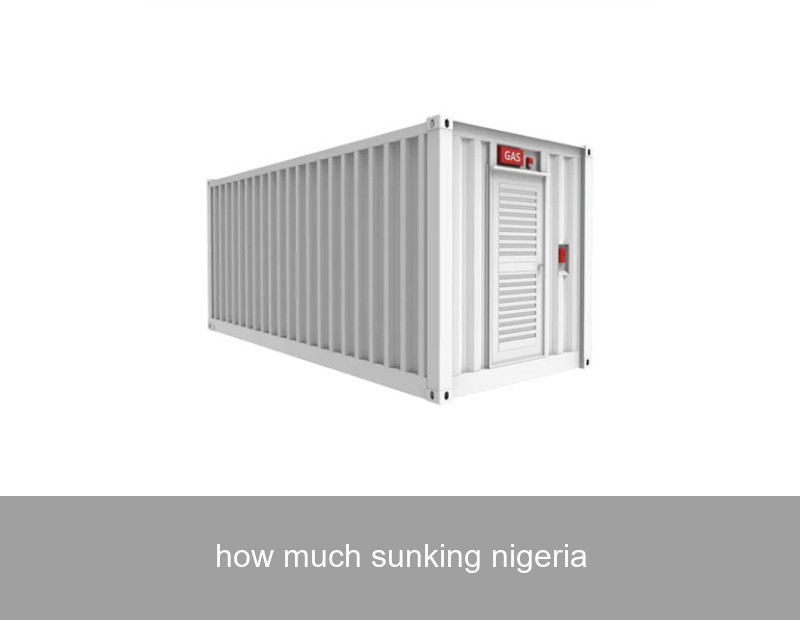
You've likely heard the term "Sun King" buzzing around discussions about Nigeria's energy future. It paints a powerful picture: a nation so abundantly blessed with sunlight that it could reign supreme in solar energy. But when we ask "how much sunking Nigeria" truly possesses, we're moving beyond a catchy nickname into a critical analysis of potential, reality, and the practical path to energy independence. For nations and businesses watching from Europe and the US, Nigeria's journey is a compelling case study in harnessing renewable resources.
Table of Contents
- The Phenomenon: Nigeria's Glaring Energy Paradox
- The Data: Quantifying the "Sun King" Bounty
- The Case Study: From Theory to Practice in Lagos
- The Insight: It's Not Just About Panels, It's About Intelligent Storage
- Highjoule's Role: Stabilizing the Sun King's Reign
- Your Energy Future: A Question to Consider
The Phenomenon: Nigeria's Glaring Energy Paradox
Here's the stark contrast: Nigeria enjoys an estimated average of 5.5 to 6.5 kWh/m²/day of solar irradiance. To put that in perspective for a European audience, that's nearly double what Germany, a global solar leader, receives. The country is bathed in enough sunlight to theoretically power itself many times over. Yet, over 85 million Nigerians lack access to grid electricity, and those connected face frequent, debilitating outages. This is the "Sun King" paradox – vast potential locked behind the challenges of infrastructure, investment, and integration.
The Data: Quantifying the "Sun King" Bounty
Let's move from metaphor to metrics. Research from the World Bank and the International Renewable Energy Agency (IRENA) provides concrete figures:
- Solar Resource: Northern Nigeria boasts some of the highest solar insulation levels in West Africa, with some regions exceeding 7 kWh/m²/day.
- Current Capacity: Despite this, solar contributes less than 1% to Nigeria's energy mix as of 2023, with total installed capacity around 1,000 MW.
- The Gap: The national demand is estimated at over 25,000 MW, with generation often below 4,000 MW. This yawning gap is primarily filled by expensive, polluting diesel generators.
So, "how much sunking Nigeria" has is immense, but the conversion of this sunlight into reliable, dispatchable power is the real challenge. It's a lesson relevant everywhere: resource assessment is just step one.

Image: The abundant solar potential in regions like Nigeria is clear, but capturing it effectively requires more than just panels.
The Case Study: From Theory to Practice in Lagos
Consider a real-world example from Lagos, Nigeria's commercial heartbeat. A mid-sized textile factory, spending over ₦15 million monthly on diesel, decided to transition. They installed a 500 kW rooftop solar array. The results were promising but incomplete:
| Metric | Before Solar | After Solar (Only) |
|---|---|---|
| Energy Cost | ₦15M/month | ₦8M/month |
| Reliability | Unstable (Grid + Diesel) | Daytime-only power |
| Night/Cloudy Operations | Dependent on diesel | Still dependent on diesel |
The solar system cut daytime costs dramatically, but the factory remained chained to diesel generators after sunset and during grid failures. This is the critical pivot point in the conversation. The initial question of "how much solar potential" evolved into a more complex one: how to store and manage that energy for 24/7 reliability?
The Insight: It's Not Just About Panels, It's About Intelligent Storage
The Lagos case study highlights a universal truth in renewable energy: generation is only half the equation. The true key to unlocking the "Sun King" is advanced, intelligent Battery Energy Storage Systems (BESS). Without storage, solar energy is a daytime-only commodity, leaving businesses and homes vulnerable when the sun sets.
This is where global expertise from companies like Highjoule becomes pivotal. Having pioneered advanced energy storage solutions since 2005, we understand that the challenge in markets like Nigeria isn't just capturing sunlight—it's taming it, storing it, and deploying it intelligently to match demand curves. The most successful projects integrate high-efficiency solar generation with robust, smart storage from the very beginning.
Highjoule's Role: Stabilizing the Sun King's Reign
For commercial and industrial (C&I) applications in regions with high solar potential but unstable grids, like parts of Nigeria, our solutions are engineered for resilience. Highjoule's Intelligent BESS platforms are designed to:
- Provide 24/7 Power: Store excess solar energy generated during the day for use at night, eliminating diesel dependency.
- Ensure Grid Stability: Offer frequency regulation and voltage support, acting as a buffer for microgrids or weak grid connections.
- Maximize Financial Return: Through intelligent energy management software, our systems optimize when to store, use, or even sell back energy, ensuring the fastest possible return on investment.
Imagine if that Lagos factory had paired its solar array with a Highjoule C&I储能系统. The monthly energy cost could have approached zero, with complete independence from the grid and diesel. This is the model transforming energy landscapes: solar + smart storage = reliable, sustainable, and economical power.

Image: Advanced containerized BESS units, like those from Highjoule, provide the critical backbone for 24/7 renewable power.
Looking Beyond Nigeria: Lessons for Global Audiences
The "how much sunking Nigeria" inquiry holds lessons for Europe and the US. As grids everywhere integrate higher percentages of variable renewables like wind and solar, the same principle applies. According to a report by the U.S. Department of Energy, energy storage is the keystone technology for a resilient, modern grid. Whether it's a Nigerian factory, a German industrial park, or a Californian community, the combination of local generation and intelligent storage is the blueprint for energy security.
Your Energy Future: A Question to Consider
As you look at your own energy challenges or opportunities—whether evaluating sustainability goals, seeking energy cost certainty, or building resilience against outages—consider this: Is your renewable energy strategy complete with a plan for storage? The story of Nigeria's solar potential reminds us that the sun's power is free, but its true value is only realized when we can control it.
What would 24/7 clean power do for your operations?
 Inquiry
 Online Chat