


Deep Well Solar Submersible Pumps: Your Complete Guide to Off-Grid Water Solutions
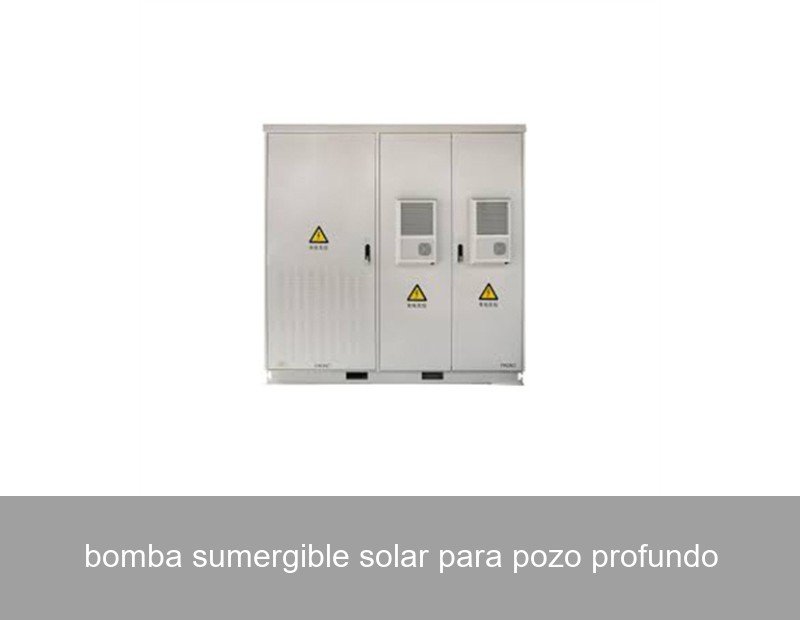
Table of Contents
- The Rising Demand for Off-Grid Water Solutions
- How a Deep Well Solar Submersible Pump System Works
- Key Components: More Than Just a Pump
- The Financial and Environmental Case: Data You Can't Ignore
- A Real-World Case Study: Farming in California's Central Valley
- Choosing the Right System: A Buyer's Checklist
- Highjoule's Integrated Energy Solution for Reliability
- Installation and Maintenance Insights
Imagine a reliable water source, deep underground, brought to the surface using nothing but the power of the sun. For farms, remote homesteads, and communities far from the grid, this isn't a fantasy—it's the practical reality offered by a deep well solar submersible pump. As energy independence and sustainability move from niche concepts to mainstream priorities, these innovative systems are solving critical water access challenges across the globe, from the sun-drenched farms of Southern Europe to the sprawling ranches of the American Southwest.
The Rising Demand for Off-Grid Water Solutions
Let's face it: traditional water pumping methods have their drawbacks. Grid-connected electric pumps leave you vulnerable to power outages and rising electricity costs. Diesel pumps are noisy, polluting, and require constant fuel deliveries, which is both costly and logistically challenging in remote areas. The phenomenon is clear—there's a growing need for resilient, cost-effective, and clean water infrastructure.
This is where solar submersible pumps for deep wells shine. They convert sunlight directly into the work of moving water, eliminating monthly fuel or electricity bills for pumping. For agricultural irrigation, livestock watering, or providing clean water to off-grid homes, they represent a paradigm shift. The driver isn't just environmental sentiment; it's hard-nosed economics and a desire for operational resilience that is pushing this technology to the forefront.
How a Deep Well Solar Submersible Pump System Works
At its core, the system elegantly marries solar technology with hydraulic engineering. Here’s the step-by-step process:
- Solar Energy Capture: Photovoltaic (PV) panels, typically mounted on a ground-based array, capture sunlight and convert it into direct current (DC) electricity.
- Smart Power Management: This DC electricity is routed to a specialized solar pump controller (often called an inverter or variable frequency drive). This is the brain of the operation. It adjusts the pump's speed to match the available solar power, allowing it to start in low morning light and run optimally throughout the day.
- Water Lifting: The controller sends power down your well to the submersible solar pump itself—a sealed, waterproof unit placed deep below the water level. It converts electrical energy into mechanical energy, spinning an impeller that pushes water up through the drop pipe to the surface.
- Storage and Distribution: Water is then delivered to a storage tank (providing a reserve for nighttime and cloudy days) or directly into an irrigation system or pressure tank for household use.

The beauty lies in its simplicity and automation. Once installed, the system requires minimal intervention, quietly providing water as long as the sun shines.
Key Components: More Than Just a Pump
Understanding the system components helps in making an informed choice:
| Component | Function | Considerations |
|---|---|---|
| Solar PV Array | Generates DC power from sunlight. | Size (in watts) determines pumping capacity. Must be matched to pump voltage (DC or AC). |
| Solar Pump Controller | Regulates power, protects the pump, and maximizes efficiency. | Essential for AC pumps and for optimizing DC pump performance. Look for models with dry-run protection. |
| Submersible Solar Pump | The motor and impeller unit that lifts water. | Defined by flow rate (GPM/LPM), head (vertical lift), voltage, and construction material (stainless steel for longevity). |
| Water Storage | Holds water for use when the sun isn't shining. | Capacity should cover 1-3 days of water needs for true resilience. Tanks can be above or below ground. |
| Piping & Wiring | Transports water and power. | Must be correctly sized to minimize friction loss (piping) and voltage drop (wiring), especially for deep wells. |
The Financial and Environmental Case: Data You Can't Ignore
The initial investment for a solar pumping system can be higher than a conventional pump. However, the operational cost savings are transformative. According to a report by the International Renewable Energy Agency (IRENA), the levelized cost of water for solar pumping can be 50-70% lower than using diesel over the system's lifetime. For a typical mid-sized agricultural setup, this can mean saving thousands of dollars annually on fuel alone.
Furthermore, with various federal (like the USDA REAP grant in the U.S.) and European agricultural subsidies for renewable energy, the payback period can often be reduced to 3-6 years. After that, the "fuel" is free for the next 15-20 years. Environmentally, the impact is equally compelling. A single solar pump replacing a diesel unit can reduce CO2 emissions by several tons per year, contributing directly to farm sustainability goals.
A Real-World Case Study: Farming in California's Central Valley
Let's look at a concrete example. A 40-acre almond orchard in Fresno County, California, was relying on a 15 HP diesel pump to draw water from a 400-foot well for irrigation. The annual costs were staggering: over $8,500 in diesel fuel, plus $2,000 in maintenance.
In 2022, the farm installed a 12kW solar array coupled with a high-efficiency 10 HP AC submersible pump and a 20,000-gallon storage tank. The total system cost was approximately $45,000. However, a 30% USDA REAP grant brought the net cost down to $31,500.
- Result: Immediate elimination of the $8,500 fuel bill and a 90% reduction in maintenance costs.
- Payback: The net investment was recouped in just under 4 years ($31,500 / $8,500 ≈ 3.7 years).
- Ongoing Benefit: The farm now has a predictable, zero-cost energy source for water, insulating it from volatile diesel prices. It also reduced its carbon footprint by an estimated 20 tons of CO2 annually.
This case underscores that a deep well solar submersible pump is not just an eco-friendly choice, but a robust financial decision that enhances long-term operational security.
Choosing the Right System: A Buyer's Checklist
Selecting a system isn't one-size-fits-all. Ask these critical questions:
- Well Specifications: What is the static water level and total dynamic head (lift + friction loss)?
- Water Needs: How many gallons per day are required (for irrigation, animals, household use)?
- Solar Resource: What is the average peak sun hours at your location? (Data from Global Solar Atlas is a great start).
- Backup Needs: Is water storage sufficient, or do you need a generator/grid hybrid backup for critical needs?
Highjoule's Integrated Energy Solution for Reliability
While a standalone solar pump is excellent, what happens during a string of cloudy days or when water demand spikes unexpectedly? This is where thinking about an integrated energy system becomes a game-changer. Highjoule, as a leader in advanced energy storage, provides the missing piece for ultimate reliability.
Imagine coupling your solar pump with a Highjoule residential or commercial battery energy storage system (BESS). The solar array can charge the batteries during the day, and the pump can draw power from the batteries in the early morning, evening, or during brief cloudy periods. This extends your pumping window significantly without oversizing the solar array. For critical applications like community water supply or dairy farming, this ensures uninterrupted water access.
Furthermore, Highjoule's smart energy management systems can optimize the entire site's energy use—prioritizing power for the pump, the homestead, and other farm operations. This holistic approach to renewable energy, where pumping is part of a microgrid, represents the future of off-grid and agricultural energy independence. It transforms a singular solution into a comprehensive, resilient power ecosystem.

Installation and Maintenance Insights
Professional installation is non-negotiable for deep well systems. It involves precise pump setting, proper electrical connections, and secure mounting of solar panels. Once installed, however, maintenance is remarkably low. Key tasks include:
- Regularly cleaning solar panels of dust and debris.
- Inspecting electrical connections for corrosion.
- Monitoring water output and system pressure for early signs of issues.
- Having a professional service the pump every 3-5 years.
The robust design of quality submersible pumps, especially those with stainless-steel construction, ensures a long service life with minimal downtime.
As you consider harnessing the sun to power your water needs, what other energy challenges on your property could be solved with an integrated, battery-backed solar approach like the one Highjoule specializes in?
 Inquiry
 Online Chat