


How Much Is the Big Battery? Unpacking the True Value of Grid-Scale Storage
If you're following the energy transition, you've likely seen the headlines: "Giant Battery Project Announced" or "Utility Commissions Massive Energy Storage System." A common first question pops into mind for industry professionals and curious citizens alike: how much the big battery actually costs. But here's the insight we at Highjoule have gained from nearly two decades in advanced energy storage: focusing solely on the capital expenditure (CapEx) is like valuing a Swiss Army knife by the cost of its steel. The real question isn't just "how much does it cost?" but "how much value does it create?"
Beyond the Price Tag: The True Cost of Grid-Scale Energy Storage
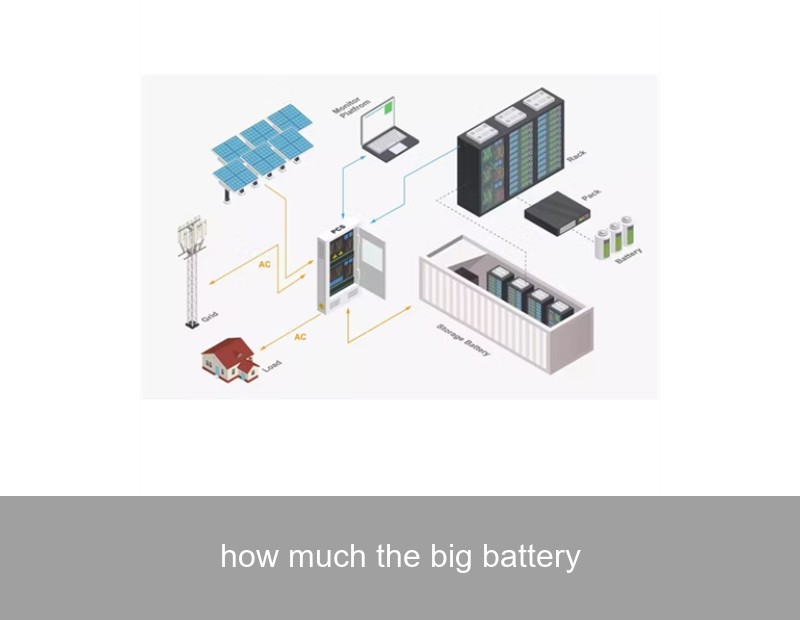
The initial price of a grid-scale Battery Energy Storage System (BESS) is a complex figure. It's not a single product but an integrated ecosystem. Think of it as asking "how much is a data center?" The answer depends on capacity, technology, power electronics, software intelligence, and civil works.
The Components of "The Big Battery" Price
A utility-scale storage project's cost breaks down into several key areas:
- Battery Cells & Modules: The core energy storage units, typically lithium-ion, though alternatives are emerging.
- Power Conversion System (PCS): The inverters that manage AC/DC conversion, a critical component for efficiency and grid response.
- Battery Management System (BMS) & Energy Management System (EMS): The "brain" of the operation. This software is what transforms a passive battery into a smart grid asset. At Highjoule, our proprietary AI-driven EMS is where we add immense value, optimizing every charge-discharge cycle for maximum financial and grid reliability returns.
- Balance of Plant (BoP): This includes climate control, fire suppression, containerization, and electrical interconnection hardware.
- Installation & Grid Integration: Construction, permitting, and connection to the transmission or distribution network.

Credit: Photo by American Public Power Association on Unsplash. A modern BESS site involves sophisticated integration beyond just battery racks.
The Value Stack: Where the Big Battery Earns Its Keep
This is where the conversation gets exciting. A "big battery" doesn't have one job; it can perform multiple services simultaneously, a concept known as "value stacking." This is the ultimate determinant of its worth.
| Service | Function | Economic & Grid Benefit |
|---|---|---|
| Frequency Regulation | Responding in milliseconds to keep grid frequency stable. | High-value grid service revenue; prevents blackouts. |
| Renewables Firming | Storing excess solar/wind power and releasing it when generation drops. | Maximizes renewable asset ROI; reduces curtailment. |
| Peak Shaving | Discharging during high-demand, high-price periods. | Lowers energy bills for commercial/industrial users; defers costly grid upgrades. |
| Backup Power & Resilience | Providing electricity during outages. | Avoids business interruption losses; supports critical infrastructure. |
So, when you ask "how much the big battery" is, a more accurate answer might be: "It's an asset that can reduce grid congestion costs, integrate more renewables, and provide stability, paying for itself over time through these stacked value streams."
The California Case Study: A Real-World "Big Battery" in Action
Let's move from theory to hard data. California's grid operator, CAISO, has been a global leader in integrating storage. A pivotal moment came during a September 2022 heatwave. The state's growing fleet of grid-scale batteries, exceeding 3.7 GW at the time, played a starring role in keeping the lights on.
The Phenomenon: Extreme heat led to record electricity demand as the sun set, precisely when solar generation plummeted—a period known as the "duck curve" neck.
The Data: According to a U.S. Department of Energy report, on September 6, 2022, batteries discharged a record 3.36 GW of power into the California grid between 6:15 PM and 7:15 PM. This output was crucial, effectively acting as the largest power plant on the grid at that critical moment, preventing rolling blackouts.
The Case: Projects like the 250 MW / 1000 MWh Moss Landing expansion phase (one of the world's largest) were not just idle assets. They were strategically dispatched, storing cheap, abundant solar power from the afternoon and delivering it during the evening peak. The "cost" of these batteries is now measured against the avoided cost of potential widespread blackouts, which run into billions of dollars in economic damage.
The Insight: This real-world stress test proved that the value of big batteries transcends simple arbitrage. Their true worth is in reliability and resilience. For a utility or a region, the calculus shifts from "Can we afford this storage?" to "Can we afford the risk of not having it?"

Credit: Photo by Kindel Media on Pexels. Co-located solar and storage, like Highjoule's solutions, are becoming the new standard for reliable renewable energy.
The Highjoule Approach: Making "Big Battery" Value Accessible
At Highjoule, founded in 2005, we've evolved our thinking from simply supplying storage hardware to delivering intelligent, outcome-driven power solutions. We understand that the economics of "the big battery" must work for our clients, whether they are a European industrial manufacturer facing high time-of-use rates or a U.S. microgrid developer seeking islandable resilience.
Our product suites, like the Highjoule GridMAX for utility-scale applications and Highjoule C&I PeakGuard for commercial and industrial sites, are built around this principle of value stacking. They are powered by our Adaptive Storage Intelligence (ASI) platform. Think of ASI as a tireless financial and operational trader for your stored energy. It continuously analyzes market prices, grid signals, weather forecasts, and your facility's load patterns to decide the most profitable and beneficial moment to charge or discharge.
For a business, this might mean automatically reducing demand charges by 20-30%. For a community microgrid, it means seamlessly blending solar, storage, and backup generation to ensure continuity. We shift the client's perspective from upfront cost to lifetime value, offering clear financial models and performance guarantees that turn a capital expenditure into a strategic investment with a measurable return.
From Gigawatts to Your Watt: The Scaling Principle
The same technological and economic principles that make a 100 MW grid battery viable also apply at smaller scales. A 1 MW/2 MWh system for a factory or a hospital operates on the same value logic—peak shaving, backup power, sustainability goals—just within a different regulatory and physical framework. Highjoule's expertise spans this entire spectrum, ensuring best practices from the largest projects inform our commercial and residential solutions.
The Future of Big Batteries and Your Role in It
The landscape is moving fast. Costs for lithium-ion batteries have fallen dramatically, dropping 89% in real terms from 2010 to 2023 according to BloombergNEF. This trend, coupled with supportive policies like the U.S. Inflation Reduction Act (IRA), is making the "big battery" question more relevant than ever. The next frontier includes longer-duration storage technologies, second-life EV battery applications, and even more sophisticated AI for grid services.
So, the next time you read about a "big battery," we encourage you to look past the headline cost figure. Ask instead: What value streams will it unlock? How will it strengthen the grid? How will it accelerate our clean energy future?
What specific energy challenge—be it price volatility, reliability concerns, or sustainability targets—could a smart storage solution transform for your organization or community?
 Inquiry
 Online Chat