


Hoymiles Cloud: How Much Can It Truly Optimize Your Solar Investment?
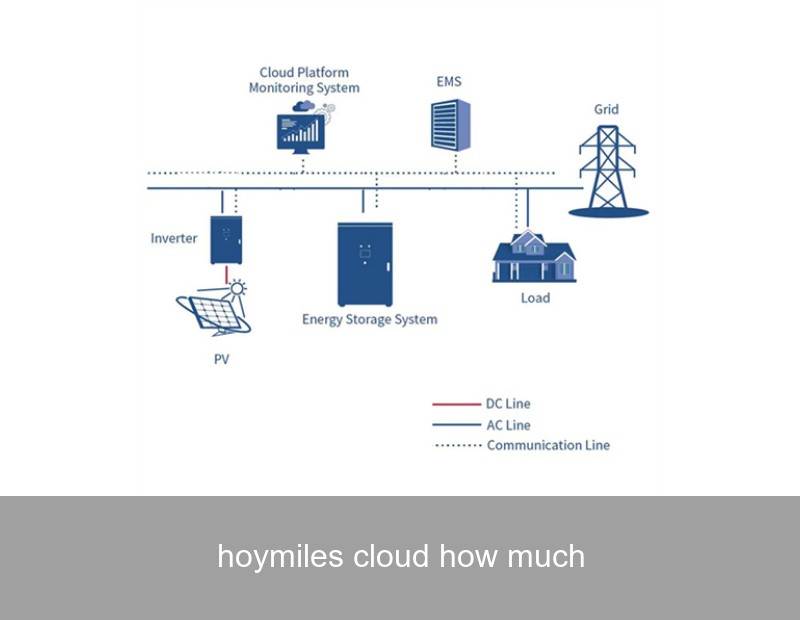
As a homeowner or business with solar panels, you've made a smart investment in clean energy. But here's a question many are asking: "Is my system performing as well as it should?" This is where monitoring platforms like the Hoymiles Cloud come into play. It promises visibility and control, but the real question on everyone's mind is: Hoymiles Cloud, how much value does it actually add? How much energy can it save? How much can it improve my return on investment? Let's move beyond the sales pitch and dive into the data, real-world performance, and how it fits into a complete, intelligent energy ecosystem.
Table of Contents
- The Phenomenon: The "Set-and-Forget" Mentality
- The Data: Quantifying the Performance Gap
- The Case Study: A German Bakery's Recipe for Savings
- The Insight: Monitoring is Just the First Step
- Beyond Monitoring: The Highjoule Intelligent Ecosystem
- Making the Choice: Key Questions to Ask
The Phenomenon: The "Set-and-Forget" Mentality
For years, the solar industry operated on a simple promise: install the panels, connect them to the grid, and enjoy lower bills. Many systems were essentially "set-and-forget." Without detailed monitoring, subtle issues like a single underperforming panel (due to shading, dirt, or a technical fault), inverter inefficiencies, or unexpected consumption patterns could go unnoticed for months. This silent performance drain eats away at your expected savings. A platform like Hoymiles Cloud directly addresses this by providing an app-based window into your system's daily, monthly, and yearly production. But seeing a problem is only half the battle.
The Data: Quantifying the Performance Gap
So, how much impact can these hidden issues have? Studies show that non-optimal performance can reduce a solar PV system's output by a significant margin. According to the National Renewable Energy Laboratory (NREL), factors like soiling (dirt on panels) alone can cause average losses of up to 7% annually, with regional variations making it far worse. When you combine this with potential inverter clipping, mismatch losses, or component degradation, the total energy loss can easily reach 10-15% or more over time. For a system designed to save you $1,000 a year, that's $100-$150 vanishing into thin air. A monitoring tool helps you identify and quantify these losses, turning vague suspicion into hard data.
What Monitoring Platforms Typically Measure:
- Real-time & Historical Generation: Total power output of your solar array.
- Per-Module or Per-String Data: (In advanced systems) Pinpoints exactly which panel group is underperforming.
- Energy Export/Import: How much you send to and pull from the grid.
- Basic Environmental Correlation: Production vs. sunlight levels.

Image Source: Unsplash - Visualizing solar system monitoring.
The Case Study: A German Bakery's Recipe for Savings
Let's look at a real example from our primary market. A family-run bakery in Bavaria, Germany, had a 50kW rooftop solar installation with a leading brand of microinverters, monitored via its cloud platform. The owner noticed the system was consistently underperforming forecasts by about 8%. The monitoring app showed lower-than-expected output across several strings but couldn't diagnose the root cause.
Frustrated, they contacted Highjoule for a professional energy audit. Our experts cross-referenced their cloud data with Highjoule's own analytics and conducted an on-site inspection. The issue wasn't a single faulty panel, but a combination of subtle shading from a newly grown tree and a gradual degradation in one inverter's maximum power point tracking (MPPT) efficiency—a nuance the basic monitoring platform flagged as "low production" but didn't explain.
By rectifying the shading and replacing the underperforming inverter unit, the bakery's system output increased by 9.5% within the same sunlight conditions. This translated to an additional 4,200 kWh per year, boosting their annual energy savings by over €1,200 (at local electricity rates). The monitoring cloud asked "how much are you losing?" but it took integrated expertise to answer "why?" and "how to fix it?"
The Insight: Monitoring is Just the First Step
The bakery's story illustrates a critical insight: Data is not the same as insight. Knowing your system is underperforming is valuable, but it's the beginning of the journey, not the end. The true value lies in:
- Diagnosis: Interpreting the data to find the root cause.
- Action: Taking corrective steps, whether physical maintenance or system reconfiguration.
- Optimization: Using the data to make smarter energy decisions in real-time.
This is where the question "Hoymiles Cloud, how much" evolves. It's not just about how much energy you see. It's about how much actionable intelligence you gain, how much waste you can eliminate, and ultimately, how much you can increase your energy independence.
Beyond Monitoring: The Highjoule Intelligent Ecosystem
At Highjoule, we view monitoring as one vital component of a holistic energy management system. Our solutions are designed to answer the "what's next?" after you see your data. For our residential and commercial clients across Europe and North America, we integrate premium components with our intelligent software to create a seamless, optimizing ecosystem.
Highjoule's Integrated Product & Service Approach:
| Component | Role | How It Complements Monitoring |
|---|---|---|
| Highjoule AIO Battery Storage Systems | Store excess solar energy for use at night or during outages. | Monitoring tells you when you're exporting; our battery system automatically stores that energy instead, maximizing self-consumption. Our AI learns your patterns to optimize charge/discharge cycles. |
| Highjoule Energy Management System (EMS) | The brain of the operation. | It takes data from your solar monitors, inverters, batteries, and grid signals. It doesn't just show you data—it automatically makes decisions to minimize costs, based on time-of-use rates or your personal preferences. |
| Professional Energy Audit & Integration Services | Expert analysis and system design. | Our technicians can diagnose the complex issues that basic cloud platforms can't, ensuring all components—from your PV modules and inverters to our storage systems—work in perfect harmony. |
Imagine this: Your monitoring platform shows a sunny afternoon with high solar production. In a standard setup, excess power might be sold to the grid at a low feed-in tariff. In a Highjoule system, our EMS predicts this surge, ensures batteries are ready to absorb the excess, and can even pre-cool your commercial refrigeration or charge an EV, all while keeping you completely off the grid during expensive peak periods. This is optimization in action.

Image Source: Unsplash - A modern home with integrated solar and battery storage.
Making the Choice: Key Questions to Ask
When evaluating any monitoring solution or overall energy system, move beyond the basic features. Ask these deeper questions:
- Integration: Does this platform only monitor, or can it directly control and optimize my other assets (batteries, smart loads)?
- Insight vs. Data: Does it provide actionable alerts and diagnostics, or just raw numbers and graphs?
- Future-Proofing: Is the system designed to easily incorporate storage or additional renewable sources later?
- Support: Who do I call when the data shows a problem? Is there expert support for diagnosis and repair?
So, Hoymiles Cloud, how much can it do? It is a capable tool for visibility. But the greater question for you is: How much of your solar energy potential are you ready to actually capture and control? The difference between seeing your energy and truly mastering it is the difference between a simple monitor and an intelligent, integrated system like the ones Highjoule provides.
Is your current setup showing you data, but leaving you to figure out the next steps on your own?
 Inquiry
 Online Chat