


Understanding La Fuente de Energia Solar: Your Guide to Solar Power Generation
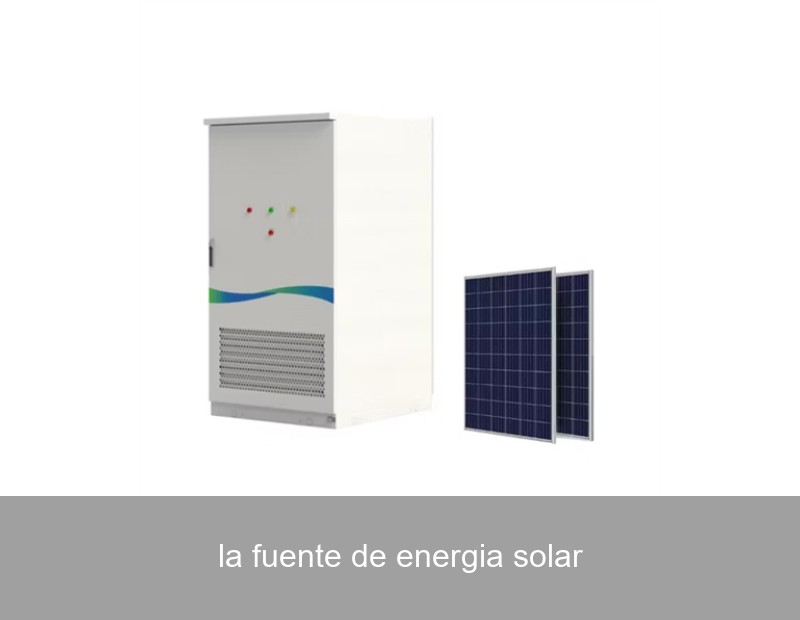
As energy costs rise and climate concerns grow, more homeowners and businesses across Europe and the United States are looking upward for a solution: the sun. La fuente de energia solar, or the source of solar energy, is no longer a futuristic concept but a practical and powerful mainstream technology. But what exactly is this source, how does it transform sunlight into usable electricity for your home or factory, and how can you harness it reliably? This article will demystify solar power, explore its real-world impact with concrete data, and introduce you to the advanced systems that make true energy independence possible.
Table of Contents
- What is La Fuente de Energia Solar?
- How Solar Power Generation Works: From Photons to Your Plug
- Key Components of a Modern Solar Energy System
- The Real Impact: Data, Savings, and Grid Stability
- Case Study: Solar & Storage for a Spanish Agri-Business
- Beyond the Panels: The Critical Role of Intelligent Energy Storage
- Is Your Home or Business Ready to Tap into This Source?
What is La Fuente de Energia Solar?
At its core, la fuente de energia solar refers to the origin of all solar power: the nuclear fusion reactions within the sun. This process emits an immense amount of energy in the form of electromagnetic radiation, which travels to Earth as sunlight. For us, the "source" is both this astronomical phenomenon and the human-made technology—primarily photovoltaic (PV) panels—that captures and converts it. Think of it this way: the sun is the infinite wellspring, and your solar panels are the tap that lets you draw power from it. The beauty of this system is its simplicity and scalability, from a small rooftop array powering a family home to vast solar farms feeding entire communities.

Image Source: Unsplash - A visual representation of la fuente de energia solar being captured.
How Solar Power Generation Works: From Photons to Your Plug
The magic happens in the silicon cells of a solar panel. When particles of light (photons) strike these cells, they knock electrons loose from their atoms. This movement of electrons creates a direct current (DC) of electricity. However, our homes and the grid run on alternating current (AC). That's where an inverter comes in—it's the essential translator that converts DC into usable AC power. This seamless process happens silently every second the sun is shining, creating clean electricity without moving parts, emissions, or noise.
Key Components of a Modern Solar Energy System
- Solar Panels (PV Modules): The primary harvesters, typically made of monocrystalline or polycrystalline silicon for high efficiency.
- Inverter(s): The brain of the power conversion. Modern systems often use module-level power electronics (MLPEs) like microinverters for better performance in shaded conditions.
- Mounting System: The secure, often adjustable structure that fixes panels to your roof or the ground.
- Monitoring System: Software that provides real-time and historical data on your system's energy production and consumption.
- The Game-Changer: Battery Energy Storage System (BESS): This is where true energy independence is achieved. A storage system, like those developed by Highjoule, captures excess solar energy produced during the day for use at night or during power outages, maximizing self-consumption.
The Real Impact: Data, Savings, and Grid Stability
The phenomenon of solar adoption is backed by compelling data. In the U.S., solar accounted for 53% of all new electricity-generating capacity added in 2023 (SEIA, 2024). In the EU, solar PV generation saw a staggering 18% increase in 2023, helping to offset fossil fuel use (Ember, 2024). But beyond macro-trends, the impact is personal. A well-sized solar system can typically reduce a household's electricity bill by 50-90%. For businesses, it locks in energy costs for 25+ years, providing critical financial predictability. Furthermore, when paired with storage, distributed solar systems provide grid services, helping to stabilize frequency and reduce the risk of blackouts—a benefit for all utility customers.
Case Study: Solar & Storage for a Spanish Agri-Business
Let's look at a concrete example from southern Spain. A medium-sized olive oil processing cooperative faced two major problems: extremely high energy costs during the harvest and milling season, and unreliable grid power in their rural location. Their operation was energy-intensive, requiring significant power for irrigation, cold storage, and processing machinery.
They turned to a system integrator who deployed a solution centered on la fuente de energia solar, supported by a robust battery storage system from Highjoule. The installation included:
| Component | Specification | Purpose |
|---|---|---|
| Solar PV Array | 450 kW | Primary daytime power generation |
| Highjoule H-Stack Commercial BESS | 300 kWh / 150 kW | Store excess solar, provide nighttime power, and ensure grid stability |
| Energy Management System (EMS) | Highjoule Neuron OS | Intelligently dispatch stored energy based on cost and demand |
- Energy Cost Reduction: 72% decrease in electricity expenses from the grid.
- Self-Consumption: Increased on-site solar usage from ~40% to over 90%.
- Reliability: Zero production downtime due to grid outages, as the BESS provided seamless backup.
- ROI: Projected payback period of under 5 years, thanks to savings and available incentives.
This case demonstrates that solar is not just about panels; it's about an intelligent, resilient energy system.
Beyond the Panels: The Critical Role of Intelligent Energy Storage
As the Spanish case shows, the full potential of la fuente de energia solar is unlocked only when paired with storage. The sun doesn't shine at night, but your energy needs don't stop. This is the fundamental challenge that companies like Highjoule have spent nearly two decades solving. Highjoule's advanced battery energy storage systems (BESS) are designed to seamlessly integrate with solar PV installations. Their H-Stack (Commercial/Industrial) and HomePower (Residential) series feature high-cycle life lithium iron phosphate (LFP) battery chemistry, known for its safety and longevity. More importantly, their proprietary Neuron OS energy management platform acts as the brain, making real-time decisions to store solar surplus, discharge during peak rate periods, and even provide backup power during outages—all without user intervention.

Image Source: Unsplash - A modern home battery storage unit, a key component for maximizing solar.
For larger-scale applications like microgrids or industrial parks, Highjoule's containerized MegaPack solutions offer utility-scale storage that can smooth out solar intermittency at a community level, turning a variable solar resource into a firm, dispatchable power source. This capability is crucial for both energy independence and for supporting the broader grid's transition to renewables.
Why Highjoule's Approach is Different
Founded in 2005, Highjoule's expertise lies in creating holistic power solutions. They don't just sell hardware; they provide intelligent, software-defined storage systems that are:
- Adaptable: Scalable from residential to industrial scale.
- Grid-Interactive: Capable of providing services that support network stability.
- User-Centric: Managed via intuitive apps that put control in the owner's hands.
Is Your Home or Business Ready to Tap into This Source?
Harnessing la fuente de energia solar is one of the most impactful decisions you can make for your finances and your environmental footprint. The technology is proven, the economics are compelling, and the path to implementation is clearer than ever. But the key to success lies in thinking beyond the initial installation. It's about designing a system that not only captures sunlight but also manages that energy intelligently to meet your specific load profile and goals.
What is the single biggest energy cost or reliability concern you face that a smart, self-sufficient solar and storage system could solve?
 Inquiry
 Online Chat