


Unlocking Energy Independence: A Deep Dive into the Hoymiles Microenergy Storage Cabinet
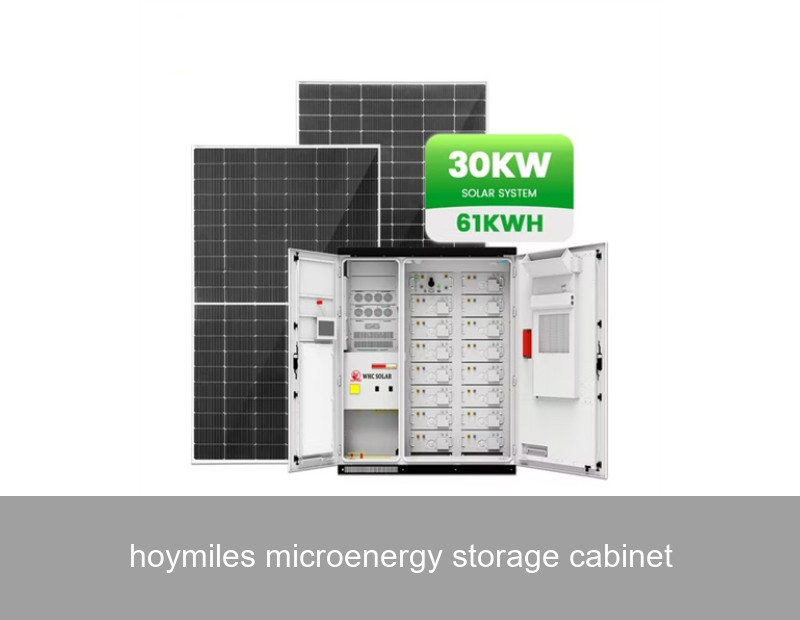
Imagine a power outage. The lights flicker and die. In a traditional home, silence falls, broken only by the frustration of disrupted lives. Now, imagine a different scenario: the lights stay on, the Wi-Fi hums, and the refrigerator keeps your food safe. This isn't magic; it's the reality enabled by a Hoymiles microenergy storage cabinet. For homeowners and small business owners across Europe and the US, this compact, intelligent system is becoming the cornerstone of a new, resilient energy paradigm. It's not just a battery in a box; it's a sophisticated energy manager that sits quietly in your garage or utility room, working tirelessly to maximize your solar investment and shield you from grid instability. But what exactly is it, and how does it transform your relationship with electricity? Let's explore.
The Grid Challenge: Why Micro-Storage is No Longer Optional
The energy landscape is shifting beneath our feet. We're witnessing two powerful, concurrent trends: the meteoric rise of rooftop solar and the increasing strain on aging electrical grids. The U.S. Energy Information Administration (EIA) notes that the frequency and duration of power outages are a growing concern, with extreme weather events being a major driver. Similarly, in Europe, the push for decarbonization and the geopolitical energy crisis have made security of supply a top priority.
This creates a paradox. You generate clean solar power during the day, but if the grid goes down at night, your high-tech solar system often shuts off too—a phenomenon known as "solar abandonment." Furthermore, net metering policies, which credit solar owners for excess power sent to the grid, are evolving and becoming less lucrative in many regions. The financial incentive to simply export everything is diminishing.
The Phenomenon: Homeowners with solar panels are seeking more control. They want to use their own clean energy, especially when it matters most.
The Data: Studies show that adding storage can increase a household's consumption of its own solar power from 30% to over 70%, dramatically reducing reliance on the grid.
The Logical Step: The solution is local storage. This is where purpose-built systems like the Hoymiles microenergy storage cabinet enter the picture, offering a targeted, scalable answer for individual energy producers.
Inside the Hoymiles Microenergy Storage Cabinet: More Than Just a Battery
So, what makes this "cabinet" special? It's an integrated, all-in-one energy storage system (ESS). Unlike piecing together components from different manufacturers, a microenergy cabinet is a pre-engineered solution where the battery, inverter, battery management system (BMS), and cooling/thermal management are housed in a single, sleek enclosure. The Hoymiles microenergy storage cabinet typically features:
- Modular Lithium-Ion Battery Banks: Scalable capacity, often starting from around 5 kWh, allowing you to expand as your needs grow.
- Hybrid Inverter: The brain of the operation. It manages DC power from solar panels, converts it to AC for your home, directs excess to charge the battery, and seamlessly switches to battery power during an outage.
- Advanced Battery Management System (BMS): This is the guardian of your battery's health, ensuring safety, longevity, and optimal performance through precise monitoring of voltage, temperature, and cell balance.
- Grid-Forming Capability: A critical feature for true backup power. It can create a stable "microgrid" in your home, allowing essential circuits to operate independently of the main grid.
- Smart Energy Management Software: User-friendly apps let you monitor production, consumption, and storage in real-time, and set preferences (e.g., "save more energy for the evening peak").

Image Source: Unsplash (Representative image of a modern home energy storage system)
This integrated design simplifies installation, improves reliability, and provides a unified user experience. It’s a plug-and-play approach to energy independence.
A Real-World Case: Powering Resilience on a German Farmstead
Let's move from theory to practice. Consider the case of the Schmidt family, who own a dairy farm in Bavaria, Germany. Their operation is energy-intensive, with refrigeration, milking machines, and general household load. While they had a sizable 20 kW solar array, evening energy costs were high and winter storms threatened outages that could spoil milk and disrupt operations.
The Solution: They installed a Hoymiles microenergy storage cabinet with an initial capacity of 15 kWh, integrated with their existing solar PV. The system was configured to prioritize self-consumption and provide whole-home backup for critical circuits.
The Data-Driven Outcome (12-month period):
| Metric | Before Installation | After Installation |
|---|---|---|
| Self-Consumption of Solar | 35% | 82% |
| Grid Electricity Purchased | 6,200 kWh | 1,150 kWh |
| Number of Grid Outages Mitigated | N/A | 4 (totaling 11 hours) |
| Estimated Annual Savings | Base | €1,850 |
The system paid for itself in under seven years, not even factoring in the avoided losses from potential spoilage. More importantly, it provided peace of mind. As Herr Schmidt noted, "When the lights in the village go out, our farmstead stays bright and operational. The storage cabinet is our silent partner in resilience."
Beyond the Battery: The Highjoule Advantage in System Integration
While the Hoymiles microenergy storage cabinet is a superb standalone solution, achieving ultimate energy efficiency and control often requires a broader, system-level approach. This is where Highjoule's expertise as a global advanced energy storage system provider becomes invaluable. Think of the micro-cabinet as a high-performance engine; Highjoule provides the entire intelligent drivetrain and navigation system.
Founded in 2005, Highjoule specializes in integrating diverse energy assets into a cohesive, smart network. For a homeowner or small business with a Hoymiles microenergy storage cabinet, Highjoule's platform can elevate its functionality:
- Advanced Energy Management Systems (EMS): Our software can orchestrate not just your storage cabinet, but also other loads like EV chargers or heat pumps. It can make predictive decisions based on weather forecasts and electricity tariff schedules, automatically charging your battery when grid power is cheapest and greenest.
- Scalability for Growing Needs: Starting with a micro-cabinet is wise. Highjoule's modular commercial and industrial (C&I) storage solutions mean your system can grow seamlessly if you expand your property, add an EV fleet, or start a small business.
- Professional Integration & Support: Our network of certified partners ensures your Hoymiles storage is perfectly integrated with your solar PV and home electrical system, with ongoing monitoring and support for decades of optimal performance.

Image Source: Unsplash (Representative image of energy system monitoring)
In essence, Highjoule doesn't just provide products; we provide intelligent, efficient, and sustainable power solutions. We see the microenergy storage cabinet as a vital node in the future decentralized grid, and our technology ensures it performs at its peak as part of your personal energy ecosystem.
Is a Microenergy Storage Cabinet Right for Your Energy Future?
The journey toward energy independence is personal. It depends on your location, energy costs, solar production, and your appetite for resilience. If you're frustrated by volatile electricity bills, concerned about grid reliability, or simply want to maximize the return on your solar investment, a Hoymiles microenergy storage cabinet is a compelling next step.
Ask yourself these questions:
- Do I have or plan to install rooftop solar panels?
- Does my utility have time-of-use rates or less favorable net metering?
- Are short power outages a common or concerning issue in my area?
- Do I want a cleaner, more self-sufficient energy footprint?
If you answered "yes" to any of these, the conversation is worth having. What specific energy goal—financial savings, uninterrupted power, or environmental impact—would drive you to explore this technology for your home or business?
 Inquiry
 Online Chat