


Batteries for Energy Storage Cabinet System: The Intelligent Heart of Modern Power Resilience
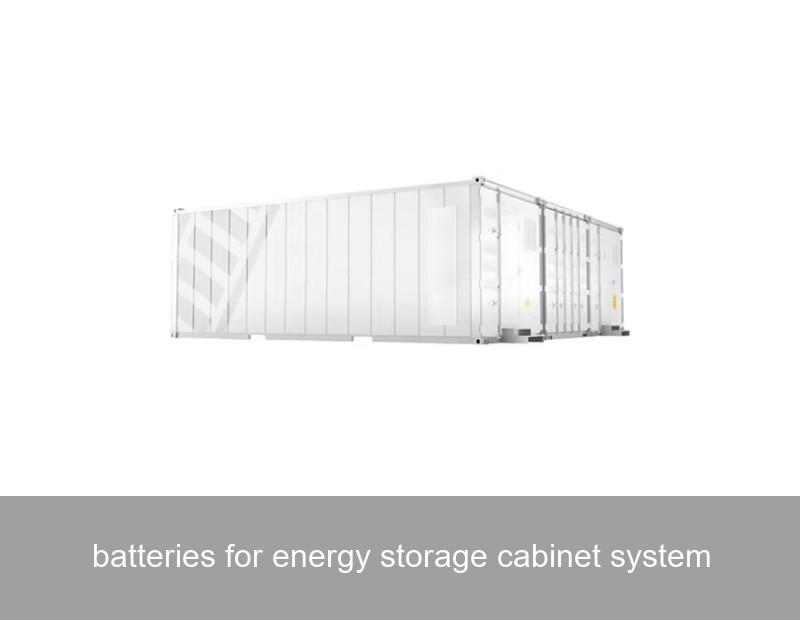
Have you ever wondered what keeps a supermarket's lights on during a grid outage, or ensures a factory's production line runs smoothly despite fluctuating energy prices? The answer increasingly lies in a sophisticated, box-like unit: the energy storage cabinet system. And at the very core of these systems are the batteries for energy storage cabinet system – the critical components determining performance, safety, and return on investment. As a product technology expert at Highjoule, I've seen how the right battery technology transforms these cabinets from simple backup units into intelligent assets for energy management and sustainability. Let's delve into why these batteries are so pivotal and how choosing the right partner makes all the difference.
Table of Contents
- The Phenomenon: From Backup to Strategic Asset
- Decoding Battery Technologies for Cabinet Systems
- Key Considerations: Beyond Basic Specifications
- Case Study: A German Manufacturing Plant's Success
- The Highjoule Approach: Integrated Intelligence
- Future Trends and Your Next Step
The Phenomenon: From Backup to Strategic Asset
Gone are the days when energy storage was just about emergency power. Today, commercial and industrial entities face a triple challenge: achieving energy independence, managing soaring electricity costs, and meeting stringent carbon reduction goals. This is where modern energy storage cabinet systems shine. They are no longer passive devices but active participants in the energy ecosystem.
Consider this data: The U.S. energy storage market saw a record 4,235 megawatts (MW) installed in 2023, with the front-of-the-meter and commercial & industrial segments leading the growth (source: Wood Mackenzie). In Europe, driven by the energy crisis and REPowerEU plan, the market is projected to grow exponentially. This surge isn't just about capacity; it's about intelligence. Systems are now expected to perform peak shaving, arbitrage (buying cheap power, selling or using it when prices are high), and integrate seamlessly with on-site solar.

The batteries inside the cabinet are the enabling factor for these advanced functions. Their cycle life, depth of discharge, charge/discharge rates, and degradation profile directly dictate the financial and operational benefits of the entire system.
Decoding Battery Technologies for Cabinet Systems
Not all batteries are created equal. The choice of chemistry fundamentally shapes the cabinet system's capabilities. Here’s a breakdown of the leading contenders:
| Battery Chemistry | Key Advantages | Ideal Use Case in Cabinet Systems | Considerations |
|---|---|---|---|
| Lithium Iron Phosphate (LFP) | High safety, long cycle life (6,000+ cycles), stable chemistry, cobalt-free. | Daily cycling for peak shaving, solar self-consumption, high-safety priority installations. | Slightly lower energy density than NMC, but gap is narrowing. |
| Lithium Nickel Manganese Cobalt (NMC) | High energy density, good performance across temperatures. | Applications where space is extremely limited; less frequent cycling. | Thermal runaway risk requires more sophisticated Battery Management Systems (BMS). |
| Advanced Lead-Acid | Lower upfront cost, well-understood technology, high recyclability. | Infrequent backup power, budget-constrained projects with low cycling needs. | Shorter cycle life, lower depth of discharge, requires regular maintenance. |
At Highjoule, our H-Cube commercial energy storage cabinet is predominantly built with LFP battery cells. Why? For the demanding daily cycling required in business and industrial settings, safety and longevity are non-negotiable. Our philosophy is that the best batteries for energy storage cabinet systems are those you can rely on for over a decade with minimal degradation, ensuring a predictable and positive total cost of ownership.
Key Considerations: Beyond Basic Chemistry
Choosing the right battery involves looking at the bigger picture:
- The Battery Management System (BMS): This is the brain of the battery pack. A superior BMS, like Highjoule's Adaptive BMS, provides cell-level monitoring, precise state-of-charge calculation, thermal management, and safety interlocks. It's what maximizes both performance and safety.
- Thermal Management: Batteries perform best within a specific temperature range. Cabinet systems must have active cooling/heating (liquid or air) to maintain this, especially in harsh climates.
- System Integration & Software: Can the cabinet's inverter and control software "talk" optimally to the batteries? Highjoule designs our cabinets as fully integrated systems, not a assembly of parts, ensuring our batteries are perfectly managed by our proprietary energy management system (EMS) for optimal grid services and self-consumption.
Case Study: A German Manufacturing Plant's Strategic Investment
Let's look at a real-world application. A mid-sized automotive parts manufacturer in Bavaria, Germany, faced volatile energy prices and pressure to reduce its carbon footprint. Their goal: increase on-site solar consumption from 35% to over 70% and cut grid peak demand charges.
The Solution: They installed a 500 kWh/1000 kWh Highjoule H-Cube storage cabinet system, integrated with their existing 800 kWp rooftop solar array. The system uses our high-cycle LFP batteries for energy storage.
The Data-Driven Outcome (after 12 months):
- Solar Self-Consumption Rate: Increased to 78%.
- Peak Demand Reduction: Achieved a 40% cut in monthly peak demand charges.
- ROI Timeline: Projected payback period of 6.2 years, based on energy cost savings and avoided peak charges.
- Performance: The battery system consistently delivered over 99% efficiency and showed no measurable capacity degradation in the first year, thanks to the controlled cycling and thermal management.
This case exemplifies how the right cabinet system, with robust batteries at its heart, turns energy from a cost center into a manageable, strategic asset.
The Highjoule Approach: Integrated Intelligence
Since 2005, Highjoule's mission has been to provide more than just hardware. We provide intelligent, sustainable power solutions. For our energy storage cabinets, this means:
- Cell-to-Cabinet Design: We select and qualify LFP cells from tier-one suppliers, then design the battery modules, BMS, power conversion, and safety systems in-house. This vertical integration guarantees compatibility, reliability, and easier serviceability.
- Adaptive EMS Software: Our cloud-connected platform allows operators to set strategies (e.g., "minimize cost," "maximize renewables") and lets the system autonomously optimize battery usage based on weather forecasts, tariff schedules, and load patterns.
- Scalability for Microgrids: Our cabinet systems are modular by design. For larger applications like community microgrids or industrial parks, multiple H-Cube units can be paralleled to form a multi-megawatt-hour storage plant, all controlled by a central Highjoule Microgrid Controller.

In essence, when you choose a Highjoule system, you're not just buying batteries for an energy storage cabinet; you're investing in a comprehensive, future-proof energy resilience platform.
Future Trends and Your Next Step
The landscape is evolving rapidly. We're closely monitoring advancements in solid-state batteries and sodium-ion chemistry, which promise even greater safety and potential cost reductions for future cabinet systems. Furthermore, the role of storage is expanding into providing grid-forming services and virtual power plant (VPP) aggregation, areas where Highjoule's intelligent systems are already primed to participate.
The journey to energy resilience and sustainability starts with a critical question: Is your organization simply reacting to energy challenges, or are you ready to proactively manage your power with an intelligent storage system? The quality, integration, and intelligence of the batteries within your energy storage cabinet will be the decisive factor in your success.
What specific energy challenge – be it demand charges, renewable integration, or backup power requirements – is most pressing for your operation in the current energy climate?
 Inquiry
 Online Chat