


What is a 2.5 kVA 12V Energy Storage Cabinet and Why Is It a Game Changer for Modern Power Needs?
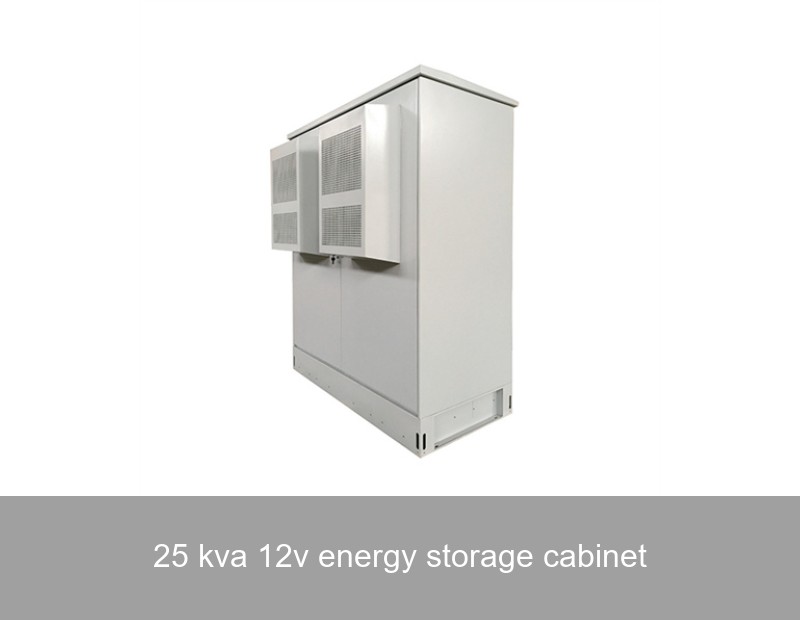
Have you ever experienced that frustrating moment when a power flicker disrupts your work, or worried about the electricity bill after running heavy equipment? You're not alone. Across homes, small businesses, and critical infrastructure, the demand for reliable, clean, and cost-effective power is surging. This is where compact, intelligent energy storage systems come into play. A 2.5 kVA 12V energy storage cabinet represents a pivotal solution in this space—a self-contained unit that stores electricity from the grid or renewable sources like solar panels, providing backup power and energy management in a surprisingly scalable package. But what makes this specific configuration so versatile, and how can it transform your energy independence? Let's delve into the technology that's quietly powering a more resilient future.
Table of Contents
- What Exactly is a 2.5 kVA 12V Energy Storage Cabinet?
- Why the 2.5 kVA Rating Matters: Bridging the Power Gap
- The Technological Core: More Than Just a Battery Box
- A Real-World Case Study: The Small Business Resilience Story
- The Highjoule Approach: Engineering Intelligence into Every Cabinet
- Future Trends and Your Next Step
What Exactly is a 2.5 kVA 12V Energy Storage Cabinet?
Let's break down the terminology. 2.5 kVA (kilo Volt-Ampere) refers to the system's apparent power capacity. In simpler terms, it tells you the total load it can support—roughly 2,500 watts. This is the sweet spot for powering essential circuits, office equipment, refrigeration, lighting, or communication systems without oversizing. 12V denotes the nominal battery voltage. While it may seem low, this voltage is a cornerstone of reliability and safety, often utilizing robust deep-cycle or advanced lithium-ion battery banks wired in series and parallel. The term "cabinet" is key: it signifies an all-in-one, enclosure-based system. Unlike a loose collection of components, a cabinet integrates the batteries, battery management system (BMS), inverter/charger, cooling, and safety mechanisms into a single, tidy, and install-ready unit.
At Highjoule, we view these cabinets not as mere backup devices but as intelligent energy nodes. Our EcoCube 2.5i series, for instance, embodies this principle. It's engineered for seamless integration, whether paired with a new solar array or retrofitted to an existing grid connection, providing both uninterrupted power supply (UPS) and sophisticated energy arbitrage capabilities.
Why the 2.5 kVA Rating Matters: Bridging the Power Gap
Why is 2.5 kVA such a common and critical benchmark? The data reveals a clear need. According to the U.S. Department of Energy, power interruptions cost the U.S. economy billions annually, with small businesses being particularly vulnerable. A 2.5 kVA system directly addresses this by covering a vital spectrum of loads:
- Residential Essentials: Refrigerator, modem/router, lights, security system, and medical devices.
- Small Business & Retail: Point-of-sale systems, computers, lighting, and signage.
- Telecom & Critical Infrastructure: Remote radio units, network switches, and monitoring stations.
It's powerful enough to be genuinely useful, yet compact and cost-effective enough for widespread adoption. It's the workhorse capacity that sits between smaller, portable power stations and larger, whole-house industrial systems.
The Technological Core: More Than Just a Battery Box
The true value of a modern energy storage cabinet lies beneath the surface. Let's explore the critical components that differentiate a basic battery box from a smart energy asset.
| Component | Function | Highjoule's Implementation |
|---|---|---|
| Battery Bank | The energy reservoir. Chemistry (e.g., LiFePO4) dictates lifespan, depth of discharge, and safety. | We use premium LiFePO4 cells, known for thermal stability and 6000+ cycle life, ensuring a decade of reliable service. |
| Battery Management System (BMS) | The "brain" that monitors cell voltage, temperature, and state of charge, preventing damage. | Our proprietary Smart BMS includes cell-level balancing and predictive health analytics, accessible via a cloud dashboard. |
| Hybrid Inverter/Charger | Converts DC battery power to AC for appliances and manages charging from AC or solar DC inputs. | The EcoCube 2.5i features a true hybrid inverter with 98% peak efficiency, enabling multiple operational modes (backup, time-of-use optimization). |
| Thermal Management | Maintains optimal operating temperature for safety and longevity. | An intelligent, low-noise forced-air system that adapts fan speed based on load and ambient conditions. |
A Real-World Case Study: The Small Business Resilience Story
Theory is one thing; tangible results are another. Consider the case of a family-owned artisan bakery in Bavaria, Germany. Their challenges were twofold: frequent, brief grid fluctuations were damaging sensitive proofer and oven controllers, and rising energy costs were squeezing margins.
The Solution: In 2023, they installed a Highjoule EcoCube 2.5i cabinet paired with a modest 6 kW rooftop solar array. The system was configured for priority backup of the control circuits and refrigeration, while also storing excess solar energy produced during the day.
- Uptime: Eliminated 100% of production downtime due to micro-outages over 12 months.
- Cost Savings: By using stored solar energy to power evening operations (lighting, cleaning), they reduced grid consumption during peak tariff hours by approximately 30%.
- ROI: Projected payback period of under 5 years, factoring in equipment protection and energy savings.
"It's not just a battery; it's our silent partner in quality and consistency," the owner noted. This example underscores how a correctly sized 2.5 kVA 12V energy storage cabinet delivers both resilience and economic return.

Image Source: Unsplash (Representative image of a clean energy installation)
The Highjoule Approach: Engineering Intelligence into Every Cabinet
With nearly two decades of experience since 2005, Highjoule's philosophy extends beyond hardware. We provide intelligent, efficient, and sustainable power solutions. Our cabinets are designed with the installer and end-user in mind.
- Grid-Forming Capability: Advanced models can create a stable microgrid, essential for off-grid or weak-grid applications.
- Software Integration: The Highjoule Energy OS platform allows for remote monitoring, firmware updates, and customized control strategies based on weather forecasts or utility signals.
- Sustainability by Design: From cell sourcing to end-of-life recycling programs, we embed circular economy principles into our product lifecycle. For more on sustainable battery technology, the International Energy Agency's reports provide excellent context.
Our global support network, spanning Europe and North America, ensures that whether it's a commercial, industrial, residential, or microgrid application, you have a partner for the long term.
Future Trends and Your Next Step
The landscape is evolving rapidly. The integration of vehicle-to-grid (V2G) technology and AI-driven energy prediction will make storage cabinets like the 2.5 kVA unit even more valuable as interactive grid assets. The question is no longer if you need energy storage, but how to select the right system to meet your specific reliability and financial goals.
What specific energy challenge—be it unpredictable outages, soaring peak demand charges, or a desire to maximize your solar investment—is most critical for you to solve in the next 18 months?
 Inquiry
 Online Chat