


Hoymiles Microsolar Battery: The Future of Decentralized Energy Storage?
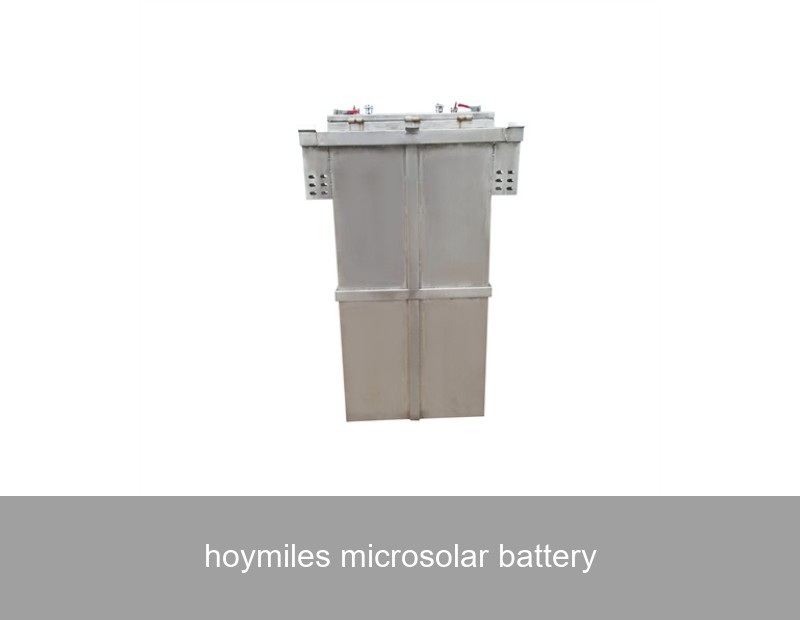
Have you ever looked at your solar panels on a bright, sunny day and wondered, "Where is all this extra power going?" If you're like many solar adopters in Europe and the US, you're generating clean energy that often flows back to the grid for minimal compensation, leaving you reliant on that same grid at night. This is the solar paradox. The rise of Hoymiles microinverters has revolutionized solar generation at the panel level, maximizing harvest from each module. But the true game-changer lies in pairing this with intelligent storage. This brings us to a key question: Is the Hoymiles microsolar battery the missing piece for a truly resilient and efficient home energy system? Let's explore the evolution from simple solar generation to smart, self-sufficient energy management, and where advanced solutions from providers like Highjoule fit into this picture.
Table of Contents
The Microsolar Revolution: Beyond Simple Generation
First, let's clarify the "microsolar" concept. Traditional solar systems use a single, central inverter. If one panel is shaded or underperforming, the entire system's output drops—a significant inefficiency. Hoymiles microinverters, attached to individual solar panels, solve this. Each module operates independently, ensuring optimal harvest. It's a brilliant solution for generation. But generation is only half the story. The energy you produce is instantaneous; use it immediately, sell it back, or lose it. This real-time nature of solar power is the core challenge that a Hoymiles microsolar battery system aims to address.

Image source: Unsplash (Representative image of a modern residential solar installation).
The Storage Imperative: Data Doesn't Lie
The phenomenon is clear: a massive surge in daytime solar production followed by an evening energy cliff when demand peaks. Let's look at the data. In California, the now-famous "duck curve" illustrates the steep net demand ramp as solar fades in the evening. In Germany, energy think tanks note that a typical household with solar but no battery only consumes about 30% of its self-generated electricity directly. The remaining 70% is fed into the grid.
This creates a dual problem: homeowners buy expensive grid power at night, and utilities manage massive, destabilizing swings in supply. The logical step? Store the midday surplus for personal use during peak hours. This is where battery storage transitions from a luxury to a core component of a rational energy system. It's not just about having a battery; it's about having a smart, resilient, and integrated battery storage system that communicates seamlessly with your microsolar setup.
Why Integration Matters More Than Just the Brand
While a dedicated Hoymiles microsolar battery might promise seamless compatibility, it's crucial to think in terms of system performance. The key metrics are:
- Round-Trip Efficiency: How much energy you get back vs. what you put in. Top systems exceed 95%.
- Depth of Discharge (DoD): The usable battery capacity. Quality lithium-phosphate batteries allow 90-100% DoD.
- Cycling Capability: The number of charge/discharge cycles over its lifetime. A good benchmark is 6,000+ cycles to 80% capacity.
- Scalability & Power Output: Can you easily expand storage capacity? Can the battery handle starting high-power appliances like heat pumps?
This is where partnering with an experienced system integrator becomes invaluable. Companies like Highjoule specialize in designing systems that harmonize best-in-class components—whether microinverters, solar panels, or batteries—into a cohesive, high-performance unit. Our Highjoule Home Energy Vault, for instance, is engineered to integrate with various DC and AC-coupled sources, providing the intelligence to prioritize self-consumption, manage peak loads, and ensure backup power, regardless of the primary solar inverter brand.
Beyond Basic Batteries: The Highjoule Integration Philosophy
At Highjoule, we view the battery not as a standalone product but as the heart of a smart energy ecosystem. Since 2005, we've evolved from a battery technology pioneer to a global provider of complete, intelligent storage solutions. For residential and commercial clients, this means our systems are built with three core principles:
- Interoperability: Our energy management systems (EMS) are designed to communicate with a wide array of devices, including systems using Hoymiles microinverters. We focus on creating a stable, efficient link between generation and storage.
- Resilience: Our systems feature automatic transfer switches that provide seamless backup power during outages—a critical feature increasingly valued in both the US and European markets facing grid instability.
- Intelligence: Advanced software learns your consumption patterns, weather forecasts, and utility rate schedules (like time-of-use in California or dynamic tariffs in Europe) to autonomously optimize when to charge, discharge, or hold.

Image source: Unsplash (Representative image of a modern home battery installation).
A Real-World Case: Munich Household Cuts Grid Reliance by 80%
Let's move from theory to a tangible example. In 2023, a family in Munich, Germany, approached Highjoule's EU partner network with a common goal: maximize self-consumption from their existing 8 kWp solar array with Hoymiles microinverters and achieve near-complete energy independence.
The Challenge: Their system was exporting over 60% of its annual production. They wanted to cover their base load overnight and power essential systems during increasingly frequent grid fluctuations.
The Highjoule Solution: Our team designed a retrofit storage solution centered on a scalable 15 kWh Highjoule Home Energy Vault with integrated hybrid inverter. The system was AC-coupled to the existing Hoymiles microsolar setup, requiring no modification to the primary generation system.
The Data-Driven Outcome (First Year):
| Metric | Before Highjoule Battery | After Highjoule Battery | Change |
|---|---|---|---|
| Self-Consumption Rate | ~32% | ~92% | +187% |
| Grid Electricity Purchased | 3,200 kWh/year | ~620 kWh/year | -80% |
| Grid Feed-in | 6,100 kWh/year | ~900 kWh/year | -85% |
| Estimated Annual Savings* | €850 (from feed-in) | €1,540 (from avoided costs) | +€690 |
*Based on German 2023 electricity prices of €0.40/kWh and a feed-in tariff of €0.08/kWh. Savings include value of self-consumed energy plus reduced feed-in.
This case, documented in our partner portfolio, highlights that the synergy between efficient microsolar generation and a high-performance, intelligently managed battery system delivers transformative results. The family now enjoys predictable energy costs and peace of mind through reliable backup power.
Making the Right Choice for Your Energy Independence
So, is a Hoymiles microsolar battery the right path? The answer depends on your system goals. A brand-matched battery can offer plug-and-play simplicity. However, for those seeking ultimate flexibility, scalability, and proven performance in backup scenarios, considering an integrated solution from a specialized provider like Highjoule may offer significant long-term advantages.
Our commercial and industrial (C&I) solutions also apply this same philosophy on a larger scale, helping businesses across Europe and North America manage demand charges, participate in grid services, and secure their operations against power interruptions. The core technology principle remains: intelligent storage is the catalyst that turns variable renewable generation into a dependable asset.
Key Questions to Ask Your Installer
- Can this battery system provide full-home backup, or only select circuits?
- What is the expected degradation over 10 years? What is the warranty on throughput and capacity?
- How does the system's software integrate weather data and utility rates to make decisions?
- Can the system be easily expanded if my energy needs grow (e.g., with an EV)?
- Do you have case studies or performance data from similar installations in my region?

Image source: Unsplash (Representative image of monitoring a home energy system).
The energy landscape is shifting from centralized supply to decentralized, consumer-centric networks. Your home or business can be an active node in this new grid. With the right combination of precise generation from technologies like Hoymiles microinverters and robust, intelligent storage from partners like Highjoule, you're not just saving money—you're investing in resilience and true energy sovereignty.
What specific energy goal—total independence, backup security, or financial return—is driving your consideration of a solar battery system today?
 Inquiry
 Online Chat