


Unlock Energy Freedom: Your Guide to the Ultimate Portable Solar Panel Kit with Battery and Inverter
you're miles from the nearest power outlet, yet your laptop is charged, your lights are on, and your small fridge is humming quietly. This isn't magic; it's the modern marvel of a portable solar panel kit with battery and inverter. For everyone from weekend campers and digital nomads to emergency preparedness families, these all-in-one systems are redefining what it means to have reliable, clean power on the go. In this guide, we'll demystify these kits, explore why they've become essential, and show you how to choose a system that truly empowers your adventures and safety.
The Rise of Portable Power: Why Are These Kits So Popular Now?
The demand for portable, off-grid energy isn't just a trend; it's a response to a changing world. Several key factors are driving this shift. First, extreme weather events linked to climate change have made backup power a critical concern for households. The U.S. Energy Information Administration notes an increase in power outage frequency and duration, pushing consumers toward resilient solutions. Second, the remote work revolution has untethered people from offices, creating a new class of "work-from-anywhere" professionals who need dependable power in nature. Finally, advancements in solar panel efficiency and lithium battery technology have made these kits more powerful, lighter, and affordable than ever before.

Image Source: Unsplash - Portable solar power enables work and leisure anywhere.
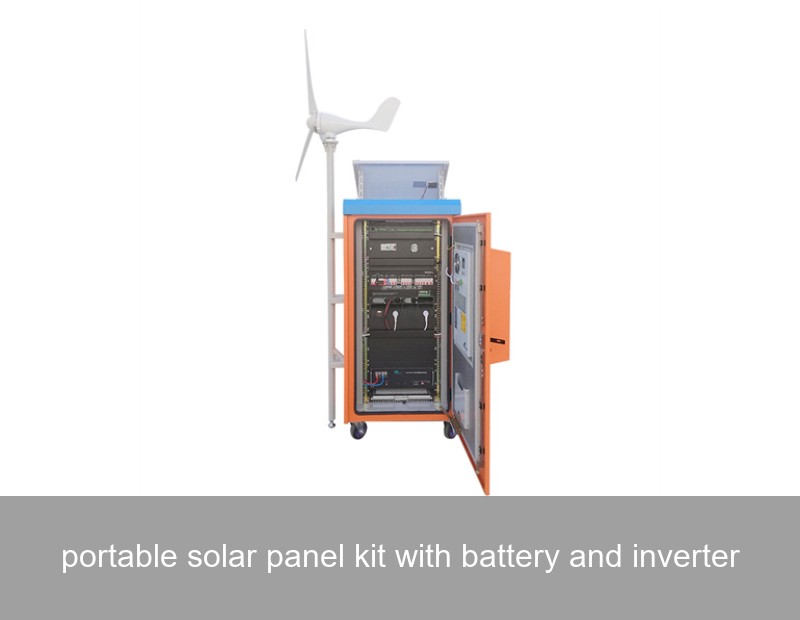
So, what exactly are you getting? A complete portable solar panel kit with battery and inverter typically integrates three core components: the panels that capture sunlight, a battery storage unit that holds the energy, and an inverter that converts that stored energy into usable AC power for your standard appliances. It's a personal microgrid in a box.
Breaking Down the Kit: Key Components and What to Look For
Not all kits are created equal. Understanding the specs will ensure you invest in a system that matches your energy appetite.
1. The Solar Panels: Your Power Harvesters
Portable panels are usually foldable or rollable, using monocrystalline silicon cells for high efficiency in limited space. Key metrics are Wattage (W) and Efficiency (%). A 200W panel will charge your battery faster than a 100W panel, especially in less-than-ideal light. Look for robust, weather-resistant designs with kickstands for optimal sun angle adjustment.
2. The Battery: Your Energy Bank
This is the heart of the system. Lithium-ion (LiFePO4) batteries are the gold standard for portability due to their high energy density, long cycle life (often 3000+ cycles), and safety. Capacity is measured in Watt-hours (Wh). Think of it as your fuel tank: a 500Wh battery can run a 50W laptop for about 10 hours. Ensure the battery has a reliable Battery Management System (BMS) for protection.
3. The Inverter: The Power Translator
The inverter transforms the battery's DC power into the 120V/230V AC power your devices need. The continuous power rating (in Watts) is crucial. A 300W inverter can run a small TV or blender, but for a microwave or electric kettle, you'll likely need 1000W or more. Pure sine wave inverters are recommended as they provide clean, stable power safe for sensitive electronics like medical devices or premium audio gear.
| Device | Approx. Power (Watts) | Estimated Runtime* |
|---|---|---|
| LED Camp Light | 10W | 100 hours |
| Laptop | 60W | ~16 hours |
| Mini Fridge | 50W (cycling) | ~24 hours |
| Smartphone Charger | 10W | 100 charges |
| Small TV (32") | 40W | 25 hours |
| *Runtime varies based on inverter efficiency and actual device draw. | ||
Powering Adventure: A Real-World Case Study from the US
Let's move from theory to practice. Consider the experience of "Vanlife" creators, Mark and Sarah, who traveled for 6 months across the Pacific Northwest in their converted campervan. Their primary goal was to work remotely without relying on crowded campground hookups.
The Challenge: Powering two laptops, camera gear, lighting, a 12V fridge, and a small induction cooktop for 3-4 days without driving to recharge.
The Solution: They installed a robust portable solar panel kit with battery and inverter, comprising:
- 400W of foldable solar panels (4x100W).
- A 2kWh (2000Wh) LiFePO4 battery bank.
- A 2000W pure sine wave inverter.
- A smart charge controller for system management.
The Data-Driven Outcome: On a typical summer day with 5 peak sun hours, their system harvested approximately 400W x 5h = 2000Wh of energy. This fully replenished their daily consumption, which averaged 1.6kWh. Over the 6-month journey, they estimated a reduction of over 80% in generator use, saving hundreds of dollars in fuel and eliminating noise and fumes. Their system, as documented in their travel logs, provided uninterrupted power even during a 3-day rainy spell, thanks to the large battery buffer.

Image Source: Unsplash - Modern portable power stations offer multiple AC, DC, and USB outputs.
Highjoule's Approach to Intelligent Portable Power
At Highjoule, with nearly two decades of expertise in grid-scale and residential energy storage, we understand that reliability isn't just about hardware—it's about intelligent integration. While our core focus is on larger commercial and residential storage systems, the engineering principles of safety, efficiency, and longevity directly inform our perspective on portable power.
We see the ideal portable solar panel kit with battery and inverter as more than a collection of parts; it's a seamless ecosystem. Key features that should be non-negotiable, drawn from our professional experience, include:
- Smart System Communication: Components that "talk" to each other optimize charging and prevent damage, much like our Highjoule BESS (Battery Energy Storage System) controllers.
- Modular Scalability: The ability to easily add extra battery units or panels, offering the same flexibility we design into our modular home storage solutions.
- Robust Safety Protocols: Multi-layered protection (temperature control, short-circuit, over-voltage) is paramount, a standard in every Highjoule system from the largest microgrid to a portable power station.
For users seeking to step up from a basic kit, Highjoule's expertise in system design can guide the integration of portable solar into a whole-home resilience plan, where a portable kit acts as a critical, mobile backup component.
How to Choose the Right Portable Solar Kit for Your Needs
Ready to find your perfect match? Follow this simple decision ladder:
- List Your Essential Devices: Write down every device you need to power and their wattage (found on the label).
- Calculate Your Daily Watt-hour Need: (Device Wattage x Hours of Use). Sum them up. This is your daily energy budget.
- Select Battery Capacity: Choose a battery with a Wh rating at least 20-30% higher than your daily need to account for inefficiencies and cloudy days.
- Size Your Solar Array: Match your solar panel total wattage to recharge your battery in your typical available sun hours. A good rule of thumb: Panel Wattage = (Daily Wh need / Peak Sun Hours) x 1.5.
- Choose Your Inverter: Ensure its continuous wattage rating exceeds the highest single device wattage you'll run, and that it's a pure sine wave type.
The International Renewable Energy Agency (IRENA) highlights the dramatic cost decline and innovation in solar technology, making now an excellent time to invest. Remember, the best kit is the one you can rely on when it matters most.
Your Next Step Towards Energy Independence
The freedom to generate and use your own power, anywhere, is profoundly empowering. Whether you're preparing for an emergency, planning a cross-country road trip, or simply wanting to reduce your reliance on the grid during peak times, a well-chosen portable solar system is a powerful tool. What's the first adventure or peace-of-mind scenario you envision powering with your own portable solar kit?
 Inquiry
 Online Chat