


Navigating Hybrid Inverter Price in Kenya for a Smarter Energy Future
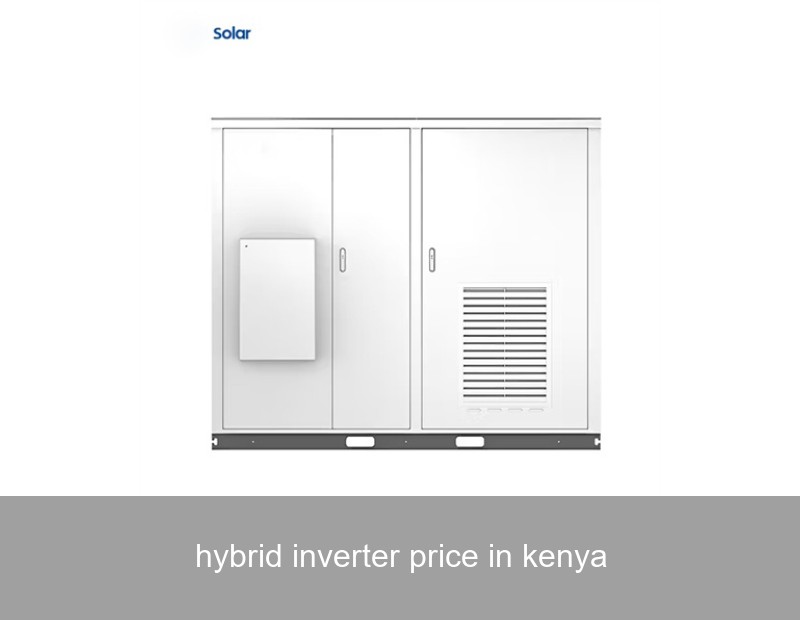
If you're exploring solar power in Kenya, you've likely encountered a crucial component: the hybrid inverter. This intelligent device is the brain of a modern solar system, managing energy from your panels, your battery bank, and the national grid. But when you start searching for "hybrid inverter price in Kenya," the figures can be confusingly wide-ranging. Why does one unit cost KES 80,000 and another KES 300,000? Understanding this isn't just about budgeting; it's about investing in reliable power for your home or business in Nairobi, Mombasa, or anywhere across the beautiful Kenyan landscape. Let's demystify the costs and focus on the value of a resilient energy system.
Understanding Hybrid Inverters: The Heart of Modern Solar Systems
Unlike a standard solar inverter that only converts DC from panels to AC for your home, a hybrid inverter does that and manages battery storage. It's a multi-talented performer. During the day, it directs solar energy to power your appliances and charge your batteries. At night or during a grid outage (a familiar challenge in many regions), it seamlessly switches to battery power. With increasing grid instability and the rising cost of diesel for generators, the demand for these all-in-one units in Kenya has surged. A hybrid system isn't a luxury anymore; for many, it's a necessity for productivity, security, and comfort.

Credit: Unsplash / Photo by American Public Power Association
Decoding Hybrid Inverter Price in Kenya: Key Factors at Play
The price tag on a hybrid inverter is a sum of its parts, capabilities, and pedigree. Here’s what you're really paying for:
- Power Rating (kW): This is the biggest cost driver. A 3kW inverter for a small home will cost significantly less than a 10kW unit for a large villa or a small business. You need to calculate your essential load.
- Battery Voltage Compatibility: Inverters are designed for specific battery bank voltages (e.g., 24V, 48V, or higher). Higher voltage systems for larger installations are more complex and costly.
- Waveform: Pure Sine Wave inverters are more expensive than Modified Sine Wave but are essential for safely running sensitive electronics like laptops, medical equipment, and modern appliances.
- Brand and Quality: Established global brands with proven reliability in harsh conditions often command a premium over generic, unbranded units. This is directly linked to durability and after-sales support.
- Additional Features: Built-in MPPT solar charge controllers, grid-tie functionality, advanced monitoring via Wi-Fi/apps, and generator start-stop functions all add to the cost but also to convenience and efficiency.
- Import Duties and Logistics: As most inverters are imported, shipping costs, customs duties, and local distributor margins influence the final retail hybrid inverter price in Kenya.
| Power Rating | Typical Application | Price Range (KES) | Key Considerations |
|---|---|---|---|
| 3kW - 5kW | Small home, basic loads & lighting | 80,000 - 180,000 | Essential features, reliable brand for frequent outages |
| 5kW - 8kW | Medium home, includes fridge, TV, water pump | 180,000 - 300,000 | Pure sine wave, app monitoring, good surge capacity |
| 10kW+ | Large home, office, or small business | 300,000+ | Three-phase options, high efficiency, professional installation key |
A Kenyan Case Study: From Power Anxiety to Energy Independence
Let's look at a real-world example. A poultry farm in Kiambu County faced crippling losses due to inconsistent power, which threatened ventilation and lighting for their stock. Running diesel generators was expensive and noisy. In 2023, they installed a 15kW hybrid solar system with a high-quality 48V hybrid inverter and a 20kWh lithium-ion battery bank.
- Problem: Average of 8 hours of grid outages per week, leading to high diesel costs and operational risk.
- Solution: A robust hybrid system designed for 24/7 critical load support.
- Result: Grid consumption reduced by over 90%. The system paid for itself in under 4 years through diesel savings and prevented losses. The farmer now has total control, monitoring the system's performance in real-time via a smartphone app. This case, echoed by many in Kenya's agricultural and SME sectors, shows that the right inverter is an investment, not just an expense. You can read more about Kenya's renewable energy drive from authoritative sources like the International Energy Agency (IEA).
Looking Beyond the Price Tag: Quality and Long-Term Value
The cheapest hybrid inverter price in Kenya can be the most expensive mistake. A low-quality unit may fail under the stress of frequent load-shedding or Kenya's voltage fluctuations, leaving you with no power and a dead battery bank. Key indicators of quality include:
- Warranty: A reputable brand will offer a 5-year warranty, not 1 year.
- Efficiency: Look for inverter efficiency above 97%. Every percentage point lost is energy and money wasted.
- Local Support: Does the supplier have trained technicians in Kenya? Can they provide firmware updates and honor warranties locally?
- Safety Certifications: Ensure it has international certifications (e.g., IEC, UL) for safety and performance.
Highjoule's Smart Solutions for the Kenyan Market
At Highjoule, with nearly two decades of experience powering homes and businesses globally, we understand that markets like Kenya need robust, intelligent, and service-backed solutions. Our H-Energy Hub Series of hybrid inverters is engineered for resilience. We've designed them to handle the specific challenges of regions with unstable grids, from voltage spikes to high ambient temperatures. For a homeowner in Nairobi or a dairy cooperative in Nakuru, our inverters offer:
- Unmatched Grid Intelligence: Advanced software manages grid, solar, and battery power with millisecond-level precision, protecting your appliances.
- Highjoule Cloud Monitoring: Our intuitive platform gives you full visibility and control of your energy usage from anywhere, helping you optimize every kilowatt-hour.
- Scalable Architecture: Start with a system that meets your current budget and scale up by adding more batteries or solar panels later without changing the core inverter.
- Local Partnership Network: We work with certified Kenyan installers and partners to ensure professional installation, training, and accessible after-sales service, making the total cost of ownership clear and predictable.

Credit: Unsplash / Photo by Andreas Gücklhorn
Making the Right Choice for Your Kenyan Home or Business
So, how do you move forward? First, partner with a reputable solar consultant or installer who will conduct a proper load audit, not just guess. They should discuss your daily energy usage, peak demands (like starting a water pump), and future plans. Second, insist on a system simulation that projects your energy autonomy and savings. Third, always ask for a breakdown of the hybrid inverter price in Kenya as part of a complete system quote—including batteries, panels, mounting, and installation. A holistic view is essential. For technical standards, referencing bodies like the Kenya Ministry of Energy and Petroleum can provide useful guidelines.
What specific energy challenge in your Kenyan home or business keeps you up at night, and how might a properly sized hybrid inverter system be the key to solving it?
 Inquiry
 Online Chat