


Which One is the Best Solar Panel? A Practical Guide for Homeowners
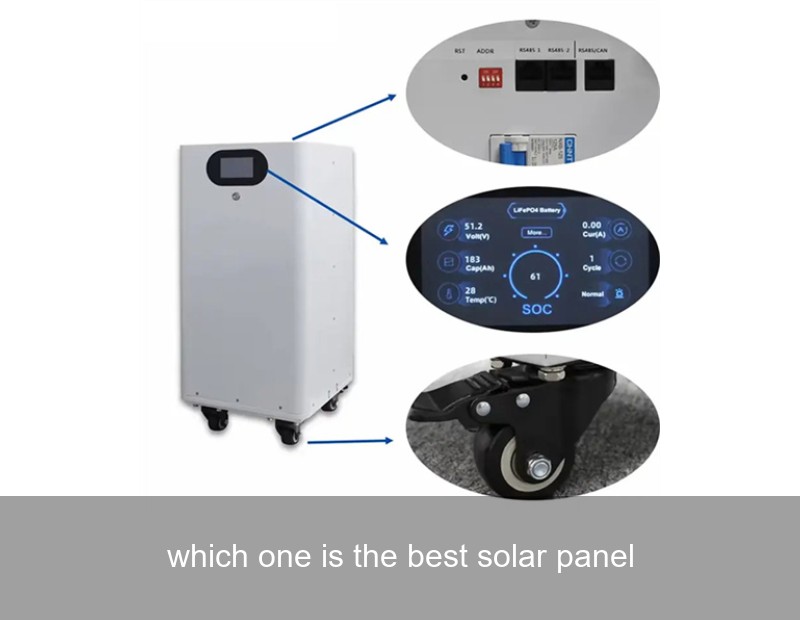
If you're researching solar power, you've likely asked yourself: "Which one is the best solar panel for my home?" It's a common question, but the answer isn't a simple brand name. The "best" panel depends on your roof, your energy goals, your location, and, crucially, how it integrates with a complete energy system. As energy experts, we at Highjoule understand that the panel is just one piece of the puzzle for achieving true energy independence and savings.
Table of Contents
- The Panel Puzzle: More Than Just a Name
- Key Metrics: Decoding the Solar Panel Spec Sheet
- The Three Main Contenders: Monocrystalline vs. Polycrystalline vs. Thin-Film
- Beyond the Panel: Why Your Inverter and Battery Matter More
- Real-World Case: Maximizing Limited Roof Space in Hamburg
- Making Your Choice: It's About the System, Not Just a Component
The Panel Puzzle: More Than Just a Name
Many homeowners start their solar journey focused solely on panel efficiency—the percentage of sunlight a panel converts to electricity. While important, fixating on this single number can be misleading. A panel with slightly lower efficiency but better durability, temperature coefficient, or warranty might be a far better long-term investment for your specific climate. The true measure of "best" is which panel, combined with the right complementary technology, delivers the lowest cost of energy over the system's 25+ year lifespan.
Key Metrics: Decoding the Solar Panel Spec Sheet
To compare apples to apples, you need to understand the key specifications:
- Efficiency: Typically ranges from 17% to 22+% for residential panels. Higher efficiency means more power per square foot, critical for small roofs.
- Power Tolerance: A +5% tolerance means the panel can produce 5% more than its rated power. Look for a positive or zero tolerance.
- Temperature Coefficient: This shows how much power output drops as the panel heats up. A coefficient closer to zero (e.g., -0.3%/°C) is better for hot climates.
- Warranty: Two parts: a product warranty (often 12-25 years) against defects, and a performance warranty (usually 25 years) guaranteeing the panel will still produce at least 80-92% of its original power at the end of the term.
| Metric | Why It Matters | What to Look For |
|---|---|---|
| Efficiency | Power output per square meter | Match to your available roof space |
| Temperature Coefficient | Performance in hot weather | Closer to 0% (e.g., -0.3%/°C) |
| Performance Warranty | Long-term energy yield guarantee | At least 25 years, with 85%+ retained output |
The Three Main Contenders: Monocrystalline vs. Polycrystalline vs. Thin-Film
Let's break down the primary technologies:
- Monocrystalline (Mono-Si): Made from single-crystal silicon. They are the most efficient (often 20%+), space-efficient, and perform better in low-light conditions. They are typically the premium option with a higher price point.
- Polycrystalline (Poly-Si): Made from melted silicon fragments. Slightly lower efficiency (15-17%), with a blueish hue. They are a cost-effective option where roof space is not a major constraint.
- Thin-Film: A lightweight, flexible technology. Lower efficiency (10-13%) and requires more space, but can perform better in high heat and shaded conditions. Often used for large commercial roofs or unique installations.
For most residential installations in Europe and the US, high-quality monocrystalline panels are the recommended choice due to their superior performance and space efficiency, which maximizes the value of your investment.
Beyond the Panel: Why Your Inverter and Battery Matter More
Here's the critical insight many miss: The best solar panel is hamstrung by a mediocre system. Your inverter is the brain that converts DC solar power to usable AC power. A cheap inverter can bottleneck production, especially on roofs with partial shading. More importantly, without a storage solution, excess solar energy you produce at midday is exported to the grid for minimal compensation, leaving you to buy expensive power in the evening.
This is where a holistic approach defines true energy leadership. At Highjoule, we don't just sell components; we design integrated systems. Our Highjoule HES (Home Energy System) pairs premium solar panels with our intelligent hybrid inverter and the Highjoule VoltaStack battery. The system's AI-driven energy management software makes real-time decisions: should solar power charge the battery, run your appliances, or export to the grid? This ensures you use every watt you produce, maximizing self-consumption and shielding you from peak utility rates.

Image Source: Unsplash. A modern energy-independent home requires more than just panels; it needs intelligent storage and management.
Real-World Case: Maximizing Limited Roof Space in Hamburg
Consider a real example from our European deployments. A family in Hamburg, Germany, had a south-facing roof with limited space. They wanted to cover their high electricity consumption, including a new heat pump.
- Challenge: Small roof area, high energy demand, cloudy northern climate.
- Solution: We installed high-efficiency monocrystalline panels (425W each) to maximize the kilowatt-hour yield per square meter. These were connected to a Highjoule 10kW hybrid inverter and a 15kWh VoltaStack battery.
- Result: Despite the lower solar insolation, the high-efficiency panels generate sufficient power. The system now achieves 82% self-sufficiency year-round, up from an estimated 40% with panels alone. The battery stores excess midday production to run the heat pump in the evening, drastically reducing grid imports. You can explore similar real-world performance data from independent sources like the U.S. Department of Energy.
Making Your Choice: It's About the System, Not Just a Component
So, which one is the best solar panel? The answer is: The one that is part of the best-designed system for your home. Your selection criteria should expand from panel specs to include:
- System Design & Software: Does the provider use advanced modeling for your specific roof? Does the system include smart energy management?
- Storage Readiness: Is the inverter hybrid-ready? Can the system easily integrate a battery now or later?
- Provider Expertise: Do they offer a single warranty for the entire system, and do they have a proven track record? Highjoule, with nearly two decades of experience since 2005, provides this holistic guarantee.
For deeper technical comparisons of panel technologies, reputable institutions like the National Renewable Energy Laboratory (NREL) maintain updated efficiency tables.

Image Source: Unsplash. Intelligent monitoring and control are key to unlocking your solar system's full potential.
Ultimately, the goal isn't just to install solar panels; it's to achieve energy resilience and cost predictability. The most advanced panels on the market can't do that alone. They need to be the heart of a smarter, integrated ecosystem. This is the core of Highjoule's mission: to provide intelligent, efficient, and sustainable power solutions that work seamlessly together for homes and businesses worldwide.
 Inquiry
 Online Chat