


Libbi myenergi: How Much Can It Save You on Your Energy Bills?
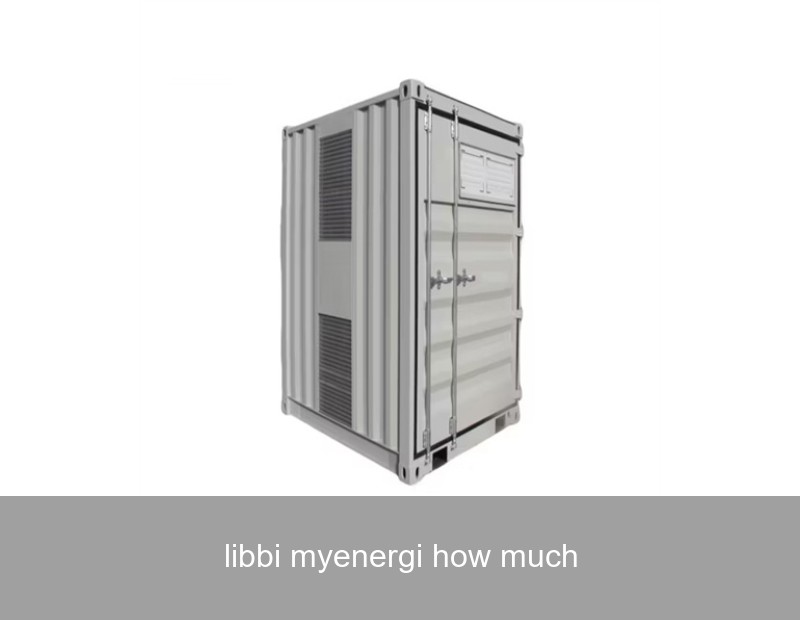
If you're a homeowner looking to maximize your solar investment or gain true energy independence, you've likely come across the name myenergi Libbi. It's a popular all-in-one battery storage system, and the most pressing question is always: "Libbi myenergi, how much can it actually reduce my bills and carbon footprint?" The answer isn't a single number—it's a journey through your energy habits, local climate, and the smart technology that manages it all. As a leader in advanced energy storage, Highjoule understands that the true value of a system like Libbi is unlocked not just by hardware, but by intelligent integration and long-term performance. Let's break down the factors that determine your savings and explore how modern storage solutions are reshaping home energy.
Table of Contents
Understanding the Libbi Ecosystem
The myenergi Libbi is a modular AC-coupled battery storage system, often paired with their famous Eddi power diverter and zappi eco-smart EV charger. Its appeal lies in creating a self-contained, smart energy ecosystem for your home. The system stores excess solar generation for use at night, can charge during low-cost off-peak periods, and aims to keep you off-grid during peak tariff times. But its performance—and therefore your financial return—depends on a precise dance between generation, consumption, and storage.

Think of it this way: a battery is a bank for your electrons. The "interest" you earn is the difference between the price of electricity you avoided buying from the grid and the cost of the solar energy you stored. With volatile energy prices, especially in Europe and the US, that differential can be significant.
Key Factors That Determine "How Much" You Save
To move from a vague "you'll save money" to a concrete estimate, we must consider several variables. Here’s a logical breakdown:
1. Your Local Electricity Rates & Tariff Structure
This is the biggest driver. If you're on a time-of-use (TOU) tariff with high peak rates (often 5-9 pm in the US, or similar in Europe), the savings from avoiding grid use during those windows are substantial. According to the U.S. Energy Information Administration, average residential electricity prices have risen over 30% in some regions since 2020. The higher your rate, the quicker the payback.
2. Your Solar PV System Size and Generation Profile
A larger solar array produces more surplus energy to fill your battery. However, the Libbi's capacity (starting at 5kW/4.6kWh and expandable) must match your evening and nighttime load. An oversized battery without enough solar to fill it may need grid charging, altering the economics.
3. Your Household Consumption Patterns
Do you work from home, or is the house empty all day? Evening-heavy loads (appliances, heating, EV charging) are ideal for battery storage. The system's smart learning capabilities aim to align storage discharge with these habits.
| Time of Day | Solar Generation | Home Consumption | Battery Action | Grid Interaction |
|---|---|---|---|---|
| 6 AM - 9 AM | Low | High (Wake-up) | Discharging | Low Import |
| 9 AM - 4 PM | High | Low (Empty) | Charging | Zero Import / Export Surplus |
| 4 PM - 9 PM (Peak) | Low/None | Very High | Discharging Fully | Zero Import (Goal) |
| 9 PM - 6 AM (Off-Peak) | None | Low (Baseload) | Depleted / Grid Charging if smart-timed | Low-Cost Import if needed |
A Real-World Case Study: The Smith Household in Hamburg
Let's make this tangible. The Smith family lives in Hamburg, Germany. They have an 8kWp solar array and installed a myenergi Libbi system with 9.2kWh of storage in early 2023. Their primary goal was to increase self-consumption of solar energy and hedge against soaring energy prices.
- Pre-Installation: Their solar self-consumption rate was ~35%. They exported most surplus to the grid at a feed-in tariff of €0.08/kWh, while buying from the grid at €0.40/kWh.
- Post-Installation: With the Libbi managing their flow, their self-consumption jumped to over 80%. They now rarely draw from the grid during high-price evening hours.
- The "How Much" Result: Over 12 months, they avoided purchasing approximately 3,200 kWh from the grid at peak rates. This translated to annual savings of around **€1,280** on their electricity bill. Combined with smart EV charging for their electric vehicle using excess solar, their total energy cost reduction approached 70%. The system's automated energy management was key to this outcome.
This case highlights the importance of intelligent energy management software—the brain behind the battery—which is where companies like Highjoule deeply focus their expertise.
Beyond Savings: Resilience and Grid Support
Financial return isn't the whole story. For many in the US facing more frequent grid outages due to extreme weather, or in Europe seeking energy security, the backup power capability is invaluable. Systems like Libbi can provide essential circuit backup. Furthermore, by reducing peak demand on the grid, you're actively supporting grid stability—a cornerstone of the transition to renewables. The National Renewable Energy Laboratory (NREL) notes that distributed storage can defer costly grid upgrades and better integrate renewable sources.
The Highjoule Approach: Precision in Storage Solutions
While evaluating specific products like the Libbi is crucial, the broader principle is matching the right storage technology to your unique needs. At Highjoule, with nearly two decades of experience since 2005, we specialize in this precise matchmaking. Our expertise extends beyond residential to commercial, industrial, and microgrid applications, giving us a holistic view of energy flows.
For homeowners, our role is often advisory, helping you analyze whether an all-in-one system or a component-based approach offers the best lifetime value. We consider:
- System Longevity & Degradation: Not all batteries are created equal. We focus on systems with robust cycle life and thermal management for long-term performance.
- Integration Complexity: Seamless integration with existing solar, inverters, and home energy management systems is critical for achieving the promised savings.
- Scalability: Your needs may change. Can the system grow with you, perhaps with an additional EV or heat pump? Highjoule's solutions are designed with this flexibility in mind.

Our commercial and microgrid projects, which utilize Highjoule's large-scale Battery Energy Storage Systems (BESS), operate on the same fundamental principle as your home system—just at a different scale: intelligently time-shift energy to maximize economic and operational efficiency.
Making the Decision: Is It Right for You?
So, back to your original question: "Libbi myenergi, how much?" The Smith family saved €1,280 annually, but your figure will be yours alone. To move forward, you need to interrogate your own energy data. Start by looking at a full year of utility bills. What's your consumption pattern? Do you have time-varying rates? What is your solar export versus import?
The future of energy is decentralized, digital, and sustainable. A home battery system is a step into that future. It turns your home from a passive consumer into an active node in a cleaner grid.
What single energy-consuming activity in your home—be it charging your EV, running your heat pump, or powering your home office—would you most want to shield from volatile energy prices, and how would transforming that cost change your household's budget?
 Inquiry
 Online Chat