


Unlock Energy Independence: The Ultimate Guide to the Solar Hybrid Energy Storage Cabinet for Home
Imagine a storm knocks out your neighborhood's power, but your lights stay on, your fridge hums quietly, and your home office remains fully operational. This isn't just a dream of resilience; it's the everyday reality made possible by a solar hybrid energy storage cabinet for home. As electricity prices soar and grid reliability becomes a growing concern, especially in regions like Europe and the U.S., homeowners are seeking smarter ways to manage their energy. The solution lies in seamlessly integrating solar panels with intelligent battery storage, creating a personal energy ecosystem that saves money, increases independence, and powers a sustainable future. This guide will demystify this technology and show you how it's transforming homes today.
Table of Contents
- What is a Solar Hybrid Energy Storage Cabinet?
- Why the Surge in Home Energy Storage? The Data Speaks
- How Does a Home Solar Hybrid System Work? Your Personal Power Plant
- Key Benefits: More Than Just Backup Power
- A Real-World Case Study: The Smith Family in Texas
- Choosing the Right System: What to Look For
- How Highjoule Powers Smarter Home Energy Management
- The Future of Your Home Energy
What Exactly is a Solar Hybrid Energy Storage Cabinet for Home?
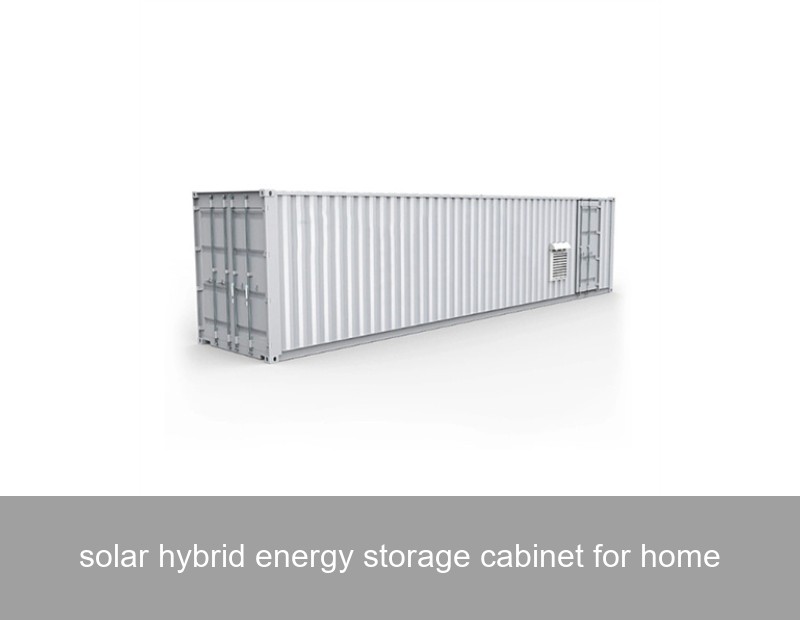
Let's break down the name. A solar hybrid energy storage cabinet for home is an all-in-one, sleek unit that typically houses the brains and brawn of your home's energy system. Think of it as the command center. It intelligently combines power from your rooftop solar panels, the electricity grid, and a built-in battery bank. Unlike simple solar setups that send excess power straight to the grid, a hybrid system stores that excess solar energy for you to use whenever you need it—at night, during peak rate hours, or during a blackout. It's a self-contained cabinet that manages energy flow (the hybrid inverter), stores it (lithium-ion batteries), and protects your home (integrated safety systems).

Image Source: Unsplash - A modern home equipped for energy independence.
Why the Surge in Home Energy Storage? The Data Speaks
The trend is undeniable. The global home energy storage market is exploding. But what's driving homeowners in Europe and America to invest?
- Rising Electricity Costs: In the U.S., average electricity prices have risen significantly over the past decade. In Europe, the energy crisis of 2022 saw prices in some markets increase by over 80% year-over-year. A hybrid system acts as a financial shield, allowing you to use cheap, self-generated solar power around the clock.
- Grid Instability: From heatwaves in California straining the grid to more frequent storms across the Midwest and Northeast, power outages are increasing. The U.S. Energy Information Administration (EIA) notes that the average U.S. customer experienced just over 5 hours of outages in 2021. Homeowners want reliable backup power that kicks in instantly.
- Policy Support: Incentives like the federal Investment Tax Credit (ITC) in the U.S., which now includes standalone storage, and various European subsidies (like Germany's KfW programs) make these systems more affordable than ever.
- Environmental Drive: There's a growing personal commitment to reducing carbon footprints. Maximizing your own solar consumption means supporting the grid with cleaner energy during peak demand.
How Does a Home Solar Hybrid System Work? Your Personal Power Plant
The magic is in the intelligent orchestration. Here’s a typical day in the life of your solar hybrid energy storage cabinet:
- Daytime (Sunny): Your solar panels generate electricity. This power first meets your home's immediate needs (running appliances, AC, etc.). Any excess energy is not wasted; it's directed to charge the batteries inside the storage cabinet.
- Evening & Peak Hours: As the sun sets and utility rates often spike (time-of-use rates), the system automatically switches to draw power from the fully charged batteries. You avoid buying expensive grid power.
- Nighttime: If the batteries are depleted and your home still needs power, the system can draw a minimal amount from the grid at lower off-peak rates.
- Grid Outage: When the grid fails, the system instantly isolates your home (forming a "microgrid") and continues to power critical loads from the battery and solar panels. This seamless transition happens in milliseconds—you might not even notice the outage.
Key Benefits: More Than Just Backup Power
| Benefit | Explanation | Homeowner Impact |
|---|---|---|
| Maximized Solar Self-Consumption | Store surplus solar energy instead of selling it back to the grid at lower rates. | Dramatically reduces your electricity bill, often by 70% or more. |
| Uninterrupted Power Supply (UPS) | Provides instant backup power during grid failures. | Peace of mind, safety, and comfort during storms or blackouts. |
| Peak Shaving | Uses stored energy during high-cost peak utility rate periods. | Further protection from rising and volatile electricity rates. |
| Grid Support & Sustainability | Reduces strain on the public grid and lowers your household carbon emissions. | Contribute to community resilience and a cleaner environment. |
| Smart Energy Management | Advanced systems learn your usage patterns and optimize energy flow automatically. | Set-and-forget convenience with optimal financial and energy outcomes. |
A Real-World Case Study: The Smith Family in Austin, Texas
Let's look at a concrete example. The Smith family lives in a 2,500 sq ft home in Austin, TX—a market with hot summers, plenty of sun, and time-of-use electricity rates.
Phenomenon: High summer AC bills ($400+ monthly) and concerns about grid reliability during heatwaves.
Action: In 2023, they installed a 10 kW solar array paired with a 15 kWh solar hybrid energy storage cabinet. The system was designed to cover their critical loads (refrigeration, lighting, internet, and one AC zone) for over 10 hours on battery alone.
Data & Results (12-month period):
- Electricity Bill Reduction: Average monthly bill dropped from $280 to $35 (a combination of low grid import and small fixed charges).
- Self-Consumption Rate: Increased from ~40% (without storage) to over 85% (with storage), meaning they use almost all the solar they produce.
- Backup Events: The system provided backup power during two grid outages totaling 8 hours. The family reported no disruption to their routine.
- ROI Estimate: With federal and state incentives, they project a full payback on their system in under 8 years.
Insight: For the Smiths, the system wasn't just an expense; it became a predictable, fixed "energy mortgage" that replaced a volatile and rising utility bill, while providing crucial resilience. You can explore more about the benefits of home storage from the U.S. Department of Energy.
Choosing the Right System: What to Look For
Not all cabinets are created equal. When evaluating a solar hybrid energy storage cabinet for your home, consider these critical factors:
- Battery Chemistry & Lifecycle: Lithium Iron Phosphate (LFP) is now the industry standard for safety, longevity (often 6,000+ cycles), and stable performance. Ask about the warranty (e.g., 10 years, 70% retained capacity).
- Power Rating & Capacity: Distinguish between power (kW, how much it can output at once to run appliances) and capacity (kWh, how much total energy it stores). Ensure both match your home's needs.
- Scalability: Can you easily add more battery modules later if your needs change (e.g., buying an EV)?
- Inverter Efficiency: Look for high round-trip efficiency (above 90%), meaning less energy is lost in the storage and conversion process.
- Smart Software & Monitoring: A user-friendly app that lets you monitor production, consumption, and savings in real-time and set preferences is essential.
- Safety Certifications: Ensure the system has key certifications like UL 9540 in the U.S. or equivalent in Europe, covering the entire energy storage system unit.
How Highjoule Powers Smarter Home Energy Management
This is where expertise and reliable engineering become paramount. At Highjoule, with nearly two decades of experience since 2005, we've distilled our knowledge from large-scale commercial projects into our premier residential solution: the Highjoule Horizon Home Hub. This isn't just a battery box; it's an integrated energy management system designed for the discerning homeowner.
The Horizon Home Hub embodies what a modern solar hybrid energy storage cabinet for home should be:
- All-in-One Design: It integrates a high-efficiency hybrid inverter, scalable LFP battery modules (from 10 kWh to 30 kWh), and advanced cooling and safety systems in one compact, wall-mounted cabinet.
- True AI-Driven Optimization: Our proprietary energy management system learns your household patterns, considers weather forecasts, and automatically adjusts your energy flow to maximize savings and comfort. It can even pre-charge your battery based on a storm alert.
- Seamless Integration & Backup: It works with both new and existing solar installations and provides <20ms transition to backup power, ensuring your devices never flicker.
- Global Standards, Local Support: Built to the highest international safety and performance standards, the Horizon Home Hub is backed by Highjoule's network of certified installers across Europe and North America, ensuring professional setup and service. For insights into grid integration and storage value, resources like the National Renewable Energy Laboratory (NREL) provide valuable context.

Image Source: Unsplash - A sleek, modern home energy storage unit.
The Future of Your Home Energy
The home is evolving from a passive energy consumer to an active, intelligent node in the broader energy network. The solar hybrid energy storage cabinet is the cornerstone of this transformation. As electric vehicles become ubiquitous, this system will seamlessly charge your car with solar power. As virtual power plants (VPPs) grow, your cabinet could responsibly support the community grid in times of need, potentially earning you revenue.
The question is no longer if home energy storage makes sense, but when and how you will make it a part of your life. What's the first load you would want to secure during the next power outage, and how much value would you place on knowing it will always stay on?
 Inquiry
 Online Chat