


Unlocking Energy Independence: A Deep Dive into the 24V Hybrid Solar Energy Storage Cabinet
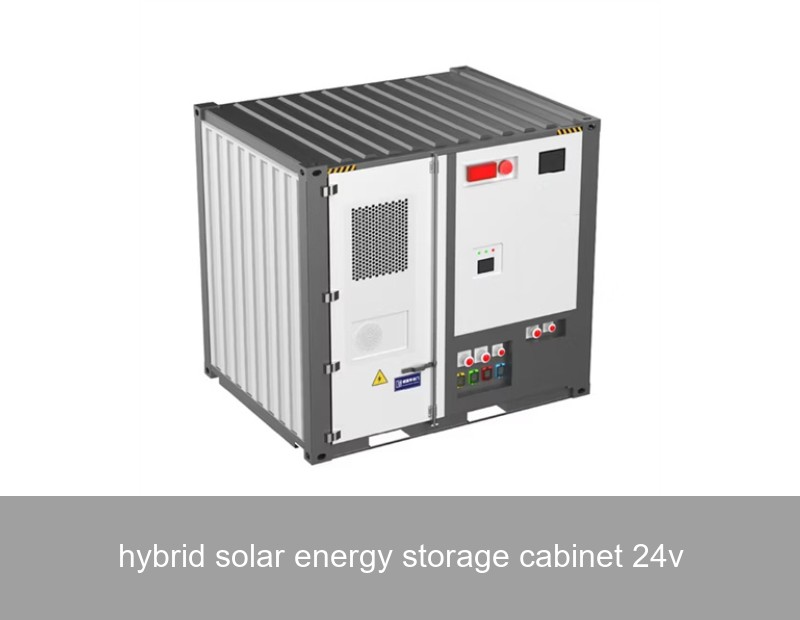
Have you ever watched your solar panels generate abundant power on a sunny afternoon, only to know that much of it is flowing back to the grid because you can't use or store it all? Then, as evening falls, you find yourself drawing expensive power from the utility once more. This is the common solar conundrum. The solution, increasingly sought after by savvy homeowners and businesses across Europe and the U.S., lies in a sophisticated yet streamlined technology: the hybrid solar energy storage cabinet 24V. This integrated system is the brain and battery of a modern energy-independent setup, and it's revolutionizing how we consume renewable power.
Table of Contents
- What is a 24V Hybrid Solar Energy Storage Cabinet?
- The "Why" Behind the Surge: Data and Drivers
- Inside the Cabinet: Core Components and How They Work
- A Real-World Case Study: Resilience in Rural California
- The Highjoule Approach: Engineering for Simplicity and Performance
- Choosing the Right System for Your Needs
What is a 24V Hybrid Solar Energy Storage Cabinet?
Let's demystify the name. A hybrid solar energy storage cabinet is an all-in-one unit that combines a solar inverter, a battery charger, and a battery bank into a single, often wall-mountable, enclosure. The "24V" refers to the DC voltage of the battery bank inside, a common and efficient voltage for mid-sized residential and small commercial systems. Think of it not just as a battery box, but as an intelligent energy manager. It seamlessly decides when to store solar energy, power your home, or even sell excess back to the grid, all while providing a critical backup during outages.
The "Why" Behind the Surge: Data and Drivers
The move towards these integrated systems isn't just a trend; it's a logical response to clear market and environmental signals.
- Rising Energy Costs: In Europe, household electricity prices have seen significant volatility, with countries like Germany and the UK experiencing sustained high prices. In the U.S., average retail electricity prices have risen steadily over the past decade.
- Grid Instability: Increased frequency of extreme weather events, from heatwaves in Southern Europe to winter storms in Texas, has exposed grid vulnerabilities, making backup power a priority for many.
- Policy Shifts: Changes in net metering policies (like in California's NEM 3.0) are making solar-only systems less economical, shifting the value proposition strongly towards solar-plus-storage.
- Tech Advancement: Lithium-ion phosphate (LFP) batteries, now standard in cabinets like ours at Highjoule, offer longer lifespans (6,000+ cycles), enhanced safety, and falling costs.
The data is clear. According to the International Energy Agency (IEA), global renewable capacity additions jumped by almost 50% in 2023, with solar PV accounting for three-quarters of this growth. Much of this new solar is now paired with storage from the outset.

Image: A modern home energy setup featuring solar panels and a wall-mounted storage cabinet. Source: Unsplash
Inside the Cabinet: Core Components and How They Work
So, what's inside this sleek cabinet that makes it so powerful? It's a symphony of components working in harmony.
| Component | Function | Benefit |
|---|---|---|
| Hybrid Inverter/Charger | The "brain." Converts DC from solar/batteries to AC for home use, and AC from grid to DC to charge batteries. Manages energy flow. | Single-device control, high efficiency (often >97%), enables grid interaction and backup. |
| LFP Battery Bank (24V) | The "fuel tank." Stores energy chemically at a 24V DC nominal voltage. | Safe, long-lasting, deep-cycle capability, stable performance. |
| Battery Management System (BMS) | The "guardian." Monitors cell voltage, temperature, and state of charge to ensure safety and longevity. | Prevents overcharge/discharge, thermal runaway, and balances cells. |
| Integrated Monitoring | The "dashboard." Provides real-time and historical data on production, consumption, and storage via a user app. | Empowers user with insights, helps optimize energy habits, and troubleshoots issues. |
The operational logic follows a smart, prioritized ladder: 1) Solar power directly supplies home loads. 2) Excess solar charges the battery. 3) Once the battery is full, excess can be exported to the grid. 4) When solar is insufficient (at night), the battery discharges to power the home. 5) Only when the battery is depleted does the system draw from the grid. In a blackout, the system automatically islandes, using solar and battery to power critical loads.
A Real-World Case Study: Resilience in Rural California
Let's look at a practical example. A small, family-run vineyard in Sonoma County, California, faced two major challenges: escalating electricity costs for irrigation pumps and cooling systems, and an increasing risk of pre-emptive power shutoffs (PSPS events) during wildfire season to prevent grid ignition.
Their Solution: In early 2023, they installed a 15kW solar array paired with a 24V hybrid solar energy storage cabinet system featuring a 30kWh LFP battery. The cabinet was chosen for its simple, all-weather outdoor installation against a utility wall.
- Energy Bill Reduction: Their monthly grid electricity consumption dropped by 92%, moving them to a minimal "grid connection" fee for most of the year.
- Backup Performance: During a 36-hour PSPS event in October 2023, the system automatically switched to backup mode. It powered all critical loads—including refrigeration for harvested grapes and essential site lighting—without interruption. The battery state of charge never fell below 40%, thanks to daytime solar recharge.
- ROI: Factoring in state and federal incentives (like the IRA tax credit), the vineyard owner projects a full system payback in under 7 years.

Image: Solar power supporting agricultural operations. Source: Unsplash
The Highjoule Approach: Engineering for Simplicity and Performance
At Highjoule, with nearly two decades of experience since 2005, we've seen the evolution of storage technology firsthand. Our philosophy is to deliver robust, intelligent, and user-friendly systems. Our H-Cabinet 24V Series embodies this, designed specifically for the European and North American markets.
What sets our hybrid cabinet apart?
- Plug-and-Play Architecture: Pre-assembled, pre-wired, and pre-tested. This drastically reduces installation time and complexity, lowering overall system cost.
- Scalable Design: Start with a base capacity and add additional battery modules as your needs and budget grow, without needing to change the core inverter unit.
- Advanced Grid Services Ready: Our systems are firmware-upgradable to participate in future virtual power plants (VPPs) or grid-balancing programs, turning your storage into a potential revenue stream.
- Highjoule Energy Cloud: Our proprietary monitoring platform offers not just data, but actionable insights, firmware updates, and remote diagnostics, ensuring your system performs optimally for years.
We provide more than hardware; we offer a complete sustainable power solution, from initial consultation and custom design to installation support and long-term performance monitoring.
Choosing the Right System for Your Needs
Selecting a 24V hybrid solar energy storage cabinet requires careful consideration. Ask yourself (and your installer) these key questions:
- What are my primary goals? (Maximize self-consumption, backup for essential loads, full home backup during outages?)
- What is my critical load? Calculate the total wattage of appliances you need to run during an outage (refrigerator, lights, modem, well pump). This determines your required battery capacity (kWh).
- What is my solar panel capacity? Your storage should be sized to capture the excess from your existing or planned solar array.
- What are the local codes and incentives? Regulations for grid-tied storage vary. A qualified installer, like Highjoule's network of certified partners, will navigate this for you and identify available rebates.
The journey to energy resilience is clearer than ever. With a well-designed hybrid solar energy storage cabinet, you're not just buying a product; you're investing in control, stability, and a sustainable future for your home or business.
Is your current solar setup working as hard for you as it could be, and what would it mean for your peace of mind to have reliable power, even when the grid goes down?
 Inquiry
 Online Chat