


Understanding Hybrid Solar Price in the Philippines: A Smart Investment Guide
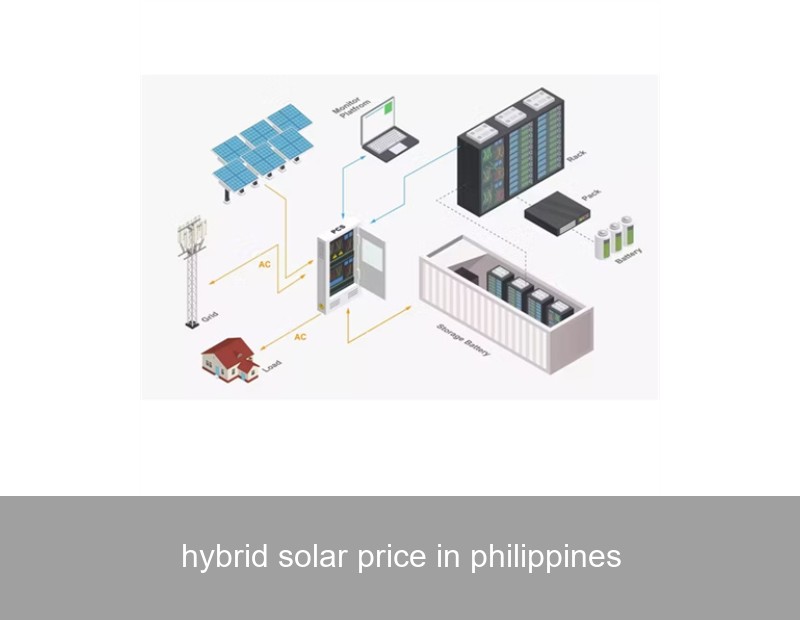
If you're a homeowner or business owner in the Philippines researching energy independence, you've likely encountered the term "hybrid solar system" and a wide range of quotes. The hybrid solar price in the Philippines can seem confusing at first glance. Why such variation? The answer lies not just in the cost of panels, but in the intelligence of the storage system, the quality of components, and the long-term value it delivers. Unlike simple grid-tie or off-grid setups, a hybrid system intelligently manages solar generation, battery storage, and grid power to maximize savings and ensure reliability. This article will demystify the costs, showcase real-world benefits, and explore how advanced technology from global leaders like Highjoule is making resilient, clean energy more accessible than ever.
Table of Contents
What Makes Up the Hybrid Solar Price in the Philippines?
When you receive a quote for a hybrid solar system, you're seeing the sum of several critical components. Understanding each helps you evaluate value, not just cost.
- Solar Panels: The most visible part, converting sunlight into DC electricity. Efficiency and durability are key price factors.
- Hybrid Inverter: The system's brain. It converts DC to AC for home use, manages battery charging/discharging, and seamlessly switches between solar, battery, and grid power.
- Battery Energy Storage System (BESS): The heart of a hybrid setup. This is where your solar surplus is stored for use at night or during outages. Battery chemistry (like Lithium Iron Phosphate), capacity (kWh), and cycle life are major cost drivers.
- Balance of System (BOS): Mounting structures, wiring, circuit breakers, monitoring systems, and importantly, professional installation and engineering.
While a lower upfront hybrid solar price in the Philippines might be tempting, investing in high-quality, integrated components from a trusted provider like Highjoule ensures higher efficiency, longer lifespan, and better support, leading to greater savings over 20+ years.
The Philippine Energy Phenomenon: High Cost, Low Reliability
Let's address the elephant in the room: why are so many Filipinos turning to hybrid solar? The local energy landscape presents a unique challenge. The Philippines has some of the highest electricity rates in Southeast Asia, frequently exceeding ₱12 per kWh. Compounding this is the vulnerability of the grid to typhoons, leading to frequent and prolonged power outages, especially in provincial areas.
This creates a perfect storm of high operational costs for businesses and daily inconvenience for households. The initial hybrid solar price in the Philippines is therefore not just an expense, but a strategic investment against volatile and costly grid power. It's a shift from being a passive consumer to an active energy manager.

Credit: Photo by Andreas Gücklhorn on Unsplash. Solar installations in tropical climates must withstand unique weather challenges.
The Data: ROI Beyond the Price Tag
Evaluating a system purely on its sticker price is a common mistake. The true metric is Return on Investment (ROI). Consider a typical 5kW residential hybrid system in Metro Manila. The hybrid solar price in the Philippines for such a system might range from ₱400,000 to ₱700,000, depending on battery capacity and brand quality.
| Cost Factor | Impact on ROI |
|---|---|
| Monthly Bill Reduction | Slashing your grid consumption by 70-90% can save ₱8,000 - ₱15,000 monthly, paying back the system in 5-8 years. |
| Avoided Outage Costs | For businesses, a single day's outage can mean lost revenue. A hybrid system keeps critical operations running, protecting income. |
| Increased Property Value | Studies show homes with solar+storage sell at a premium. It's a tangible infrastructure upgrade. |
| Protection from Rate Hikes | You lock in a significant portion of your energy cost at a fixed rate—the sun's—for decades. |
The key is choosing a system designed for longevity and performance. Highjoule's HPS Series Hybrid Power Systems, for instance, use LiFePO4 batteries with a 6000+ cycle life and are built for harsh tropical environments, ensuring the ROI calculations hold true over the long haul.
Case Study: A Cebu Manufacturing Plant's Success
Let's look at a real example. A medium-sized food processing plant in Cebu faced crippling energy costs (₱18/kWh during peak hours) and weekly brownouts disrupting refrigeration and production lines. In 2022, they installed a 100kW hybrid solar + storage system featuring Highjoule's industrial CubeBESS and hybrid inverters.
- System Cost: Approximately ₱9.5 million.
- Results (First Year):
- Grid electricity consumption reduced by 82%.
- Annual energy savings: ₱2.1 million.
- Zero production downtime due to grid outages.
- Peak demand charges reduced by 40%.
The plant's financial controller noted, "The hybrid solar price in the Philippines was a significant investment, but the payback period is under 5 years. More importantly, we've secured our operations. The Highjoule system's intelligent energy management software automatically switches to battery power during peak tariff periods, maximizing our savings without manual intervention." This case highlights how the right system transforms a cost center into a strategic asset.
Highjoule's Intelligent Technology: Unlocking More Value from Your Investment
As a global leader since 2005, Highjoule understands that the hardware is only part of the solution. Our approach to the hybrid solar price in the Philippines focuses on delivering superior lifetime value through intelligence. Our systems feature:
- AI-Powered Energy Management: Our platform doesn't just store energy; it learns your consumption patterns and weather forecasts to optimize when to use solar, charge/discharge batteries, or draw from the grid, ensuring every peso is spent wisely.
- Seamless Integration: Highjoule's hybrid inverters and battery systems are designed to work together flawlessly, ensuring safety, efficiency, and a single point of support. This integrated approach prevents the compatibility issues that can plague systems assembled from mixed components.
- Remote Monitoring & Diagnostics: Our cloud-based portal gives you and your installer real-time insights into system performance, allowing for proactive maintenance—a crucial feature in the Philippine archipelago where on-site service can be challenging.
For the Philippine market, we offer tailored solutions through our network of certified partners, ensuring systems are designed for local conditions, from salt-air corrosion resistance in coastal areas to robust performance in high heat.

Credit: Photo by American Public Power Association on Unsplash. Modern, compact BESS units like Highjoule's CubeBESS can be deployed in various settings.
The Future of Energy in the Philippines
The conversation around energy in the Philippines is rapidly evolving. With the government's push for renewable energy and the International Energy Agency highlighting the country's solar potential, hybrid systems are poised to become a mainstream solution. The question is no longer just about the upfront hybrid solar price in the Philippines, but about building a resilient, cost-effective, and sustainable energy foundation for the next generation.
Technologies like vehicle-to-grid (V2G) and advanced microgrids are on the horizon. Highjoule is already pioneering these integrations, ensuring our customers' investments are future-proof. Imagine your home or business not just consuming power, but participating in a stable, local energy network.
So, as you evaluate proposals and ponder the investment, ask yourself and your potential provider: Is this system just a collection of parts, or an intelligent energy partner designed to thrive in the unique conditions of the Philippines for the next 20 years?
 Inquiry
 Online Chat