


Schwaiger Micro Solar Inverter: The Smart Choice for Modern Solar Systems
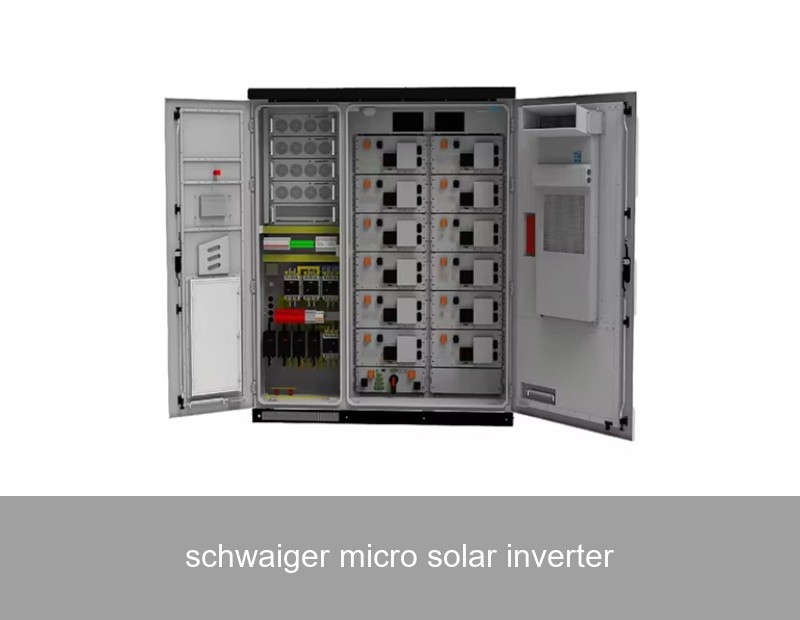
If you're exploring solar energy for your home or business, you've likely encountered a crucial decision: choosing the right inverter. While traditional string inverters have been the standard, a new wave of technology is optimizing energy harvest panel by panel. Enter the Schwaiger micro solar inverter. This innovative device represents a shift towards more resilient, efficient, and intelligent solar power systems. But what exactly makes this technology stand out, and is it the right fit for your renewable energy goals? As a leader in advanced energy storage and management, Highjoule understands that the heart of a great solar system lies in its ability to convert and manage power intelligently. Let's delve into the world of microinverters and see how solutions like the Schwaiger, paired with holistic energy management, can unlock your solar installation's full potential.
Table of Contents
- What is a Schwaiger Micro Solar Inverter?
- The Great Debate: String Inverters vs. Microinverters
- Key Benefits Unlocked by Microinverter Technology
- A Real-World Case: Performance in a European Residential Setting
- Beyond the Inverter: Synergy with Highjoule's Smart Energy Ecosystem
- Is a Schwaiger Micro Solar Inverter Right for You?
What is a Schwaiger Micro Solar Inverter?
At its core, a solar inverter's job is to convert the direct current (DC) electricity generated by your photovoltaic (PV) panels into the alternating current (AC) used by your home appliances and the grid. A Schwaiger micro solar inverter miniaturizes this function and attaches one unit to each individual solar panel. Unlike a central string inverter that handles the output of an entire array, this approach decentralizes the conversion process. Each panel operates independently, with its own dedicated power optimizer. This fundamental architectural difference is what drives the significant advantages in performance, safety, and monitoring granularity that we'll explore next.

Image Source: Unsplash - A modern rooftop solar installation where microinverters would be installed behind each panel.
The Great Debate: String Inverters vs. Microinverters
To appreciate the value proposition of the Schwaiger microinverter, it's helpful to compare it to the traditional approach. Think of a string inverter system like old-fashioned Christmas lights wired in a series: if one bulb goes out, the entire string fails. Similarly, a string inverter connects panels in a series. The output of the entire string is limited by the weakest-performing panel. Shading from a chimney, debris like bird droppings, or even slight panel mismatches can drag down the performance of every panel on that string.
Microinverters, on the other hand, treat each panel as a separate power plant. If one panel is underperforming, the others continue to operate at their peak. This is known as panel-level maximum power point tracking (MPPT). The data is compelling: according to a field study by the National Renewable Energy Laboratory (NREL), systems with module-level power electronics (like microinverters) can outperform traditional string inverter systems by 2% to 25% annually, depending on shading and mismatch conditions (NREL Report, 2015).
| Feature | Traditional String Inverter | Schwaiger Micro Solar Inverter |
|---|---|---|
| Architecture | Centralized; all panels feed one unit. | Distributed; one unit per panel. |
| Shading Impact | High - reduces whole string output. | Low - only affects the shaded panel. |
| Monitoring | System-level only. | Panel-level performance data. |
| Safety | High-voltage DC runs to the inverter. | Only AC output from the roof; no high-voltage DC. |
| Scalability & Maintenance | More complex to expand; single point of failure. | Easy to expand; failure isolates to one unit. |
Key Benefits Unlocked by Microinverter Technology
The architectural choice of using a Schwaiger micro solar inverter cascades into several tangible benefits for system owners:
- Maximized Energy Production: As the NREL data suggests, the ability to mitigate shading and mismatch losses directly translates to more kilowatt-hours generated over the system's lifetime. On complex roofs with multiple orientations or intermittent shading, this advantage is substantial.
- Enhanced Safety: This is a critical, often overlooked advantage. Microinverter systems eliminate the high-voltage DC wiring running from your roof to your utility room. The roof output is grid-compliant AC voltage, significantly reducing fire risk during installation and over the system's operational life.
- Granular Monitoring and Diagnostics: Imagine being able to check the performance of each individual solar panel from your smartphone. Microinverter systems provide this capability. You can instantly identify if a specific panel is underperforming due to dirt, damage, or a technical fault, enabling proactive maintenance.
- Design Flexibility and Scalability: With microinverters, you can easily design systems for roofs with multiple angles or orientations. Adding panels later is also simpler, as you're not constrained by matching new panels to existing strings or inverter capacity limits.
A Real-World Case: Performance in a European Residential Setting
Let's move from theory to practice. Consider a typical residential installation in Munich, Germany. A homeowner with a south-west facing roof installed a 7 kWp solar system. The roof has a dormer window that casts a moving shadow across a portion of the array in the afternoon.
The Setup: Two identical 7 kWp systems were simulated using PV*SOL premium simulation software. One used a standard string inverter, the other used a system with Schwaiger micro solar inverter technology.
The Data: Over a simulated year, the string inverter system produced an estimated 6,850 kWh. The microinverter-based system, however, was projected to produce 7,250 kWh—an increase of approximately 400 kWh, or 5.8% more energy annually. For context, that's enough extra electricity to power a highly efficient refrigerator for an entire year. This increase is directly attributable to the microinverters' ability to mitigate the partial shading from the dormer. In financial terms, at Germany's average household electricity price of ~€0.40/kWh, this translates to over €160 in additional annual savings, improving the system's payback period.

Image Source: Unsplash - Conceptual representation of energy flow and optimization in a solar system.
Beyond the Inverter: Synergy with Highjoule's Smart Energy Ecosystem
An efficient solar inverter is a fantastic start, but true energy independence and cost optimization come from intelligent storage and management. This is where Highjoule's expertise becomes pivotal. A Schwaiger micro solar inverter excels at harvesting maximum energy, but what happens when you produce more than you can use?
Pairing a high-harvest solar system with a Highjoule battery energy storage system (BESS) creates a perfect synergy. Our Highjoule HomePower series seamlessly integrates with leading inverter technologies. The excess solar energy that your microinverters efficiently capture—instead of being fed back to the grid at a lower feed-in tariff—is stored in your Highjoule battery for use in the evening or during peak rate hours. Our systems are built with long-lasting, safe lithium iron phosphate (LiFePO4) chemistry and feature sophisticated energy management software.
For commercial and industrial applications, Highjoule's GridMax solutions take this further. We combine large-scale battery storage with advanced inverters and AI-driven energy management platforms. This allows businesses to perform peak shaving, participate in demand response programs, and ensure backup power—all while maximizing the return on their solar investment. Whether it's a residential setup with panel-level optimization or a commercial microgrid, Highjoule provides the intelligent backbone to make your renewable energy system resilient, economical, and sustainable.
Is a Schwaiger Micro Solar Inverter Right for You?
The choice isn't one-size-fits-all. Microinverters, like the Schwaiger, typically have a higher upfront cost per watt than a standard string inverter. However, the decision should be based on a total lifetime value assessment.
Consider a microinverter system if: Your roof has partial shading, multiple planes, or a complex layout. You value maximum safety (no high-voltage DC) and want detailed, panel-level monitoring. You plan to expand your system in the future or have panels with different orientations.
A traditional string inverter might suffice if: Your roof is unshaded, simple, and all panels face the same direction. Your primary constraint is minimizing initial installation cost, and you are comfortable with system-level monitoring.
To make an informed decision, it's crucial to consult with a certified installer who can model your specific roof using tools like the free PVWatts Calculator from NREL (PVWatts Calculator) to compare potential production scenarios.
Ready to Design Your Optimized Energy System?
The journey to energy independence is built on a series of smart choices—from the technology on your roof to the battery in your basement. Starting with a high-efficiency component like a Schwaiger micro solar inverter sets a strong foundation. But have you considered how you will store and manage every kilowatt-hour you produce to achieve true resilience and savings? What would your energy bill look like if you could use 80% or more of the solar power you generate, day and night?
 Inquiry
 Online Chat