


Super Capacitor Energy Storage: The High-Power Ally for a Renewable Grid
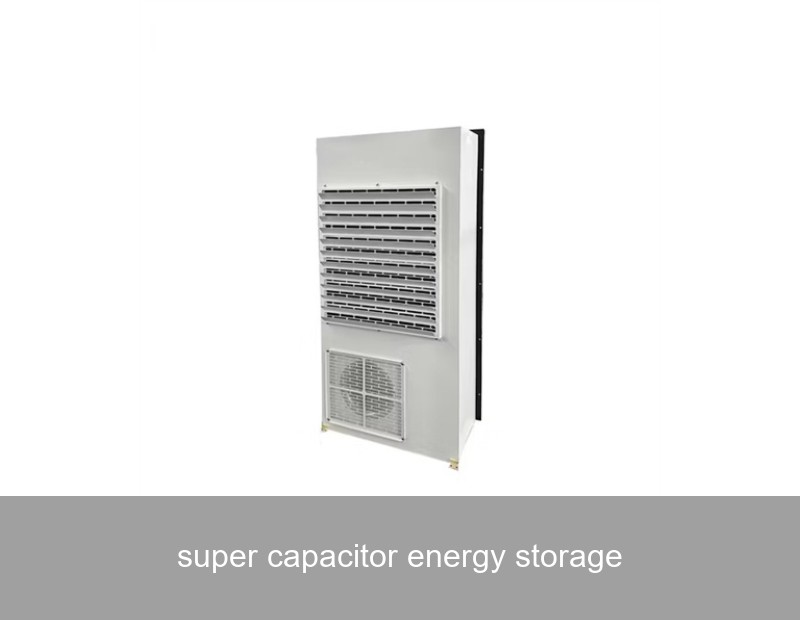
Imagine a world where renewable energy flows seamlessly, electric vehicles charge in minutes, and power grids handle sudden surges without breaking a sweat. This vision is closer than you think, thanks to a powerful but often unsung hero: super capacitor energy storage. Unlike traditional batteries, super capacitors (or ultracapacitors) store energy in an electric field, not through chemical reactions. This fundamental difference unlocks breathtaking power delivery, instant charging, and incredible longevity. As Europe and the US aggressively pursue grid modernization and decarbonization, integrating super capacitors with conventional battery systems is becoming the smart strategy for resilience. Let's explore how this dynamic technology is shaping our energy future.
Table of Contents
- What Are Super Capacitors? The Power vs. Energy Dance
- The Grid Challenge: Why Batteries Can't Do It All
- The Hybrid Solution: Super Capacitors + Batteries = Perfect Match
- Case Study: Powering Lisbon's Trams with Regenerative Braking
- Highjoule's Role: Integrating Advanced Storage for Smarter Systems
- Future Applications: From EVs to Microgrids
What Are Super Capacitors? The Power vs. Energy Dance
Think of energy storage like a water system. A battery is a large water tank—it holds a lot of water (energy) but can only release it through a small pipe (power) at a certain speed. A super capacitor, on the other hand, is like a pressurized water accumulator. It holds less water overall, but can release a massive torrent instantly when the valve is opened.
This distinction is crucial:
| Feature | Lithium-ion Battery | Super Capacitor |
|---|---|---|
| Energy Density | High (Good for long duration) | Lower (Short duration) |
| Power Density | Moderate | Extremely High (Rapid charge/discharge) |
| Cycle Life | Thousands of cycles | Millions of cycles |
| Charge Time | Hours | Seconds to Minutes |
| Primary Role | Energy Supply (kWh) | Power Burst (kW) |
This makes super capacitors ideal for applications requiring rapid bursts of power, frequency regulation on the grid, or capturing energy that would otherwise be lost in a flash—like the energy from a bus's regenerative braking system.
The Grid Challenge: Why Batteries Can't Do It All
The shift to wind and solar is fantastic, but it introduces volatility. A passing cloud can cause a solar farm's output to plummet, requiring the grid to compensate within milliseconds to maintain a stable 50Hz or 60Hz frequency. While large-scale battery energy storage systems (BESS) are excellent for shifting solar energy from day to night, their chemical nature limits how fast they can absorb or release power. Constantly asking them to handle these rapid, micro-cycles leads to accelerated degradation and higher long-term costs.
This is the phenomenon we see in grids from California to Germany: the need for both energy capacity and instantaneous power response. Data from the U.S. Department of Energy highlights the growing need for sub-second grid services as renewable penetration exceeds 30-40%. The challenge? A single technology is not economically optimal for both tasks.

Image: A modern super capacitor module, capable of delivering massive power bursts. (Source: Unsplash)
The Hybrid Solution: Super Capacitors + Batteries = Perfect Match
Enter the hybrid energy storage system. By pairing super capacitors with lithium-ion or other batteries, we create a system that excels at both power and energy tasks. Think of it as a skilled team:
- The Super Capacitor (The Sprinter): Handles the sudden, high-power spikes and sags—like stabilizing frequency or capturing regenerative braking energy.
- The Battery (The Marathon Runner): Provides the sustained energy for hours-long discharge—like powering a factory during peak tariff periods or providing backup through the night.
This partnership dramatically reduces stress on the battery, extending its lifespan by up to 50% in high-cycling applications, according to studies by the National Renewable Energy Laboratory (NREL). The result is a lower total cost of ownership and a more resilient system.
Case Study: Powering Lisbon's Trams with Regenerative Braking
A brilliant real-world example comes from Lisbon, Portugal. The city's historic tram network is iconic, but its hilly routes and frequent stops were inefficient. Every time a tram brakes going downhill, it generates electricity. Without storage, this energy was wasted as heat in the resistors.
The solution? Installing on-board super capacitor energy storage systems. Here's the impact:
- Energy Savings: The system captures over 30% of the regenerative braking energy that was previously wasted.
- Grid Relief: It reduces the peak power demand from the overhead catenary lines by up to 40%, allowing for more efficient grid operation.
- Performance: The stored energy provides a powerful burst for acceleration, improving schedule adherence.
This project demonstrates the core strength of super capacitors: efficiently managing high-power, short-duration energy cycles that would wear out a battery too quickly.
Highjoule's Role: Integrating Advanced Storage for Smarter Systems
At Highjoule, we don't just see components; we see integrated solutions. Since 2005, we've been at the forefront of designing intelligent energy storage that combines the right technologies for the job. For applications where reliability and rapid response are non-negotiable—such as industrial UPS, port crane operations, or smoothing output for large solar farms—our engineers expertly integrate super capacitor banks with our core battery storage platforms.
Our IntelliBESS Pro series, for instance, features a modular architecture that can be configured with a super capacitor power buffer. This is particularly valuable for our commercial and industrial clients in the US and Europe, where power quality issues can disrupt sensitive manufacturing processes. The super capacitors handle momentary voltage dips, while the lithium-ion battery bank tackles longer-duration outages. It's this holistic, application-driven design that makes Highjoule systems uniquely efficient and durable.

Image: An engineer monitoring a modern hybrid energy storage control system. (Source: Unsplash)
Future Applications: From EVs to Microgrids
The potential extends far beyond trams and grid frequency. Imagine:
- Electric Vehicle Fast Charging: Super capacitor buffers at charging stations could draw lower continuous power from the grid but deliver massive bursts to charge a car battery in minutes, avoiding costly grid upgrades.
- Microgrids for Critical Facilities: Hospitals or data centers with on-site solar/wind can use a hybrid system to ensure seamless power during a cloud passage or generator start-up, with super capacitors bridging the critical milliseconds.
- Heavy Machinery & Robotics: The repetitive start-stop cycles in automated warehouses or mining equipment are perfect for super capacitors to capture energy and deliver peak power, improving efficiency.
The journey towards a 100% renewable grid is not a solo race for one technology. It's a relay where each player—solar, wind, batteries, and super capacitors—runs their optimal leg. Super capacitor energy storage is the essential anchor for the high-power leg.
 Inquiry
 Online Chat