


Hybrid Wind Solar Systems: The Smart Path to Energy Independence
Imagine a world where your power supply doesn't falter when the sun sets or the wind calms. This isn't a distant dream; it's the practical reality offered by hybrid wind solar systems. For homeowners, businesses, and communities, especially across Europe and the U.S., these integrated systems are becoming the cornerstone of a resilient and cost-effective energy strategy. By combining the complementary generation patterns of wind and solar, they smooth out the biggest challenge of renewables: intermittency. Let's explore how this powerful synergy works and why it might be the perfect solution for your energy needs.
Table of Contents
- What Are Hybrid Wind Solar Systems?
- The Challenge: Taming Intermittency
- The Solution: Wind-Solar Synergy & Smart Storage
- Real-World Impact: A Case Study from Texas
- Highjoule's Role: Intelligent Integration
- Is a Hybrid System Right for You?
What Are Hybrid Wind Solar Systems?
Simply put, a hybrid wind solar system integrates photovoltaic (PV) panels and a wind turbine, connecting them to a unified energy storage and management system. Unlike standalone solar or wind setups, a hybrid setup leverages two different weather-dependent sources. The core components are:
- Solar PV Panels: Generate electricity during daylight hours, peaking around midday.
- Wind Turbine (typically small-scale): Generates power when the wind blows, which can often occur at night, during storms, or in cloudy weather.
- Hybrid Inverter/Controller: The "brain" that manages the input from both sources, converts DC to AC power, and regulates battery charging.
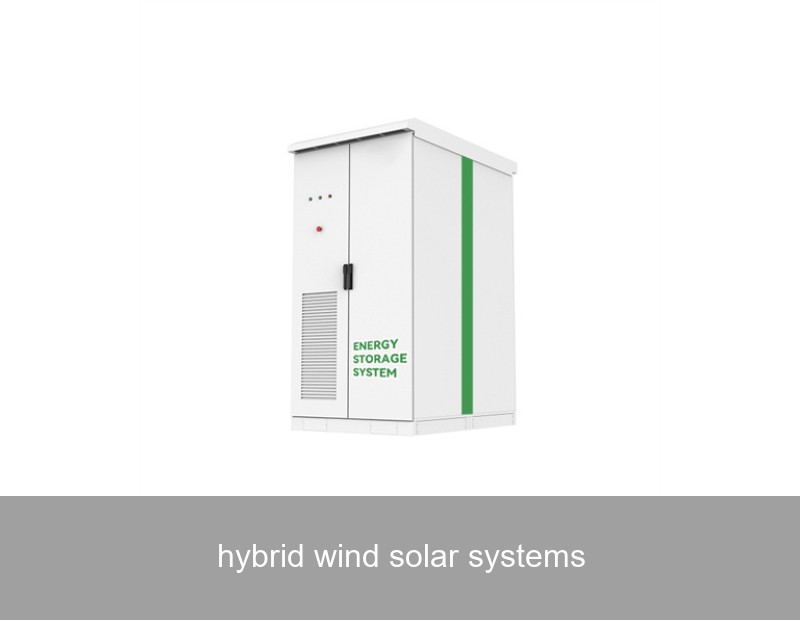
- Battery Energy Storage System (BESS): The heart of resilience. It stores excess energy for use when neither source is producing sufficiently.
This combination creates a more reliable and consistent year-round energy flow than either technology could alone.
The Challenge: Taming Intermittency with Data
The primary hurdle for renewable energy is its variable nature. Solar panels produce nothing at night, and output drops significantly on cloudy days or in winter. Wind turbines are subject to calm periods. Relying on a single source often means either accepting gaps in supply or relying heavily on the traditional grid.
Data underscores this complementarity. A study by the National Renewable Energy Laboratory (NREL) highlights that wind and solar resources are often inversely correlated—wind speeds can be higher in the evening, overnight, and during seasonal storms when solar output is low. This natural synergy is the key to unlocking stable renewable generation.

Image: A hybrid renewable energy site showcasing both wind and solar generation. Source: Unsplash
The Solution: Wind-Solar Synergy & The Critical Role of Smart Storage
This is where the hybrid concept shines. When solar production dips, wind often picks up the slack, and vice-versa. This leads to:
- Higher Capacity Factor: The combined system uses grid infrastructure more consistently.
- Reduced Storage Needs: With more consistent generation, you may require a smaller battery bank than you would for a solar-only system aiming for the same level of independence.
- Faster Return on Investment: Maximized self-consumption of generated energy and reduced grid purchases accelerate payback periods.
However, the true enabler of this synergy is advanced battery storage. A high-quality Battery Energy Storage System doesn't just store energy; it intelligently manages it based on weather forecasts, consumption patterns, and electricity tariffs.
Real-World Impact: A Case Study from Texas, USA
Consider the case of a medium-sized dairy farm in West Texas. The farm faced high operational costs and grid instability. Their goals were to power milking operations, cooling facilities, and irrigation systems reliably and reduce peak demand charges.
The Solution Deployed: A hybrid system featuring a 50kW wind turbine, 80kW rooftop solar array, and a 240kWh containerized battery storage unit.
The Results (18-month period):
| Metric | Outcome |
|---|---|
| Energy Self-Sufficiency | Increased from 30% (solar-only) to 92% (hybrid + storage) |
| Grid Energy Cost Reduction | 78% decrease |
| Peak Demand Charges | Eliminated by using battery to shave peak loads |
| System Uptime | Maintained 100% during two grid outages |
This case, documented in a report by the Solar Energy Industries Association (SEIA), clearly demonstrates the transformative power of a well-integrated hybrid system in a commercial setting. The wind component provided crucial power during night-time operations and winter storms, while solar handled the daytime load, with the battery ensuring seamless transitions and backup.
Highjoule's Role: Intelligent Integration for Maximum Value
Designing an efficient hybrid system is more than just connecting panels and a turbine to a battery. It requires deep expertise in system sizing, technology compatibility, and intelligent energy management. This is where Highjoule, with nearly two decades of experience, becomes an essential partner.
We don't just provide components; we deliver integrated, smart power solutions. Our approach focuses on the system's brain: the Highjoule Energy Management System (EMS) and our scalable H-Series battery storage units.
- Predictive Energy Orchestration: Our EMS uses AI-driven weather and load forecasting to decide in real-time whether to store wind/solar energy, use it directly, or discharge the battery, optimizing for cost and carbon savings.
- Seamless Technology Agnostic Integration: Our platform is designed to communicate with a wide range of solar inverters and wind turbine controllers, giving you flexibility in equipment choice.
- Scalable & Sustainable Storage: Our H-Series batteries, built with longevity and safety as priorities, can be scaled from residential to industrial applications, ensuring your system grows with your needs.

Image: An advanced battery energy storage system, similar to Highjoule's containerized solutions. Source: Unsplash
For a remote microgrid in Southern Europe or a farm in the American Midwest, Highjoule's technology ensures that every kilowatt-hour of wind and solar energy is captured, managed, and utilized with maximum intelligence.
Is a Hybrid Wind Solar System Right for You? Key Considerations
While powerful, hybrid systems are not a one-size-fits-all solution. Here are the factors that make a site ideal:
1. Favorable Resource Profile:
You need adequate wind and solar resources. A site assessment is crucial. Generally, average wind speeds above 4.5-5 m/s and unshaded solar access are good indicators.
2. Energy Consumption Pattern:
They are exceptionally beneficial if you have a consistent, 24/7 energy load (like a farm, workshop, or residential community) or face high time-of-use electricity rates.
3. Space and Zoning:
You need sufficient land or roof space for solar panels and a suitable location (with adequate wind flow and distance from obstacles) for a small wind turbine, considering local permitting.
4. Goal of Resilience:
If grid independence or backup power is a critical need, the combined generation of a hybrid system, backed by storage, offers far greater security than a single source.
Hybrid wind solar systems represent a mature, logical step forward in our renewable energy journey. They move us from relying on the weather to strategically harnessing its full spectrum. With partners like Highjoule providing the intelligent backbone of storage and control, these systems are not just feasible but financially and operationally superior for a growing number of applications.
What would energy independence look like for your home or business if your power supply was as predictable as the changing seasons, yet entirely under your control?
 Inquiry
 Online Chat