


Choosing the Right Solar Power System Suppliers: Your Guide to Energy Independence
So, you've decided to harness the sun. It's a smart move, whether you're a homeowner in California looking to slash bills, a factory manager in Bavaria aiming for carbon targets, or a community in the Netherlands building a resilient microgrid. But here's the pivotal moment many underestimate: the success of your entire renewable energy journey hinges not just on the technology, but on the solar power system suppliers you choose to partner with. Today's leading suppliers are far more than equipment vendors; they are architects of intelligent, integrated energy ecosystems. This guide will walk you through the evolving role of these crucial partners and the key factors that separate a basic installer from a true long-term energy solutions provider.
The Modern Solar Power System Supplier: A New Definition
Gone are the days when a supplier's job ended once the photovoltaic (PV) panels were bolted to your roof. The landscape of solar energy has transformed dramatically. We're now in the era of solar-plus-storage and smart energy management. The modern supplier must be a master integrator, weaving together generation (solar panels), storage (battery systems), conversion (inverters), and intelligent software into a seamless, high-performing unit.
Think of it this way: you wouldn't buy a high-performance car engine, tires, and chassis from three different companies and hope they work perfectly together. The same logic applies to your energy system. A top-tier supplier ensures all components are not only compatible but optimized to work in concert, maximizing every kilowatt-hour the sun provides.

This shift is driven by a simple, powerful truth: solar energy is most valuable when you can use it or store it on your terms. Without storage and smart controls, excess solar energy often gets exported to the grid at low rates, only for you to buy it back at night at a higher price. The modern supplier's role is to solve this, turning your system from a simple generator into a strategic asset.
The Core Components of a Holistic System
- Photovoltaic (PV) Panels: The primary energy harvesters. Efficiency and durability are key.
- Inverters: The "brains" of the operation, converting DC solar power to usable AC power. Advanced hybrid inverters can also manage battery storage.
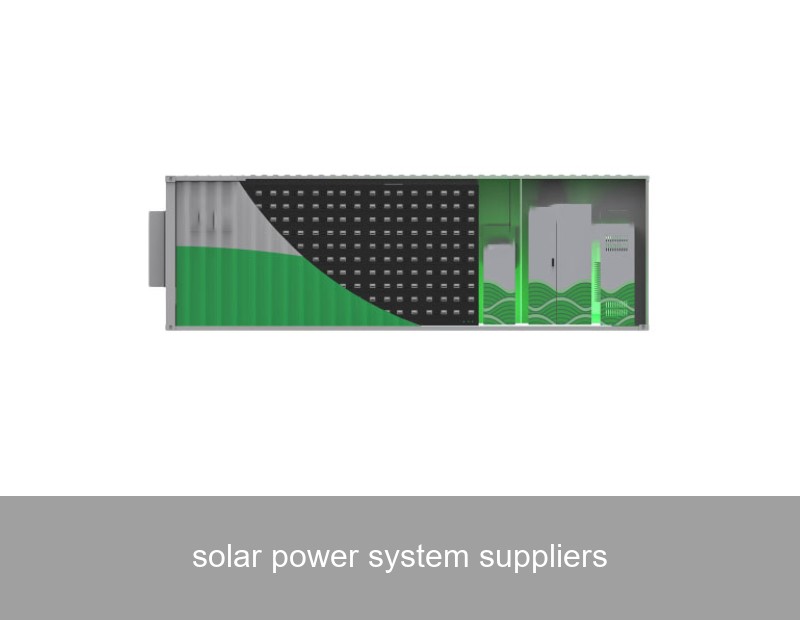
- Battery Energy Storage System (BESS): The heart of energy independence. It stores surplus solar energy for use when the sun isn't shining.
- Energy Management System (EMS): The nervous system. This software intelligently controls energy flow, deciding when to store, use, or export based on weather, usage patterns, and electricity rates.
Key Criteria for Choosing Your Solar Partner
With this broader definition in mind, how do you evaluate potential solar power system suppliers? Look beyond the per-watt panel price. Here’s a framework to guide your decision.
| Criterion | Old-School Supplier | Advanced Solutions Provider |
|---|---|---|
| Scope of Offer | Sells and installs PV panels + basic inverter. | Designs and delivers integrated solar + storage + software solutions. |
| Technology Expertise | Focus on panel brands and mounting. | Deep expertise in battery chemistry, grid services, and software integration. |
| Financial Modeling | Simple payback estimate based on generation. | Detailed analysis including storage arbitrage, demand charge reduction, and backup power value. |
| Long-Term Value | Warranty on hardware only. | Ongoing system optimization, performance monitoring, and potential firmware updates for new features. |
| Grid Interaction | Sees the grid as a simple backup. | Designs for grid-supportive features (where allowed) like peak shaving and frequency regulation. |
Case Study: A German Mittelstand Success Story
Let's look at real data from Europe. A mid-sized automotive parts manufacturer in Baden-Württemberg, Germany, faced steep and volatile energy costs, with a significant portion coming from demand charges—fees based on their highest 15-minute power draw each month. Their goal was twofold: reduce overall energy costs and enhance sustainability credentials for their supply chain contracts.
They partnered with an advanced solution provider (us, at Highjoule) rather than a basic panel supplier. The solution was a 450 kWp rooftop solar array coupled with a 500 kWh Highjoule Titan BESS and our proprietary Neuron Energy Management Platform.
- Result in Year 1:
- 70% reduction in peak demand charges by using stored solar energy to "shave" power draws during production peaks.
- 42% reduction in electricity purchased from the grid.
- 85% self-consumption rate of their solar generation (vs. a typical ~30-40% without storage).
The system's intelligence was key. The EMS learned the factory's production schedule and weather patterns, pre-charging the batteries with solar before known high-load periods. This concrete outcome, verified by meter data, highlights the transformative impact of choosing a supplier capable of delivering an intelligent, storage-integrated system. For more on demand charge management, see this U.S. Department of Energy resource.
The Highjoule Approach: Intelligence Beyond the Inverter
At Highjoule, with nearly two decades of experience since 2005, we embody this evolved definition of a solar power system supplier. We don't just supply components; we provide certified, future-ready energy independence. Our solutions for commercial, industrial, and large residential properties are built around three pillars:
- The Highjoule Titan BESS: Our flagship battery system, known for its superior safety (using stable LiFePO4 chemistry), modular scalability, and high round-trip efficiency. It's the robust heart of the storage solution.
- The Neuron Energy Management Platform: This is where the magic happens. Our cloud-based AI software doesn't just react; it predicts. By analyzing weather forecasts, historical consumption, and real-time grid conditions, it makes millions of operational decisions to maximize your financial return and system resilience.
- Certified Integration & Support: We ensure seamless compatibility with leading global PV and inverter brands. Our team of engineers provides support from initial design and financial modeling through commissioning and the entire lifecycle of the system.

This integrated approach means a business in Ohio or a housing cooperative in Sweden isn't just getting hardware. They're gaining a partner dedicated to optimizing their energy assets for the next 20+ years. For an independent look at storage technologies, the National Renewable Energy Laboratory (NREL) offers excellent research.
Addressing Common Concerns
We often hear: "Isn't this complex and expensive?" Initially, the investment is higher than panels alone. However, the ROI story is fundamentally different and often stronger. By maximizing self-consumption, avoiding peak charges, and providing backup power during outages, the integrated system pays for itself faster and continues to deliver greater long-term value. It's an investment in price predictability and operational resilience.
Future-Proofing Your Investment: Trends to Watch
The energy world is moving fast. A quality supplier will help you build a system ready for what's next. Two key trends are reshaping the landscape:
- Virtual Power Plants (VPPs): Networks of distributed energy resources (like your solar+storage system) that can be aggregated to act like a single power plant. In some markets, you can already earn revenue by allowing your qualified supplier to dispatch your stored energy to support the grid during times of stress. This turns your system from a cost-saver into a potential revenue generator.
- Bidirectional EV Charging (V2H/V2G): The electric vehicle is poised to become a mobile battery. Future-ready systems are being designed to integrate with EV chargers that can, where technology and regulations allow, use the car's battery to power your home (Vehicle-to-Home) or even send energy back to the grid (Vehicle-to-Grid).
Your chosen supplier should have a roadmap for these technologies, ensuring the system you install today can participate in the energy markets of tomorrow. The International Energy Agency (IEA) consistently tracks these global adoption trends.
Your Next Step Towards Energy Independence
The journey to solar is exciting, but the path is crowded with options. The most critical decision you'll make is selecting a partner whose vision aligns with the full potential of your project. Don't just ask, "What panels do you use?" Instead, ask: "How will your system's intelligence maximize my self-consumption and protect me from peak rates?" or "What is your platform's strategy for integrating with future grid services or my upcoming EV fleet?"
As you speak with potential solar power system suppliers, what specific energy challenge—be it unpredictable bills, sustainability targets, or the need for reliable backup power—is driving your search, and how do you envision the ideal partner helping you solve it?
 Inquiry
 Online Chat