


Finding Your Ideal Power Supplier in an Age of Energy Uncertainty
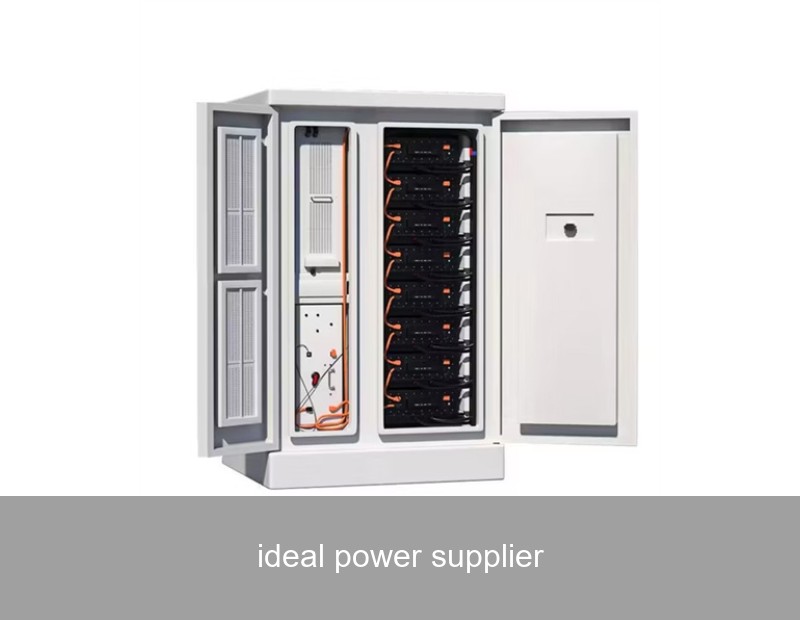
For decades, the concept of an ideal power supplier was simple: a distant utility company that delivered electricity through a vast, one-way grid. You paid the bill, and the lights stayed on. But in today's world—marked by volatile energy prices, increasing extreme weather events, and a collective push for sustainability—that old model is showing its cracks. Businesses and homeowners alike are asking: what does a truly reliable, cost-effective, and clean power partner look like in the 21st century? The answer is shifting from a centralized entity to a decentralized, intelligent system you can control. It's not just about who supplies your power, but how it's supplied.
The Grid's Achilles' Heel: Why the Old Model Falls Short
The traditional grid is an engineering marvel, but it's built for a different era. Its centralized nature is its greatest vulnerability. A single point of failure—a storm, a wildfire, or simple equipment overload—can disrupt power for thousands. In the US alone, the average duration of a power interruption per customer has been increasing, with major events driving significant spikes (U.S. Energy Information Administration). In Europe, the energy crisis following geopolitical tensions laid bare the risks of over-reliance on imported fossil fuels, causing unprecedented price volatility.
This phenomenon creates a trifecta of pain: unpredictable costs, unreliable supply, and unsustainable sourcing. For a factory manager, a 2-hour outage can mean ruined product and six-figure losses. For a homeowner, a blackout during a heatwave is more than an inconvenience—it's a health risk. The search for an ideal power supplier, therefore, is a search for stability, autonomy, and responsibility.
The Data Behind the Demand Shift
| Challenge | Impact in the US & EU | Business Consequence |
|---|---|---|
| Grid Reliability | Increasing frequency & duration of outages | Operational downtime, data loss, spoiled inventory |
| Price Volatility | Electricity prices hitting record highs in recent years | Uncontrollable overheads, broken budgets, reduced competitiveness |
| Sustainability Goals | Net-zero mandates (EU Green Deal, Corporate PPAs growing) | Regulatory pressure, investor & consumer demand for green credentials |
The Three Pillars of an Ideal Power Supplier
So, if the traditional utility can no longer be the sole ideal power supplier, what framework replaces it? Modern energy independence is built on three interconnected pillars:
- Resilience & Reliability: The system must keep critical operations running seamlessly, regardless of grid conditions. This is the non-negotiable baseline.
- Intelligence & Cost-Optimization: It must actively manage energy flows—using stored power when grid prices are high, selling excess back when profitable, and smoothing demand charges. It thinks for your wallet.
- Sustainability & Integration: It must seamlessly integrate local renewable generation, like solar PV, maximizing self-consumption and minimizing carbon footprint. It acts for the planet.
In essence, your ideal power supplier is no longer a monolithic company. It's a smart, integrated ecosystem installed on your property. This is where advanced Battery Energy Storage Systems (BESS) become the cornerstone.

Image: The modern energy setup: on-site generation paired with battery storage forms the core of a resilient power supply.
Case Study: A Bavarian Bakery's Recipe for Resilience
Let's make this concrete with a real-world example. Bäckerei Schmidt (name changed for privacy), a mid-sized bakery in southern Germany, faced a classic dilemma. Their electric ovens, refrigeration, and cooling systems made them vulnerable to even short grid outages (risking entire batches of product) and exposed them to Germany's high and fluctuating electricity prices. Their existing rooftop solar PV system often produced more power in the middle of the day than they could use, exporting it at low feed-in tariffs, while they had to buy expensive power in the early mornings and evenings.
Their solution was to integrate a Highjoule HICube 50 commercial energy storage system. Here’s what happened within the first year:
- Self-Consumption of Solar Power increased from 35% to over 80%. The bakery now stores its midday solar surplus to power the evening baking shift and early morning preparations.
- Grid Dependency reduced by 60% during peak tariff hours. The system's intelligent energy management software automatically switches to battery power during expensive peak periods.
- Critical Load Protection ensured that refrigeration and key oven circuits have 8+ hours of backup power, eliminating spoilage risk from outages.
- ROI Projection: 4.5 years, thanks to savings on peak demand charges and optimized self-consumption, not including avoided loss from outages.
For Bäckerei Schmidt, their ideal power supplier became their own hybrid system: solar panels, a Highjoule battery, and the intelligence to manage it all. They gained control, cut costs, and fortified their business against instability.
How Highjoule Enables Your Ideal Power Supply
Since 2005, Highjoule has evolved from a battery technology innovator to a global provider of complete, intelligent energy storage solutions. We understand that the journey to energy independence isn't one-size-fits-all. Our role is to provide the core technology and intelligence that makes your personalized ideal power supplier possible.
Our Product Ecosystem: Built for Commercial & Industrial Excellence
Highjoule's product lines are engineered for the demands of businesses and communities:
- HICube Commercial Series: Scalable, containerized or modular BESS solutions designed for medium to large commercial and industrial (C&I) sites. They feature industry-leading lithium-iron-phosphate (LFP) battery chemistry for safety and longevity, coupled with our proprietary EnergyOS management platform.
- EnergyOS Software Platform: This is the "brain." It doesn't just monitor—it actively optimizes. Using AI-driven forecasts for weather, energy prices, and consumption patterns, it makes real-time decisions to charge, discharge, or island your facility for maximum economic and operational benefit. IEA reports highlight software as a critical enabler for storage value.
- HI-Resilience Microgrid Solutions: For campuses, remote sites, or critical infrastructure, we design and integrate systems that can disconnect from the main grid and operate independently, powered by a combination of solar, storage, and sometimes backup generators.
Our services extend beyond hardware. We offer comprehensive energy audits, system design, financing guidance, and ongoing performance monitoring to ensure your system delivers on its promise for decades.

Image: Intelligent energy management software, like Highjoule's EnergyOS, is critical for optimizing a modern power system.
Why Highjoule Stands Out
In a crowded market, our nearly two decades of focus on advanced storage gives us a distinct edge. Our systems are renowned for their cyclical durability (exceeding 6,000 cycles at 80% depth of discharge) and safety-first design. More importantly, we view storage not as a standalone product, but as the central nervous system for a new kind of energy resilience—one that puts you, the consumer, in the driver's seat.
The Future is Local, Intelligent, and Sustainable
The transition is undeniable. The grid of the future will be a network of millions of interconnected, intelligent micro-hubs—homes, businesses, and communities—that generate, store, and share power dynamically. This isn't a rejection of the utility; it's the evolution towards a more robust, efficient, and cleaner overall system. The ideal power supplier of tomorrow is a collaborative partner in this ecosystem, providing the infrastructure and market access to complement your on-site resources.
For forward-thinking leaders, the question is no longer if to invest in energy resilience, but how and with whom. The technology is proven, the economics are increasingly compelling, and the risks of inaction are growing every season.
Is your current power supply a cost center you cannot control, or is it a strategic asset you can optimize? What would achieving 80% energy autonomy do for your operational security and your bottom line this year?
 Inquiry
 Online Chat