


On-Grid and Off-Grid Inverter: Choosing the Heart of Your Solar Power System
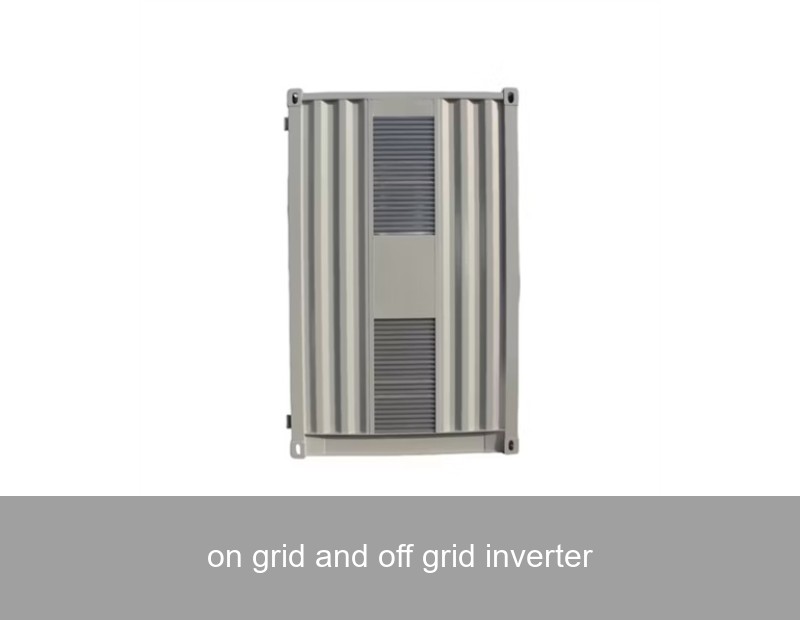
So, you've decided to harness the sun's power. You're researching solar panels, calculating potential savings, and dreaming of a lower carbon footprint. But here's a crucial piece of the puzzle many overlook: the on-grid and off-grid inverter. This isn't just a grey box on your wall; it's the intelligent brain of your entire energy system. It determines how you use your solar power, interact with the utility grid, and ensure your lights stay on. Whether you're a homeowner in California, a factory manager in Germany, or planning a remote cabin, understanding the difference between these two technologies is the first step to true energy empowerment.
The On-Grid (Grid-Tied) Inverter: Your Energy Partner
Imagine your solar panels are a small, personal power plant on your roof. An on-grid inverter (or grid-tied inverter) acts as the plant manager that seamlessly connects this operation to the public electricity grid. Its primary job is to convert the direct current (DC) electricity from your panels into the alternating current (AC) that powers your home and the grid.
Here’s how it works in practice:
- Daytime Production: Your panels generate DC power. The on-grid inverter converts it to AC, powering your appliances in real-time.
- Excess Energy: If you produce more than you use, the inverter sends the surplus back to the grid. In many regions, this earns you credits through net metering programs.
- Nighttime or Low Production: When your panels aren't producing enough, the system automatically draws power from the grid to meet your needs. The transition is instant and seamless.

A Critical Safety Feature: All certified on-grid inverters have a key function called "anti-islanding." If the grid goes down for maintenance or an outage, the inverter must shut off automatically. This protects utility workers from unexpected live feeds. This is why, with a pure on-grid system, your solar panels will also turn off during a blackout—even on a sunny day.
For businesses and homeowners connected to a reliable grid, this setup maximizes financial return and simplicity. Companies like Highjoule offer advanced three-phase commercial on-grid inverters, such as our HG-Titan Series, designed for large-scale industrial rooftops and solar farms. These systems feature high efficiency ratings (over 99%), advanced grid-support functions, and remote monitoring to ensure every kilowatt-hour is optimally converted and fed into the grid.
The Off-Grid Inverter: Your Energy Independence
Now, let's change the scenario. You're on a remote farm, a mountain lodge, or in an area with an unstable grid. Connection to the public utility is impossible, unreliable, or prohibitively expensive. Enter the off-grid inverter.
This technology is the cornerstone of complete energy independence. An off-grid system is a self-contained island of power. It requires four key components:
- Solar Panels to generate power.
- A Battery Bank to store excess energy for use at night or on cloudy days.
- A Charge Controller to manage battery charging.
- The Off-Grid Inverter to convert stored DC battery power into usable AC power for your loads.
The off-grid inverter's intelligence is different. It doesn't look for a grid; it manages the delicate balance between energy generation, battery storage, and consumption. It must prioritize charging batteries when the sun shines and efficiently draw from them when needed. Highjoule's OG-Fortis Series of off-grid inverters are built for this rugged duty. They incorporate sophisticated battery management algorithms, can handle high surge loads (like starting water pumps or refrigerators), and are designed for durability in harsh environmental conditions, making them ideal for remote telecommunications sites or agricultural operations worldwide.
Key Comparison Table
| Feature | On-Grid Inverter | Off-Grid Inverter |
|---|---|---|
| Grid Connection | Mandatory | Not Required |
| Battery Storage | Typically not included (can be added with hybrid) | Mandatory |
| Power During Grid Outage | No (shuts down for safety) | Yes, from batteries |
| System Complexity & Cost | Lower | Higher |
| Ideal For | Urban/suburban homes, businesses with reliable grid | Remote locations, areas with frequent outages, critical backup needs |
The Best of Both Worlds: Hybrid Inverter Systems
What if you want the financial benefits of net metering and the security of backup power? This is where the line between on-grid and off-grid inverter technology beautifully blurs. Hybrid inverters, or multi-mode inverters, are the all-in-one solution.
A hybrid inverter can:
- Feed solar power to your home and the grid.
- Charge a connected battery bank with excess solar or cheap off-peak grid electricity.
- Seamlessly switch to battery power during a grid outage, creating a "microgrid" in your home.
- Optimize energy use based on time-of-use rates to maximize savings.
This is the future of residential and commercial energy management. Highjoule's flagship Hybrid-X Platform exemplifies this intelligence. It integrates a high-efficiency inverter, a sophisticated battery manager, and grid-interface controls into one unit. Its AI-driven software learns your consumption patterns and can be programmed to prioritize self-consumption, maximize revenue from grid export, or ensure critical backup reserves—all controllable via a user-friendly app.
Choosing the Right Inverter for Your Needs
Your choice fundamentally depends on your goals and location. Ask yourself these questions:
- Is my primary goal to save on electricity bills? → A standard on-grid inverter is likely sufficient.
- Do I experience frequent or prolonged power outages? → You need a hybrid system with battery backup.
- Am I completely without utility access? → A robust off-grid inverter system with ample battery and solar capacity is necessary.
- Do I want to participate in grid services or virtual power plants? → You'll need an advanced, grid-interactive hybrid inverter like Highjoule's Hybrid-X, which is designed for such applications.
Case Study: A German Bakery's Energy Resilience & Savings
Let's look at a real-world application in our core European market. Bäckerei Schmidt (a mid-sized bakery in Bavaria) faced two problems: rising energy costs and the critical need for uninterrupted refrigeration. A power outage would spoil inventory and halt production.
The Solution: Highjoule designed and installed a tailored hybrid system.
- Solar Array: 50 kWp on the bakery's large roof.
- Inverter: 3x Highjoule Hybrid-X 15kW units operating in parallel.
- Storage: A 40 kWh Highjoule Lithium-Ion battery bank.
- Grid Independence: Achieved 78% self-consumption of solar energy, up from 35% with a theoretical grid-only system.
- Financial Savings: Reduced energy bills by 64%, with an estimated payback period of 6.2 years.
- Resilience: Experienced two grid outages (totaling 8 hours). The bakery's refrigeration and essential lighting continued uninterrupted, preventing an estimated €15,000 in potential lost inventory and sales.
- Carbon Footprint: Reduced CO2 emissions by 42 tonnes annually.
This case demonstrates how the right inverter technology, chosen for specific commercial needs, delivers both economic and operational resilience. For more on commercial solar benefits, see this report by the International Renewable Energy Agency (IRENA).

Future Trends and Smart Energy Management
The evolution of on-grid and off-grid inverter technology is rapidly converging towards intelligent energy management systems. Modern inverters are becoming the hub for integrating solar, storage, electric vehicle charging, and even home heating systems. With the rise of dynamic electricity pricing and the need for grid stability, inverters that can respond in real-time to grid signals (a feature known as frequency response or peak shaving) are increasingly valuable.
Highjoule's systems are at the forefront of this trend. Our cloud-based EnergyOS platform allows users to monitor, control, and optimize their energy flows from anywhere. For utilities and grid operators, aggregated fleets of Highjoule systems can provide virtual power plant services, helping to balance supply and demand without firing up fossil-fuel peaker plants. This is the true promise of a decentralized, resilient, and clean energy grid. The U.S. Department of Energy discusses the importance of these grid-edge technologies in their modern grid initiative here.
Final Thought: It's About More Than Just Conversion
Choosing between an on-grid and off-grid inverter is no longer a binary decision. It's about defining your relationship with energy. Do you see yourself as a passive consumer, an active prosumer, or a fully independent producer?
The technology exists today to support any of these paths. The critical step is partnering with an expert who can assess your unique load profile, local regulations (like grid connection codes in the EU or UL standards in the US), and long-term goals. At Highjoule, with nearly two decades of experience, we don't just sell inverters; we provide integrated, intelligent power solutions that are built to last and designed to adapt.
What energy role do you see for your home or business in the next five years, and how can the right inverter technology help you get there?
 Inquiry
 Online Chat