


Indonesia Battery Manufacturing: The Emerging Global Hub You Need to Watch
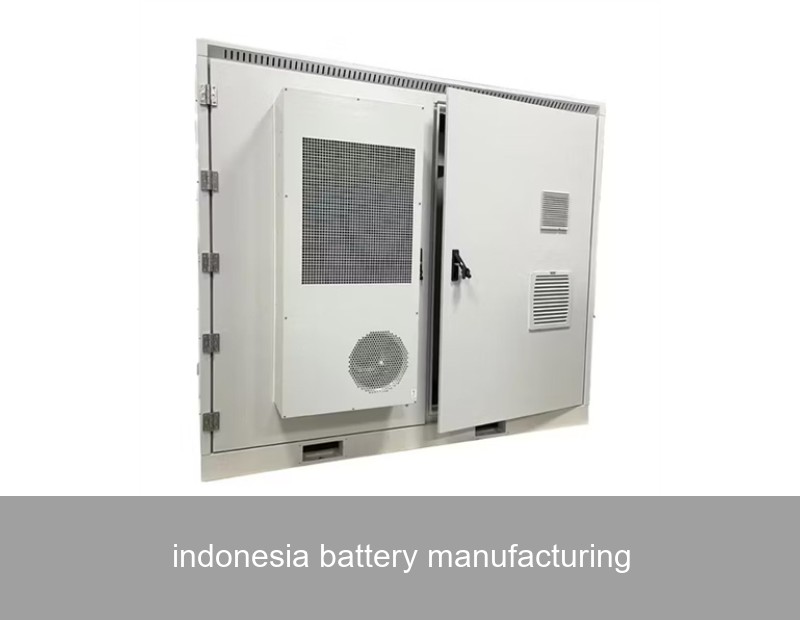
When you think of battery manufacturing giants, your mind likely jumps to China, the United States, or perhaps South Korea. But there's a new, ambitious player rapidly entering the global arena: Indonesia. With its vast reserves of critical nickel—a key component in modern lithium-ion batteries—Indonesia is not just mining raw materials anymore; it's strategically positioning itself as a full-fledged Indonesia battery manufacturing powerhouse. This shift is more than a national economic plan; it's a development with significant implications for global renewable energy adoption, supply chain resilience, and the future cost of energy storage systems for homes and businesses worldwide.
The Silent Powerhouse: Indonesia's Battery Ambition
Indonesia's strategy is clear and bold. The government has implemented a raw mineral export ban, particularly on nickel ore, to force investment in domestic processing and manufacturing. The goal? To capture more value within its borders by moving up the supply chain from mere excavation to producing battery-grade materials, cells, and eventually complete battery packs. This "on-shoring" of the battery value chain is a deliberate move to become an indispensable link in the global energy transition. For industries and nations in Europe and the US seeking to diversify their supply chains away from concentrated sources, Indonesia's emergence offers a compelling alternative.

Advanced manufacturing is key to Indonesia's battery ambitions. (Image credit: Unsplash)
Why Indonesia, Why Now? The Global Data Behind the Move
The numbers tell a compelling story. Indonesia holds approximately 22% of the world's nickel reserves, the largest global share. Nickel is crucial for high-energy-density cathode chemistries like NMC (Nickel Manganese Cobalt) and NCA (Nickel Cobalt Aluminum), which power everything from electric vehicles to grid-scale storage. The International Energy Agency (IEA) projects that demand for nickel for clean energy technologies could grow by over 20 times by 2040 in its most ambitious climate scenario. This looming demand surge creates a massive economic incentive for resource-rich nations.
But it's not just about geology. The global push for supply chain diversification, especially post-pandemic and amid geopolitical tensions, has made Indonesia an attractive partner. Major players like LG Chem, CATL, and Hyundai are investing billions in joint ventures within the country. This isn't just about building factories; it's about transferring technology and building a complete ecosystem, from smelters to precursor plants to gigafactories.
The Battery Value Chain: From Ore to System
| Stage | Traditional Model | Indonesia's Integrated Goal |
|---|---|---|
| 1. Raw Material | Export nickel ore | Process ore into nickel matte & sulfate locally |
| 2. Precursor/Cathode | Manufactured abroad (e.g., China, Korea) | Produce battery-grade precursors and cathodes domestically |
| 3. Cell Manufacturing | Concentrated in a few countries | Establish gigafactories for lithium-ion cell production |
| 4. System Integration | Assembly often close to end-market | Develop capability for specialized battery pack assembly |
Case Study: Powering Progress Beyond the Mines
Let's move beyond macroeconomics and look at a tangible impact. Consider the remote islands and industrial parks of Indonesia itself, which often rely on expensive and polluting diesel generators. A growing domestic battery supply chain is making renewable microgrids more feasible and affordable. In 2023, a project in the Sumba Island region integrated a 5 MW solar PV farm with a 10 MWh battery energy storage system (BESS). The BESS, utilizing locally sourced battery cells, now stores excess solar energy during the day and dispatches it during the evening peak, reducing diesel consumption by an estimated 1.8 million liters per year and cutting carbon emissions significantly.
This case is a microcosm of the larger opportunity: Indonesia battery manufacturing isn't solely for export. It's enabling the nation's own clean energy transition, proving the technology's value in demanding, off-grid environments. The operational data from such projects—managing heat, humidity, and cyclic loads—provides invaluable real-world feedback to manufacturers, potentially leading to more robust and globally competitive battery products.
Challenges & Opportunities: The Realities of Building a Supply Chain
The path is not without hurdles. Establishing a world-class manufacturing base requires:
- Sustainable Mining Practices: Nickel processing is energy-intensive. The industry faces pressure to use renewable energy sources to keep the carbon footprint of its batteries low, a key concern for European and US markets.
- Infrastructure & Skilled Workforce: Building gigafactories requires stable, high-capacity power, water, and logistics networks, alongside a massive upskilling of the local workforce.
- Full Supply Chain Integration: Indonesia has nickel, but lithium, cobalt, and graphite still need to be imported. Building a complete, resilient supply chain within the country remains a long-term challenge.
However, each challenge is also an opportunity for international collaboration. This is where expertise from established markets becomes crucial.
Global Implications for Energy Storage
For businesses and homeowners in Europe and the US, a diversified global battery supply chain means greater stability and potential cost reductions in the long run. Increased manufacturing capacity and competition can help alleviate the bottlenecks that have historically driven up prices. Furthermore, it allows system integrators and providers to source from multiple regions, mitigating geopolitical risk.
This is precisely the context in which a company like Highjoule operates. As a global provider with nearly two decades of experience, we design our advanced energy storage systems with supply chain agility in mind. Our modular architecture allows us to integrate high-quality battery cells from various certified suppliers, including emerging sources like Indonesia, into our robust, AI-driven Highjoule HPS (Hybrid Power System) platforms. This means our commercial, industrial, and residential clients benefit from competitive, reliable technology without being locked into a single geographic supply source.

Grid-scale storage projects can benefit from a diversified battery supply. (Image credit: Unsplash)
Highjoule's Role in a Diversifying Supply Chain
At Highjoule, founded in 2005, we view the evolution of Indonesia battery manufacturing as a positive step for the industry. Our focus has always been on creating intelligent, efficient, and sustainable power solutions—whether for a factory in Germany, a hospital in California, or a microgrid in Southeast Asia. Our expertise lies not just in sourcing cells, but in the sophisticated integration, power conversion, and software that turns those cells into a reliable, long-lasting asset.
Our Highjoule Home and Highjoule Grid product lines are built on a foundation of safety, longevity, and smart energy management. By carefully evaluating and qualifying new cell manufacturers that meet our stringent performance and sustainability criteria, we can pass on the benefits of a competitive global market to our customers. We ensure that regardless of where a battery cell is produced, it performs optimally within our thermally managed enclosures and under the watchful eye of our proprietary energy management system.
So, as Indonesia charges ahead to become a central node in the global battery map, the question for forward-thinking energy consumers isn't just "Who made the cell?" but rather "Who can best integrate diverse technologies into a system that delivers security, savings, and sustainability for decades?" How is your organization planning to navigate and benefit from the shifting geography of energy storage innovation?
 Inquiry
 Online Chat