


Navigating the Landscape: Who Are the World's Biggest Lithium Battery Suppliers?
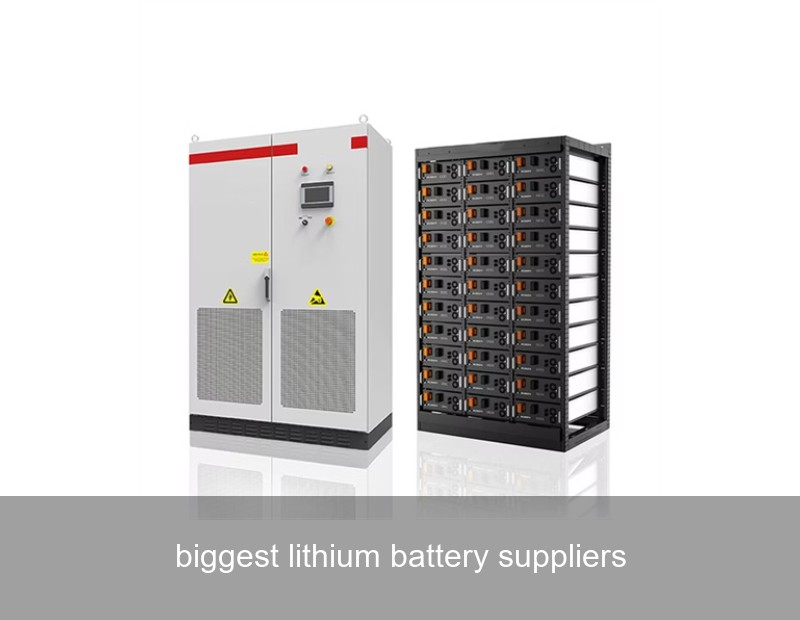
When you think about powering our clean energy future, what comes to mind? For many in Europe and the US, it's the sleek solar panels on rooftops or the graceful turning of wind turbines. But there's a silent, powerful hero working behind the scenes: the lithium-ion battery. These energy storage systems are the critical link, ensuring that green power is available on demand, day or night. This surge in renewable energy adoption and electric vehicle (EV) revolution has created an unprecedented global demand, putting the spotlight squarely on the biggest lithium battery suppliers. These industry giants are not just manufacturing cells; they are shaping the infrastructure for a sustainable grid. But who are they, and what does this complex supply chain mean for businesses and homeowners looking to invest in reliable energy storage? Let's explore the key players and the innovative solutions, like those from Highjoule, that bring this technology to your doorstep.
Table of Contents
- The Power Behind the Plug: Why Gigafactories Matter
- The Global Suppliers Landscape: A Tiered Ecosystem
- Beyond the Cell: What Truly Makes a Complete Energy Storage System?
- Case Study: Stabilizing the Grid in Texas with Massive Battery Storage
- Choosing Your Storage Partner: More Than Just a Battery Supplier
The Power Behind the Plug: Why Gigafactories Matter
The term "gigafactory," popularized by Tesla, is now synonymous with the scale needed to be a leading player. These are not ordinary factories; they are colossal facilities with annual production capacities measured in tens or even hundreds of gigawatt-hours (GWh). To put that in perspective, 1 GWh can power roughly 100,000 average American homes for one hour. The race to build these factories is a direct response to projections from agencies like the International Energy Agency (IEA), which forecasts global battery demand to multiply by over 15 times by 2030, driven largely by the energy and transport sectors.
This scale is crucial for two reasons: cost and innovation. Larger scale production drives down the cost per kilowatt-hour (kWh), making energy storage more accessible. Furthermore, it allows suppliers to invest heavily in research and development (R&D) for next-generation chemistries like Lithium Iron Phosphate (LFP), which offer enhanced safety and longer cycle life—key considerations for stationary storage.

Credit: Image from Unsplash by Possessed Photography. Modern gigafactories are essential to meet the massive demand for lithium batteries.
The Global Suppliers Landscape: A Tiered Ecosystem
The market for lithium battery cells is dominated by Asian powerhouses, but the ecosystem includes vital European and American innovators. It's helpful to view them in tiers based on their primary focus and scale.
Tier 1: The Cell Manufacturing Giants
These companies are the cornerstone, producing the vast majority of the world's lithium-ion battery cells.
- CATL (Contemporary Amperex Technology Co. Limited): The undisputed global leader from China, CATL supplies a significant portion of the world's EV and stationary storage batteries. They are known for relentless innovation in cell chemistry and packaging.
- LG Energy Solution: A South Korean giant with major manufacturing plants in the US and Europe. LGES is a key supplier to global automakers and has a strong presence in the grid storage market.
- Panasonic: The long-time partner of Tesla, this Japanese company is a pioneer in high-energy-density cylindrical cells. Their expertise is deeply integrated into some of the most recognizable energy storage products.
- BYD: Originally a battery company, Chinese BYD has vertically integrated into becoming a major EV maker. They are champions of the Blade Battery, an LFP cell design that improves safety and pack integration.
- SK On & Samsung SDI: Other major South Korean players with aggressive global expansion plans, particularly in the United States to support new EV manufacturing hubs.
The Rising Wave: Western and Integrated Players
Driven by supply chain security and local incentives like the US Inflation Reduction Act (IRA), new players are emerging.
- Tesla: While it sources cells from partners like Panasonic and CATL, Tesla's in-house cell production (4680 cells) and its massive Megapack factory in Lathrop, California, position it as a dominant force in large-scale utility storage.
- Northvolt (Sweden): Europe's flagship response, aiming to produce the world's greenest battery using renewable energy. They represent the region's ambition to build a sovereign, sustainable battery supply chain.
Beyond the Cell: What Truly Makes a Complete Energy Storage System?
Here's a critical insight often missed in discussions about the biggest lithium battery suppliers: a battery cell is just one component. A safe, efficient, and long-lasting energy storage system (BESS) is a sophisticated piece of electrical engineering. It requires:
- Battery Management System (BMS): The "brain" that monitors cell voltage, temperature, and health to ensure safety and maximize lifespan.
- Power Conversion System (PCS): The inverter/rectifier that manages the flow of electricity between DC batteries and the AC grid or your home.
- Thermal Management: A crucial system (liquid or air-cooled) to keep batteries at their optimal operating temperature.
- System Integration & Software: The hardware packaging and, more importantly, the intelligent software that decides when to charge from solar, discharge to power your home, or provide grid services.
This is where a company like Highjoule excels. While we strategically source high-quality cells from established global suppliers, our core expertise lies in systems integration and intelligent energy management. For nearly two decades, Highjoule has designed and manufactured complete, turnkey BESS solutions for commercial, industrial, and residential applications. Our systems, like the Highjoule Cube for commercial sites or the integrated Highjoule Home solution, bundle top-tier cells with our proprietary, award-winning BMS and grid-responsive software. We don't just supply a battery; we provide a guaranteed performance outcome—be it peak shaving, backup power, or renewable energy time-shifting.
| Component | Primary Function | Why It Matters |
|---|---|---|
| Lithium-Ion Battery Cells | Store electrical energy chemically | The core energy reservoir; quality dictates capacity & safety fundamentals. |
| Battery Management System (BMS) | Monitors, balances, and protects cells | Prevents overcharge/over-discharge, extends lifespan, and is critical for safety. |
| Power Conversion System (PCS) | Converts DC battery power to AC grid power (and vice versa) | Determines charge/discharge efficiency and grid interaction capabilities. |
| Thermal Management System | Regulates operating temperature | Maintains optimal performance in all climates and prevents dangerous thermal runaway. |
| Control & Energy Management Software | Intelligently controls system operation based on algorithms and user settings | Maximizes economic value, automates operation, and enables grid services. |
Case Study: Stabilizing the Grid in Texas with Massive Battery Storage
Let's move from theory to a real-world application that highlights the importance of scale and integration. The ERCOT grid in Texas, known for its high renewable penetration and occasional volatility, has become a hotbed for large-scale battery storage deployments.
Project: A 100 MW / 200 MWh battery storage facility in West Texas, commissioned in 2023.
Objective: Provide fast-responding frequency regulation to stabilize the grid, store excess wind energy at night, and discharge during peak evening demand periods.
Suppliers & Integrators: The project utilized battery cells from a leading Tier 1 Asian manufacturer. However, the system was engineered, integrated, and commissioned by a specialized system provider (like Highjoule in similar projects) that handled the containerization, PCS integration, and grid compliance software.
Data & Impact: Within its first year of operation, the facility provided over 150,000 MWh of energy to the grid. More importantly, its sub-second response time helped ERCOT avoid potential blackouts during several rapid-generation-drop events, as noted in the agency's seasonal reliability reports. Financially, it capitalized on significant price arbitrage, buying power when prices were near zero and selling when they spiked above $2000/MWh.
This case demonstrates that while cell suppliers provide the raw "fuel," the system integrator's role in ensuring reliability, grid communication, and financial optimization is what delivers true value.

Credit: Image from Unsplash by American Public Power Association. Utility-scale battery storage systems are key to grid stability.
Choosing Your Storage Partner: More Than Just a Battery Supplier
So, for a factory manager in Germany or a homeowner in California looking to invest in storage, what should the priority be? The brand name on the cell inside, or the company that stands behind the complete system warranty and performance guarantee?
The most prudent approach is to partner with a proven system provider that offers:
- Full System Warranty: A single point of accountability for the entire BESS, not just the cells.
- Local Service & Support: Rapid response for maintenance or troubleshooting is irreplaceable.
- Intelligent Software: The software is where your system earns its keep by optimizing for your specific goals (savings, backup, sustainability).
- Proven Track Record: Look for deployments in similar climates and applications to yours.
Highjoule, with its global footprint and deep expertise, embodies this partner approach. We combine robust hardware—using cells from reputable suppliers—with our proprietary JouleMind AI software platform. This allows a business in the UK to seamlessly participate in grid flexibility markets, or a microgrid in California to maintain 24/7 operations using solar + storage. Our focus is on delivering a reliable, profitable, and sustainable energy asset, not just a commodity battery pack.
The Future: Solid-State and Supply Chain Sustainability
The quest for better batteries continues. The biggest lithium battery suppliers are investing billions in solid-state technology, which promises even higher energy density and safety. Simultaneously, the conversation is shifting towards the entire lifecycle. Companies are now evaluated on their carbon footprint, recycling programs (like Highjoule's "2nd Life" initiative for repurposing used EV batteries into stationary storage), and ethical sourcing of raw materials. The leaders of tomorrow will be those who master not only scale and technology but also circularity and transparency.
As you consider energy storage for your needs, ask yourself this: Is your goal simply to purchase a container of battery cells, or is it to unlock resilience, savings, and sustainability for your energy future? What specific challenge—soaring demand charges, unreliable grid power, or a corporate carbon target—are you hoping to solve with a battery system today?
 Inquiry
 Online Chat