


Understanding the 10 kg Solar Battery Price: A Guide to Value and Performance
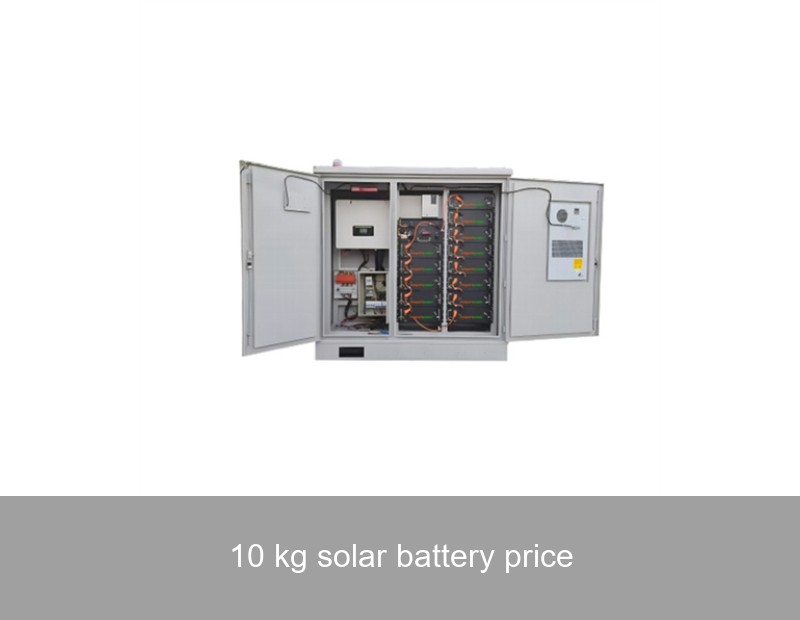
When you start shopping for home energy storage, you'll quickly encounter a curious metric: the 10 kg solar battery price. It's a common search term, and for good reason. People are looking for a simple, tangible way to compare their options. But here's the thing you need to know upfront: focusing solely on the price per kilogram of a battery is like buying a car based only on its weight. It tells you something, but it misses the critical details of performance, longevity, and intelligence that truly define value. In this article, we'll unpack what influences the cost of a compact solar battery, explore the technology inside, and show you how to make a smart investment for your energy independence.
Table of Contents
- The Weight Myth: What You're Really Paying For
- Key Factors Driving the Cost of a Solar Battery
- Battery Chemistry Showdown: LFP vs. Others
- A Real-World Case Study: Beyond the Price Tag
- The Highjoule Solution: Intelligent Storage for Modern Homes
- Making the Right Choice for Your Home
The Weight Myth: What You're Really Paying For
Let's address the elephant in the room. A 10 kg solar battery could be a premium product with a higher price, or a less capable unit with a lower one. Weight alone is a poor indicator. Why? Because the core value lies in the energy inside that mass—specifically, the energy density.
Think of it this way: a high-quality, modern Lithium Iron Phosphate (LFP) battery can store a tremendous amount of energy in a safe, stable package. The 10 kg solar battery price should reflect not the raw materials, but the engineering prowess that packs more usable kilowatt-hours (kWh), more life cycles, and more sophisticated management systems into that form factor. You're investing in years of reliable service, safety, and smart integration with your solar panels, not just a heavy box.

Image Source: Unsplash (Representative image of advanced battery technology)
Key Factors Driving the Cost of a Solar Battery
When evaluating any battery system, including those in the ~10 kg range, these are the true cost drivers:
- Usable Capacity (kWh): This is the most critical number. How much electricity can you actually use? Two 10 kg batteries might have different total capacities, and even then, some manufacturers limit the usable portion to prolong life.
- Battery Chemistry: As mentioned, LFP is now the gold standard for residential storage due to its long life and superior safety. It may command a different price point than older lithium-ion variants.
- Cycle Life & Warranty: A battery rated for 6,000 cycles will outlive one rated for 3,000, providing far better long-term value. Look for a strong warranty that guarantees both capacity retention and cycle count over 10+ years.
- Integrated Power Electronics: Does the battery have a built-in inverter? Or is it a DC-coupled system? All-in-one solutions simplify installation but affect the overall system cost structure.
- Software & Grid Services: Can the battery learn your usage patterns? Can it participate in grid-balancing programs to earn you money? This intelligence adds significant value beyond simple storage.
Battery Chemistry Showdown: Why LFP Dominates Modern Systems
The shift to Lithium Iron Phosphate (LFP) is a game-changer. Unlike some earlier chemistries, LFP batteries are inherently non-combustible, significantly reducing fire risk. They also boast a much longer lifespan—typically double or more the cycle count of older NMC batteries. For a homeowner, this means your system is safer for your family and will maintain its capacity for decades. While the upfront 10 kg solar battery price for an LFP unit might be comparable or slightly higher, the total cost of ownership is dramatically lower. It's a classic case of "buy nice, or buy twice."
A Real-World Case Study: Beyond the Price Tag in Munich, Germany
Let's look at data from a real installation. A family in Munich, Germany, installed a 8 kWp solar array on their roof in 2022. They were comparing two storage options with similar physical sizes and weights (~10-15 kg per module).
| Factor | Option A (Lower Upfront Cost) | Option B (Higher Upfront Cost, LFP-based) |
|---|---|---|
| Usable Capacity | 9.6 kWh | 10.5 kWh |
| Warranted Cycle Life | 4,000 cycles (to 70% capacity) | 8,000 cycles (to 70% capacity) |
| Chemistry | NMC | LFP |
| Grid Service Ready | No | Yes (VPP-enabled) |
| Projected Self-Consumption over 15 years | ~72% | ~88% |
The family chose Option B. The higher initial investment was offset within years by consuming more of their own solar power and participating in a local virtual power plant (VPP) program, which pays them for providing stability to the grid. This case shows that the true "price" is about the system's earning and saving potential over its lifetime.
The Highjoule Solution: Intelligent Storage for Modern Homes
At Highjoule, we engineer storage systems with this holistic value perspective. Our ResiCore 10 modular battery system exemplifies this philosophy. While individual modules are compact and manageable in weight, their true power lies in their integration.
The ResiCore 10 uses ultra-safe LFP chemistry and is designed for a lifespan exceeding the industry standard. Each module is part of a scalable system, allowing you to start with what you need and expand later. But the real differentiator is the Highjoule EnergyOS.
This intelligent software platform doesn't just store energy; it optimizes it. It learns your household's energy habits, forecasts weather and solar production, and can automatically choose the most economical times to charge (from your panels or the grid during off-peak rates) and discharge. For our customers in Europe and North America, this can mean maximizing savings under complex time-of-use tariffs or seamlessly integrating with emerging VPP markets.

Image Source: Unsplash (Representative image of energy monitoring)
We provide end-to-end solutions, from initial consultation and system design to installation support and ongoing performance monitoring. Our focus is on delivering a seamless, sustainable, and financially savvy energy experience, not just a box with a 10 kg solar battery price tag.
Making the Right Choice for Your Home
So, how should you approach your purchase decision? Move beyond simple weight or per-kg metrics. Start by asking these questions:
- What is my average daily energy consumption, and how much do I want to cover with storage?
- Is the battery chemistry safe and durable (LFP is strongly recommended)?
- What is the warranted throughput (total energy it will deliver over its life), not just the cycle count?
- Does the system come with intelligent software that can adapt and potentially generate revenue?
- Is the provider a trusted partner with a proven track record, like Highjoule, offering robust support and service?
Consulting with a certified installer is crucial. They can perform a detailed energy audit and model different scenarios to show you the payback period and long-term benefits of a quality system.
Your Home as a Power Plant
The future of energy is decentralized, digital, and sustainable. A modern solar battery is the heart of this transformation. It turns your home into a resilient power plant, giving you control over your energy costs and carbon footprint. The initial investment is significant, but when viewed as a 20+ year infrastructure upgrade for your property, the focus shifts from upfront cost to lifelong value.
Ready to explore what an intelligent energy storage system could do for your energy bills and peace of mind? What's the first question you would ask an installer about maximizing the value of your solar investment?
 Inquiry
 Online Chat