


Indonesia's BTR New Energy Material Hub in Kendal: Powering a Sustainable Future
Introduction: The Rise of a Green Industrial Giant
a sprawling industrial complex in Southeast Asia, not producing textiles or electronics, but the very materials that will power our electric vehicles and store renewable energy for decades to come. This is no longer a vision of the future; it's the reality taking shape in Indonesia's BTR New Energy Material hub in Kendal. While Europe and the US advance in battery system design and software, a quiet revolution in the foundational layer of the energy transition is happening in Indonesia. This strategic move positions the nation not just as a supplier of raw nickel, but as a pivotal player in the refined, high-value anode materials essential for lithium-ion batteries. For anyone involved in renewable energy, EVs, or energy storage, understanding this shift is crucial.
What is BTR? The "Heart" of Modern Batteries
Let's demystify the term. BTR stands for "Battery," and in this context, it specifically refers to BTR New Energy Materials Inc., a global leader in lithium-ion battery anode materials. Think of the anode as the "heart" of a battery where energy is stored during charging. The material's quality directly determines a battery's capacity, charging speed, lifespan, and safety. BTR's specialization in synthetic graphite and silicon-based anodes is what makes high-performance EVs and long-lasting storage systems possible. The establishment of their major production base in Kendal, Indonesia, is a game-changer, bringing high-tech material processing closer to Indonesia's vast nickel reserves (a key cathode material) and creating an integrated battery supply chain in the region.
Why Kendal, Indonesia? A Strategic Masterstroke
The location is no accident. Kendal Industrial Park, located in Central Java, offers a compelling blend of strategic advantages:
- Proximity to Resources: Indonesia holds the world's largest nickel reserves, a critical element for battery cathodes. Locating anode production nearby reduces logistics costs and supply chain complexity.
- Government Backing: Indonesia has enacted policies banning raw nickel exports to incentivize domestic processing and build a full-fledged battery and EV industry. The BTR Kendal facility is a direct beneficiary of this national strategy.
- Infrastructure and Port Access: The modern industrial park provides reliable power, water, and direct access to the Port of Semarang, facilitating efficient export to global markets in Asia, Europe, and North America.

Image Source: Unsplash (Representative image of a modern industrial park)
The Data: Quantifying Kendal's Transformative Impact
The scale of this project underscores its importance. Reports indicate that BTR's investment in the Kendal plant is monumental, with a planned annual production capacity in the hundreds of thousands of tons. To put this in perspective, one ton of high-quality anode material can support battery production for approximately 30-40 electric vehicles. This single facility could ultimately supply materials for millions of EVs annually. Furthermore, the shift from exporting raw nickel to processed materials exponentially increases the value captured within Indonesia. According to the International Energy Agency (IEA), global demand for EV batteries is set to grow over 15-fold by 2030, and supply chains like the one being built in Kendal are critical to meeting that demand sustainably.
Case Study: A Model for Sustainable Industrial Parks
The Kendal New Energy Material hub isn't just about production volume; it's a blueprint for modern, sustainable industry. A key challenge for energy-intensive material processing is its carbon footprint. Recognizing this, the park's developers and tenants are integrating clean energy solutions at a core level.
The Challenge: Ensure a stable, cost-effective, and low-carbon power supply for precision manufacturing processes that require consistent, high-quality electricity.
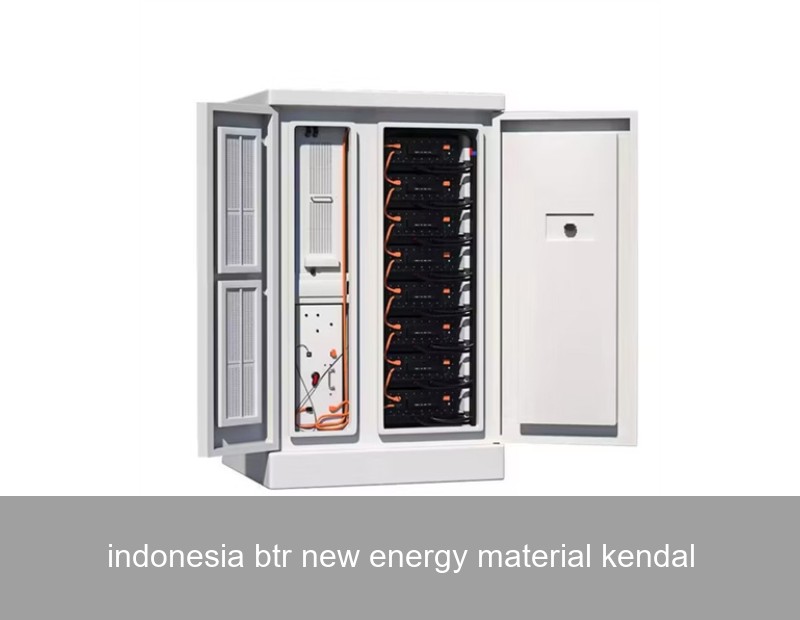
The Solution: A hybrid microgrid approach combining rooftop solar PV with large-scale battery energy storage systems (BESS). For instance, a designated zone within the park has deployed over 5 MW of rooftop solar panels, coupled with a 2.5 MWh containerized BESS. This system doesn't just lower emissions; it provides critical power quality management, reduces peak demand charges from the grid, and ensures uninterrupted power for sensitive production lines during brief grid fluctuations.
The Data Outcome: This setup is projected to reduce the zone's grid dependency by 25% during peak sun hours and cut annual carbon emissions by an estimated 4,500 metric tons—equivalent to taking nearly 1,000 gasoline-powered cars off the road. This case study proves that high-tech industrial growth and environmental stewardship can, and must, go hand-in-hand.
Global Implications: Reshaping the Energy Storage Supply Chain
For European and American markets, the rise of Indonesia's BTR hub in Kendal signifies a diversification and strengthening of the global battery supply chain. Over-reliance on a single region for material processing poses strategic risks. Indonesia's entry as a major, integrated player enhances supply security. This translates to more stable pricing and predictable material flows for battery cell manufacturers and, ultimately, for companies like Highjoule that integrate these cells into sophisticated energy storage systems for homes, businesses, and utilities. A resilient, globalized supply chain is the foundation upon which we can build a faster and more secure global energy transition.
The Technology Enablers: Beyond Raw Materials
Advanced materials are just one piece of the puzzle. The true potential of this new energy ecosystem is unlocked by intelligent energy management. This is where the synergy between material science and system engineering becomes vital. The BESS solutions deployed in places like Kendal require not just high-quality battery cells, but also:
- Advanced Battery Management Systems (BMS): To ensure every cell within a storage unit operates safely and at peak efficiency throughout its lifespan.
- AI-Powered Energy Management Software (EMS): To predict energy generation (from solar), optimize charging/discharging cycles based on tariffs and consumption patterns, and maximize financial returns and grid stability.
- Modular and Scalable Architecture: Allowing storage capacity to grow seamlessly with industrial or grid needs.

Image Source: Unsplash (Representative image of a battery energy storage system)
How Highjoule Supports This New Energy Ecosystem
At Highjoule, we view developments like the Kendal hub as essential progress. Our role is to bridge the gap between advanced battery materials and real-world, reliable power solutions. While companies like BTR produce the core materials, Highjoule designs and manufactures the integrated, smart storage systems that put these materials to work. For industrial parks, commercial facilities, or microgrids—whether in Europe, the US, or emerging hubs like Southeast Asia—our solutions are engineered to maximize the value of every kilowatt-hour stored.
Our H-Series commercial & industrial BESS, for example, leverages the latest high-density battery cells to deliver unparalleled efficiency and cycle life. Coupled with our proprietary OptiGrid AI EMS platform, it allows operators to participate in demand response, hedge against energy price volatility, and integrate large shares of renewable generation—exactly the capabilities needed to power and green-light the industries of the future. We don't just provide hardware; we provide a comprehensive energy resilience and sustainability strategy, ensuring that the advancements at the material level translate into tangible benefits for businesses and communities.
Highjoule Products & Services Snapshot
| Product/Service | Application | Key Benefit |
|---|---|---|
| H-Series C&I BESS | Factories, Data Centers, Commercial Buildings | Peak shaving, backup power, renewable integration |
| OptiGrid AI Energy Management | Microgrids, Industrial Parks, Utilities | Predictive optimization, grid services, revenue stacking |
| Residential Energy Vault | Homeowners with solar PV | Energy independence, bill savings, backup resilience |
| Custom Microgrid Solutions | Remote communities, Islands, Campus environments | 100% renewable penetration, diesel displacement |
The Critical Question for Global Businesses
The story of Indonesia's BTR New Energy Material hub in Kendal is more than an industrial news item. It's a clear signal that the geography of the energy transition is global, interconnected, and moving at an unprecedented pace. The materials produced there will find their way into products and systems across the world. As a business leader, energy manager, or sustainability officer, the question is no longer *if* you will engage with new energy technologies, but *how strategically* you will integrate them. Are you prepared to leverage intelligent storage to protect your operations from energy volatility, meet your decarbonization goals, and build resilience for the future? The materials are ready. The technology is here. What's your next move?
 Inquiry
 Online Chat