


Industrial ESS: How Much Does It Really Cost and Save?
As an operations manager or facility director, you've likely seen your energy bills climb while worrying about grid reliability. The question isn't just if an Industrial Battery Energy Storage System (ESS) is a solution, but rather: Industrial ESS, how much? How much does it cost, how much can it save, and how much value does it truly bring beyond the price tag? This article breaks down the real investment, from upfront capital expenditure to long-term operational savings, using real data and clear examples to guide your decision.
Table of Contents
- The Real Cost Question: Beyond the Price per kWh
- Key Cost Factors of an Industrial ESS
- The Savings & Revenue Side: Making the ESS Pay for Itself
- Case Study: A European Manufacturing Plant
- The Highjoule Solution: Engineered for ROI
- Finding Your "How Much"
The Real Cost Question: Beyond the Price per kWh
When you ask "Industrial ESS, how much?", the initial quote for the battery hardware is just the starting line. The total cost of ownership (TCO) and the ultimate return on investment (ROI) are shaped by system design, integration complexity, and software intelligence. A cheaper, less integrated system might lead to higher installation costs, limited functionality, and missed revenue opportunities. The real metric should be cost over the system's lifetime versus the value it generates.

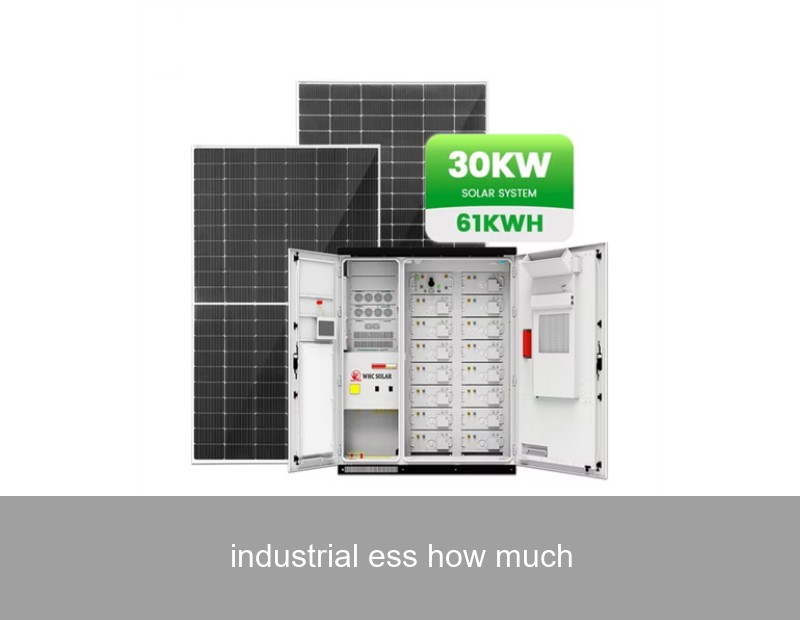
Image: A modern industrial battery installation. The physical hardware is one part of the total cost equation.
Key Cost Factors of an Industrial ESS
Let's dissect the main components that contribute to the "how much" for a robust industrial-grade system.
1. Core Hardware & Technology
The battery cells, battery management system (BMS), power conversion system (PCS), and thermal management. Lithium-ion phosphate (LFP) is now the dominant chemistry for industrial use due to its safety, longevity, and declining cost curve. System size is the primary driver here, but not linearly.
2. Balance of System (BOS) & Integration
This includes cabling, switchgear, safety systems, enclosures, and crucially, the engineering work to seamlessly connect the ESS to your facility's electrical infrastructure. This is where expertise matters most to avoid costly delays or rework.
3. Software & Intelligence
The brain of the operation. Advanced energy management software (EMS) is what transforms a passive battery into a dynamic financial asset. It enables automated control strategies for peak shaving, load shifting, and grid services participation.
4. Ongoing Operational Costs
Consider maintenance, warranty extensions, potential performance degradation, and software licensing fees. A high-quality system from a proven provider like Highjoule minimizes these through reliable design and comprehensive service agreements.
| Cost Component | Share of Total Project Cost | Notes |
|---|---|---|
| Battery Hardware (Cells, BMS) | 40-50% | Varies with chemistry and scale |
| Power Conversion (PCS/Inverter) | 15-20% | Critical for efficiency and response time |
| Balance of System & Integration | 20-30% | Highly dependent on site-specific factors |
| Software & Controls | 5-10% | The key to unlocking value streams |
| Installation & Commissioning | 10-15% | Requires specialized electrical contractors |
The Savings & Revenue Side: Making the ESS Pay for Itself
Now, let's answer the more exciting part of "how much": how much can it save or earn? An industrial ESS is a revenue-generating asset, not just a cost center.
- Peak Shaving (Demand Charge Reduction): This is often the fastest payback. By discharging the battery during your facility's short periods of highest power demand, you can dramatically reduce monthly demand charges, which can constitute 30-70% of a commercial electricity bill. Savings can reach tens of thousands annually.
- Energy Arbitrage (Time-of-Use Optimization): Store cheap energy (e.g., at night or from solar) and use it during expensive peak rate periods. The spread in electricity prices drives this value.
- Backup Power & Resilience: While not always a direct revenue stream, avoiding a production halt from a grid outage can save millions. The value of uninterrupted operation is immense.
- Grid Services (in select markets): In regions like the US (PJM, CAISO) and parts of Europe, large ESS can provide frequency regulation or capacity services to the grid, creating a new revenue line. Programs like the UK's Frequency Response offer such opportunities.
Case Study: A European Manufacturing Plant
Let's look at real numbers. A mid-sized automotive parts manufacturer in Germany faced high electricity prices and steep demand charges. They partnered with Highjoule to install a 1 MWh / 500 kW battery storage system integrated with their existing rooftop solar.
- Problem: Monthly peak demand of 1.2 MW, with demand charges of €20/kW. High evening energy costs.
- Solution: Highjoule's H-Series Industrial ESS with AI-driven predictive EMS, configured for peak shaving and solar self-consumption maximization.
- Results (Annual):
- Demand Charge Savings: Reduced peak draw by 300 kW, saving €72,000/year (300kW * €20 * 12 months).
- Energy Cost Savings: Increased solar consumption by 18%, saving an additional €15,000.
- Total Annual Savings: ~€87,000.
- Payback Period: With a total project cost of approximately €350,000, the simple payback period was just over 4 years. The system's 15-year design life ensures over a decade of net-positive cash flow post-payback.

Image: Intelligent energy management software is crucial for maximizing ESS financial returns.
The Highjoule Solution: Engineered for ROI
At Highjoule, we understand that your "Industrial ESS, how much?" question is fundamentally about value and confidence. Since 2005, we've engineered our systems to deliver superior lifetime economics. Our H-Series Modular ESS is built with industry-leading LFP cells and features a fully integrated, containerized design that slashes installation time and cost by up to 30%. More importantly, our proprietary JouleMind AI EMS doesn't just react—it predicts your load patterns and energy market prices, dynamically optimizing the battery's operation across multiple value streams to squeeze out every euro or dollar of potential revenue. We provide a clear, data-backed financial model upfront, so you know exactly "how much" savings to expect before you invest.
Finding Your "How Much"
The final answer is unique to your facility. It depends on your load profile, utility rate structure, local incentives (like the IRA tax credits in the US or various EU grants), and resilience needs. A 500 kW/1 MWh system might range from €300,000 to €500,000 fully installed, but the annual savings could be €80,000-€150,000 in the right environment. The key is a detailed feasibility analysis.
Your Next Step: From Question to Clarity
Instead of searching for a generic price online, why not start with a concrete analysis of your own facility's potential? What would your energy bill look like if you could cut your highest peak demand by 25% next month? Highjoule's energy experts are ready to provide a complimentary, no-obligation preliminary assessment to translate your specific data into a clear financial picture. Contact us today to begin defining your "how much."
 Inquiry
 Online Chat