


Industrial Thermoelectric Generators: The Unseen Powerhouse for Modern Industry
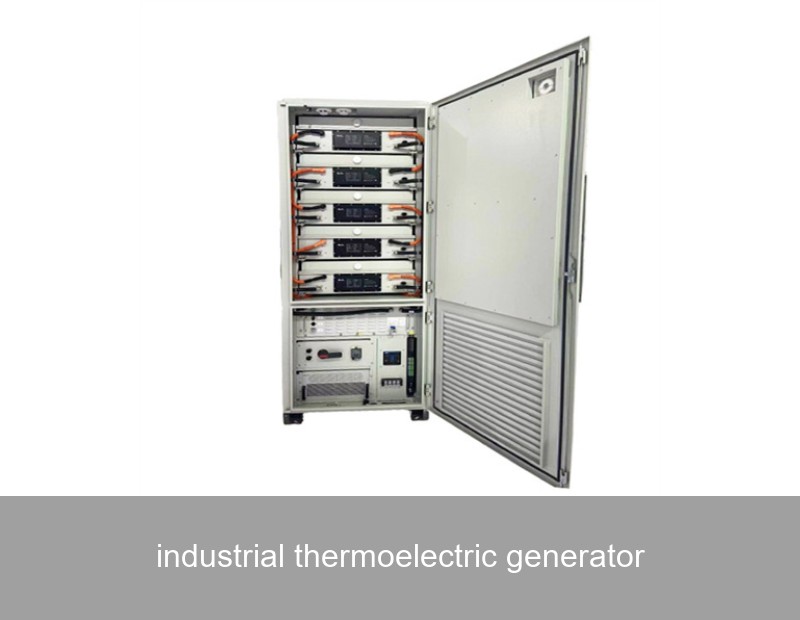
Imagine a world where the immense waste heat billowing from your factory's chimneys, furnaces, and exhaust streams isn't a cost, but a new revenue stream. This isn't science fiction; it's the practical reality offered by industrial thermoelectric generators (TEGs). For facility managers and energy directors across Europe and the U.S., these solid-state devices are emerging as a critical tool for boosting efficiency, reducing carbon footprints, and achieving true energy independence. Let's explore how this technology captures lost energy and transforms industrial operations.
Table of Contents
- What Are Industrial Thermoelectric Generators?
- The Phenomenon: Our Industrial Waste Heat Problem
- The Data: Quantifying the Untapped Potential
- A Real-World Case Study: From Theory to Kilowatt-Hours
- The Integration Challenge: Beyond the TEG Module
- Highjoule's Role: Delivering Complete Waste-Heat-to-Power Solutions
What Are Industrial Thermoelectric Generators?
At their core, industrial thermoelectric generators are devices that directly convert heat (temperature differences) into electrical energy through the "Seebeck effect." Unlike traditional generators with moving parts, TEGs are solid-state, meaning they are incredibly reliable, require minimal maintenance, and can operate in harsh environments. An industrial thermoelectric generator system is scaled and ruggedized for demanding applications like capturing energy from flue gases, process steam, or hot surfaces in sectors such as cement, glass, steel, and chemical manufacturing.

Image Source: U.S. Department of Energy (Public Domain)
The Phenomenon: Our Industrial Waste Heat Problem
Walk through any major industrial plant, and you feel it: the blast of hot air, the radiating warmth from pipelines, the steam venting into the atmosphere. This is waste heat – a fundamental byproduct of our industrial processes. For decades, this energy has been treated as an unavoidable loss, a sign of an imperfect system. We invest massive capital to create heat for processes, only to let a significant portion literally vanish into thin air. The question is no longer about why it happens, but why we continue to accept it.
The Data: Quantifying the Untapped Potential
The scale of this opportunity is staggering. According to a comprehensive study by the Oak Ridge National Laboratory, the U.S. industrial sector alone wastes enough thermal energy each year to power the entire country for 12 months. More specifically, it's estimated that between 20% to 50% of industrial energy input is lost as waste heat. In the European Union, similar assessments suggest that recovering even a fraction of this waste heat could reduce total industrial energy consumption by 5% or more, a crucial step toward meeting ambitious climate targets.
| Industry Sector | Typical Waste Heat Temperature Range | Potential TEG Application |
|---|---|---|
| Cement & Glass Manufacturing | 300°C - 600°C+ | High-grade heat, ideal for TEGs |
| Chemical Processing | 200°C - 400°C | Process stream heat recovery |
| Heavy Machinery & Engines | 100°C - 300°C | Exhaust gas & coolant recovery |
A Real-World Case Study: From Theory to Kilowatt-Hours
Let's move beyond theory to a tangible example. A large glass manufacturing plant in Germany faced rising energy costs and stringent CO2 emission limits. Their primary melting furnace released exhaust gases at approximately 480°C, which were simply cooled down before treatment.
The plant installed a customized industrial thermoelectric generator array in the exhaust stack. The system, designed to handle the corrosive flue gas environment, created a temperature differential across thousands of TEG modules.
- Project Data: The installation captured a portion of the waste heat, generating a continuous 85 kW of DC power.
- Outcome: This electricity was directly fed into the plant's internal grid to power auxiliary systems like lighting, control units, and pumps. The result was an annual production of over 700,000 kWh of clean electricity, reducing the facility's grid reliance and saving tens of thousands of euros annually.
- Broader Impact: Crucially, it also demonstrated a measurable path to lowering the plant's specific emissions per ton of glass produced, a key metric for sustainability reporting.
The Integration Challenge: Beyond the TEG Module
Here's the critical insight many overlook: the TEG module itself is just one component. The real challenge—and the key to a successful project—lies in system integration and power management. An industrial TEG installation requires:
- Robust Heat Exchangers: To efficiently transfer thermal energy from the dirty, hot source to the clean side of the TEGs.
- Advanced Power Conditioning: The raw DC power from TEGs fluctuates with heat input. It must be stabilized, converted to AC, and synchronized with the plant's grid.
- Intelligent Control Systems: To monitor performance, manage thermal stresses, and ensure optimal efficiency 24/7.
This is where choosing the right technology partner makes all the difference between a pilot experiment and a reliable, ROI-positive asset.
Highjoule's Role: Delivering Complete Waste-Heat-to-Power Solutions
At Highjoule, with nearly two decades of expertise in advanced energy storage and management, we view industrial thermoelectric generation as a vital piece of the industrial energy resilience puzzle. We don't just provide components; we deliver integrated systems.
Our approach combines high-efficiency TEG arrays with our core competency: intelligent power conversion and storage. For instance, the DC output from a TEG system can be channeled into a Highjoule industrial battery energy storage system (BESS). This solves the intermittency issue—storing power when heat flow is high and discharging it consistently, turning a variable source into firm, dispatchable power for critical loads.
Furthermore, our Energy Management System (EMS) can seamlessly orchestrate power flows between your TEGs, on-site solar, the main grid, and your Highjoule BESS. This creates a truly intelligent microgrid within your facility, maximizing self-consumption of your locally generated power, whether it's from the sun or from your own waste heat. For remote industrial sites or microgrids, this combination is a game-changer for reliability and cost control.

Image Source: Power Magazine (Illustrative Diagram)
The Future of Industrial Power Generation
The transition is clear: the most advanced industrial facilities are moving from being passive energy consumers to active "prosumers"—generating, storing, and managing their own energy ecosystem. The industrial thermoelectric generator, once a niche technology, is now a proven catalyst for this shift. It turns a liability (waste heat) into an asset (power), strengthens your bottom line against volatile energy prices, and provides concrete data for your ESG commitments.
As material science advances, the efficiency of TEGs continues to improve, opening up new, lower-temperature applications. The question is no longer if this technology is viable, but where in your process the first kilowatt of hidden power is waiting to be discovered.
What is the single largest source of waste heat in your operation, and have you measured its temperature and flow? The answer might be the starting point for your next capital improvement project.
 Inquiry
 Online Chat