


The Industrialist Lithium Battery Pack: Powering the Future of Manufacturing and Beyond
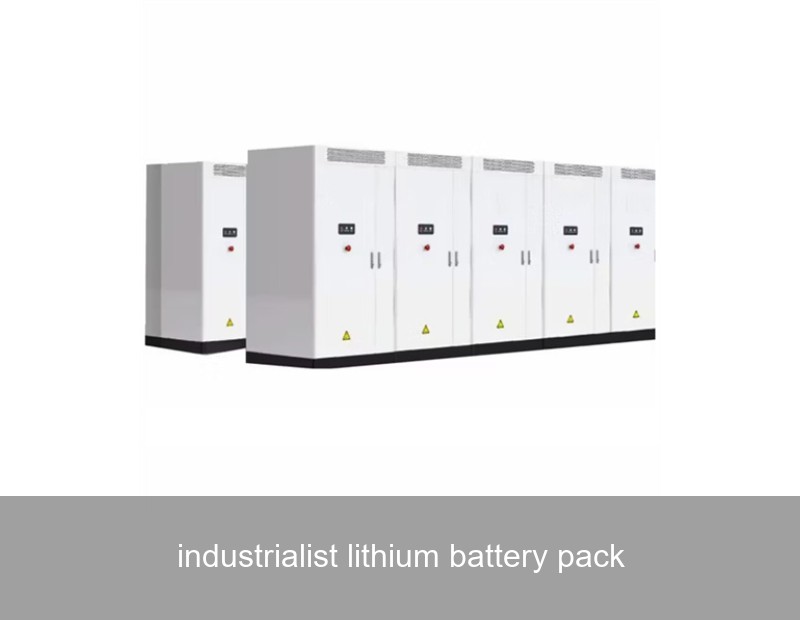
If you're an industrial leader, you've felt the pressure. Energy costs are volatile, grid reliability is a growing concern, and sustainability targets are moving from optional to mandatory. In this complex landscape, a powerful solution is emerging as a cornerstone of modern industrial strategy: the industrialist lithium battery pack. This isn't just a backup power source; it's an intelligent energy asset that can transform your operations, protect your bottom line, and future-proof your facility. Let's explore how this technology is reshaping industry.
Table of Contents
The Phenomenon: From Cost Center to Strategic Asset
For decades, industrial energy management was straightforward: draw power from the grid, pay the bill, and hope for no outages. Today, that model is broken. Industrialists face a triple challenge: soaring demand charges that punish short periods of high usage, increasing frequency of grid instability, and stringent corporate decarbonization goals. The phenomenon is clear: passive energy consumption is a major business risk.
This is where the modern industrialist lithium battery pack enters. It's a sophisticated system of lithium-ion cells, advanced thermal management, and built-in intelligence designed for the harsh, demanding environment of industrial facilities. Unlike traditional lead-acid batteries, these packs offer high power density, rapid response, and a lifespan that aligns with industrial investment cycles. They turn your facility's energy profile from a passive cost into an active, manageable asset.
The Data: Why Lithium is the Industrial Choice
Let's talk numbers. The superiority of lithium-ion technology for industrial applications isn't just marketing—it's quantifiable. Consider the comparison with older technologies:
| Metric | Advanced Lithium-Ion Pack | Traditional Lead-Acid |
|---|---|---|
| Energy Density | 150-250 Wh/kg | 30-50 Wh/kg |
| Round-Trip Efficiency | 95-98% | 70-85% |
| Cycle Life (to 80% capacity) | 6,000+ cycles | 1,200-1,800 cycles |
| Response Time | Milliseconds | Seconds |
What does this mean for you? Higher density means a smaller footprint in your valuable plant space. Greater efficiency means more of the energy you store (often from your own solar panels) is usable, wasting less as heat. A longer cycle life translates directly to a lower total cost of ownership over 10-15 years. And near-instantaneous response is critical for protecting sensitive processes from grid disturbances.

Image Source: Unsplash - Representative of modern industrial energy integration.
A Real-World Case: Peak Shaving in German Manufacturing
Let's move from theory to practice. A prominent automotive parts supplier in Bavaria, Germany, was grappling with annual energy costs exceeding €2.5 million, a significant portion of which were demand charges based on their highest 15-minute power draw each month. Their production lines, with simultaneous high-power starts, created sharp "peaks" that inflated their bills.
Their solution was a customized 1.5 MWh industrialist lithium battery pack system, integrated with their existing building management system. Here's how it worked and the outcome:
- Strategy: The system continuously monitors total facility power draw from the grid. When it detects consumption approaching a pre-set threshold (their "peak shaving limit"), the lithium battery pack instantly discharges, supplementing grid power to keep the total import below that line.
- Technology: The system utilized Highjoule's H-Series Industrial Battery Racks, known for their robust construction and liquid cooling, ensuring stable performance even during the rapid charge/discharge cycles of peak shaving.
- Result: Within the first year, the facility reduced its peak demand by 22%. This translated to a direct reduction of over €180,000 in annual demand charges alone. Furthermore, the system provided backup power for critical quality control labs, preventing spoilage during two brief grid fluctuations. The project achieved a return on investment in under 4.5 years, a compelling figure for industrial capital projects.
This case exemplifies the dual financial and operational resilience benefits. As noted by the International Renewable Energy Agency, storage is key to unlocking greater industrial efficiency and renewable integration.
The Highjoule Insight: Beyond Basic Storage
At Highjoule, with nearly two decades of experience since 2005, we understand that an industrialist lithium battery pack is more than a container of cells. It's the core of an intelligent energy ecosystem. Our approach for industrial clients focuses on three layers of value:
- Hardware Engineered for Industry: Our industrial battery packs feature proprietary thermal management systems that maintain optimal cell temperature in foundry heat or freezer-yard cold, ensuring safety and longevity. The enclosures are rated for industrial environments, protecting against dust and particulate matter.
- Software That Thinks Like a Plant Manager: The true brain is our Highjoule Energy Operating System (EOS). This platform doesn't just manage charge/discharge. It can be programmed with your utility rate structure, production schedules, and weather forecasts to autonomously optimize for the lowest cost or highest sustainability. Should you participate in a demand response program? EOS can evaluate and execute, creating a new revenue stream.
- Integration as Standard: We design our systems for seamless integration with existing solar PV arrays, wind turbines, generator sets, and facility SCADA systems. This turnkey approach minimizes disruption and maximizes the value of your entire energy infrastructure.
Image Source: Unsplash - Representative of modern industrial energy integration.
The Future Powered by Intelligent Packs
The trajectory is clear. As industries electrify processes and incorporate more variable renewables, the role of the industrialist lithium battery pack will expand from peak shaving and backup to include microgrid formation, frequency regulation services for the grid, and ensuring 24/7 carbon-free energy for green manufacturing pledges. The battery pack becomes the essential buffer and intelligence hub for a fully optimized, resilient, and sustainable industrial plant.
This isn't a distant future. It's being built today in facilities across Europe and North America that are choosing to take control of their energy destiny. The question is no longer if battery storage will play a role in industrial operations, but how soon and how comprehensively it can be integrated to start delivering returns.
 Inquiry
 Online Chat