


The Inverter Battery Cupboard: Your All-in-One Gateway to Energy Independence
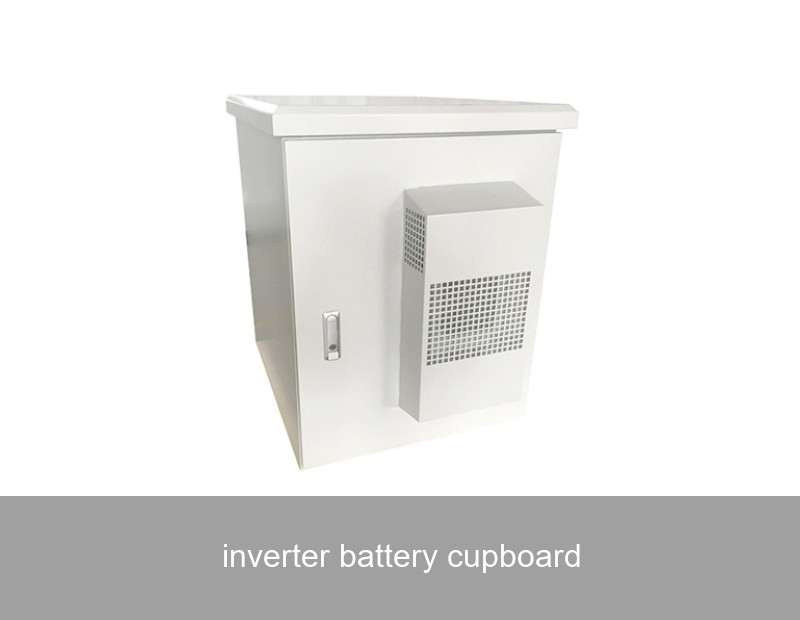
you've invested in solar panels, eager to slash your electricity bills and carbon footprint. The sun shines, your meter spins backwards, and all is well. But what happens when the sun sets, or during a grid outage? This is where the humble "inverter battery cupboard" transforms from a simple cabinet into the intelligent heart of a modern energy system. More than just a storage box, this integrated unit is the command center that manages, converts, and dispatches your precious renewable energy, ensuring power is available precisely when and where you need it.
The Silent Revolution in Your Utility Room
Gone are the days of sprawling, complex installations with separate components strewn across a wall. The modern inverter battery cupboard represents a paradigm shift towards integrated, safe, and user-friendly energy storage. It’s a pre-engineered solution that typically houses the battery modules, the hybrid inverter (which converts DC from solar/batteries to AC for your home), safety disconnects, monitoring systems, and climate control—all within a single, sleek, and secure enclosure. This isn't just about neatness; it's about efficiency, safety, and simplified maintenance.
The demand for such integrated solutions is skyrocketing. In Europe, the residential battery storage market is expected to grow by over 40% annually, with Germany and Italy leading the charge(Source: SolarPower Europe, 2023). In the U.S., driven by the Inflation Reduction Act and increasing grid instability, installations are breaking records. Homeowners and businesses aren't just looking for backup power; they're seeking intelligent systems that maximize self-consumption of solar energy, provide grid services, and future-proof their properties.
The Highjoule Approach: Intelligence in a Unified Cabinet
At Highjoule, with nearly two decades of experience, we've refined the inverter battery cupboard into a sophisticated energy management platform. Our Highjoule Unity Cabinet Series is designed for the European and North American markets, embodying this integrated philosophy. We don't just pack components into a box; we engineer them to work in perfect harmony. Our cabinet features a high-efficiency, scalable hybrid inverter, UL9540-certified lithium iron phosphate (LFP) battery packs, an integrated energy management system (EMS), and active thermal management—all pre-wired and tested for a plug-and-play experience. This reduces installation time by up to 50% and provides a single point of control and service for the customer.
Key Components Inside a High-Performance Inverter Battery Cupboard
Let's open the door and look at what makes a best-in-class system tick:
- The Hybrid Inverter: The brain of the operation. It's bidirectional, converting DC from solar panels and batteries to AC for your home, and can also convert AC from the grid to DC to charge the batteries. Advanced models, like those in Highjoule systems, feature multiple Maximum Power Point Trackers (MPPTs) for optimizing solar harvest from different roof orientations.
- The Battery Bank: The energy reservoir. Modern systems almost exclusively use Lithium Iron Phosphate (LFP) chemistry for its safety, longevity (typically 6,000+ cycles), and stability. A quality cupboard will have a modular battery design, allowing for easy capacity expansion.
- Energy Management System (EMS): This is the intelligence. It learns your consumption patterns, weather forecasts, and electricity tariffs to autonomously decide when to store, use, or even sell back energy. Highjoule's EMS can be configured for various goals: maximize self-consumption, provide backup during outages, or participate in virtual power plant programs.
- Safety & Climate Control: This is non-negotiable. A proper enclosure includes circuit breakers, fuses, and isolation switches. Perhaps most crucially, it contains a dedicated cooling/heating system to keep the batteries within their ideal temperature range (usually 15-25°C), which is vital for performance and lifespan.

Image: A sleek, integrated energy storage cabinet in a home setting. Source: Unsplash
Case Study: A Bavarian Bakery's Recipe for Resilience
Let's move from theory to practice. Consider "Brotzeit," a family-owned bakery in southern Germany. Their challenge was twofold: high, volatile energy costs for their ovens and refrigeration, and the risk of spoilage during even brief grid interruptions. A power outage wasn't just an inconvenience; it was a direct threat to their business.
They installed a Highjoule Unity Commercial Cabinet, a larger-scale inverter battery cupboard solution, paired with a 50kW rooftop solar array. Here’s the impact, measured over one year:
| Metric | Before Installation | After Installation |
|---|---|---|
| Grid Electricity Purchased | 100% of needs | 35% of needs |
| Solar Self-Consumption | ~30% (exported surplus) | 85% (stored & used on-site) |
| Energy Cost Savings | Baseline | €8,400 annually |
| Backup Power for Critical Loads | 0 hours | Up to 10 hours (ovens & cold storage) |
The system paid for itself in under 5 years, and the bakery now operates with remarkable energy independence. During a regional grid disturbance last winter, the inverter battery cupboard seamlessly switched to backup power, saving thousands of euros in inventory. This case exemplifies how a well-designed, integrated storage system solves real-world economic and operational problems.
Choosing the Right Inverter Battery Cupboard Solution
Not all cupboards are created equal. For homeowners and business managers considering this investment, here are key questions to ask:
- Scalability: Can you easily add more battery modules later if your needs grow? Highjoule's systems are designed with plug-and-play expansion in mind.
- Software & Monitoring: Is the EMS software intuitive and feature-rich? Can you monitor and control the system remotely via a smartphone app? Our Highjoule Energy Hub portal provides real-time insights and control.
- Grid Services & Compatibility: Is the system capable of participating in demand response or virtual power plant programs, potentially generating additional revenue? Does it comply with local grid codes (like VDE-AR-N 4105 in Germany or UL 1741 SA in the U.S.)?
- Warranty & Support: Look for a comprehensive warranty (often 10+ years on batteries) and a provider with a proven track record of local technical support. Highjoule's global network ensures prompt service and maintenance.

Image: A technician monitoring a commercial-scale energy storage system. Source: Unsplash
The Future is Modular, Intelligent, and Integrated
The evolution of the inverter battery cupboard is moving towards even greater intelligence and modularity. We're seeing the integration of electric vehicle (EV) charging control, allowing the system to prioritize solar power for your car. The next step is the true "home energy router," a device that seamlessly manages solar, storage, grid power, EV charging, and even heat pumps, optimizing for cost, carbon, and comfort simultaneously.
At Highjoule, our R&D is focused on this very horizon. Our next-generation cabinets are being designed as open-platform energy hubs, ready to integrate with smart home ecosystems and utility grid signals to create adaptive, resilient, and efficient microgrids at the individual property level. The goal is no longer just backup power, but total energy sovereignty.
Your Energy, Your Control
The journey to energy independence starts with a single, intelligent decision. The inverter battery cupboard is the physical manifestation of that decision—a compact, powerful statement that you are taking control of your power, your costs, and your carbon footprint. It transforms renewable energy from an intermittent source into a reliable, always-on asset.
What would you power first during an outage, and how much resilience is your peace of mind worth? Explore how a Highjoule Unity Cabinet can be tailored to answer that question for your home or business.
 Inquiry
 Online Chat