


Emergency Solar Power for Home: Your Ultimate Guide to Energy Resilience
a severe storm knocks out the grid in your neighborhood. The lights go out, the refrigerator hum falls silent, and your phone battery ticks down. Now, imagine a different scenario: your home seamlessly switches to its own clean, silent power source. The lights stay on, essential appliances keep running, and your family remains safe and connected. This isn't a fantasy; it's the reality made possible by modern emergency solar power for home systems. For homeowners in Europe and the US increasingly facing grid instability due to extreme weather, this technology has shifted from a luxury to a critical component of household preparedness.
Table of Contents
- The Rising Need for Home Energy Independence
- How an Emergency Solar Power System Actually Works
- Key Components: More Than Just Panels on Your Roof
- A Real-World Case: Resilience in the Face of Winter Storms
- Choosing the Right System for Your Home: Key Considerations
- Highjoule's Integrated Approach to Home Energy Security
- The Future of Home Energy is Proactive, Not Reactive
The Rising Need for Home Energy Independence
The frequency and intensity of power outages are climbing. In the US, a report from the Energy Information Administration (EIA) indicates that the average customer experienced just over 5 hours of outages in 2021, with major events causing significant spikes. Similarly, Europe grapples with its own challenges, from winter grid strain to storm-related disruptions. The phenomenon is clear: reliance on the traditional grid alone is becoming a vulnerability.
The data underscores a shift in thinking. Homeowners are no longer asking *if* an outage will occur, but *when* the next one will happen. This leads to a critical insight: energy resilience is now a form of home insurance. It's about maintaining safety (power for medical devices, heating/cooling), preventing loss (spoiled food, frozen pipes), and preserving comfort and communication during disruptive events.

Image: A modern home equipped with solar panels, symbolizing energy independence and preparedness.
How an Emergency Solar Power System Actually Works
Let's demystify the technology. A true emergency solar power system for a home is an integrated setup that does more than generate power when the sun shines; it stores it for use anytime, especially when the grid is down. Here's the logical progression:
- Generation: Solar panels on your roof convert sunlight into direct current (DC) electricity.
- Conversion & Management: An inverter transforms DC power into the alternating current (AC) your home uses. A critical device called a hybrid inverter or a system controller manages the flow of energy.
- Storage: The heart of emergency capability—a home battery storage system. Excess solar energy produced during the day is stored here, not sent to the grid.
- Backup Activation: When a grid failure is detected, an automatic transfer switch (often integrated) isolates your home from the grid in milliseconds—a process called "islanding." Your system then draws power from the batteries to supply your critical loads panel.
This seamless operation means you might not even notice the grid has gone down, except for the peace of mind that comes with it.
Key Components: More Than Just Panels on Your Roof
To build a reliable system, you need the right parts working in harmony. Here’s a breakdown:
| Component | Primary Function | Importance for Emergency Power |
|---|---|---|
| Solar Panels | Generate DC electricity from sunlight. | The fuel source. During extended outages, they recharge the batteries daily, providing sustained power. |
| Hybrid Inverter/Controller | Converts DC to AC, manages energy flow between panels, battery, grid, and home. | The brain of the system. Enables islanding and ensures efficient, safe operation during backup. |
| Home Battery System (BESS) | Stores electrical energy for later use. | The cornerstone of backup power. Its capacity (kWh) determines how long and what you can power. |
| Backup Load Panel | A separate electrical sub-panel for critical circuits. | Ensures limited battery power is allocated efficiently to essentials like refrigeration, lighting, and outlets. |
Why Battery Technology Matters
Not all batteries are created equal. Lithium-ion phosphate (LiFePO4) batteries, for instance, are becoming the standard for home storage due to their longer lifespan, enhanced safety, and better performance across a wider temperature range compared to older lead-acid types. When evaluating a system, the battery's cycle life, depth of discharge, and warranty are key indicators of its long-term value and reliability in emergencies.
A Real-World Case: Resilience in the Face of Winter Storms
Data and theory are compelling, but real-life stories drive the point home. Consider a case from Texas, USA, following Winter Storm Heather in early 2024. A homeowner in Austin had a 10 kW solar array paired with a 25 kWh home battery system installed in 2023.
- Event: A grid outage lasting 42 hours due to freezing rain and grid stress.
- System Performance: The system automatically switched to backup mode. The family prioritized critical loads: refrigeration, heating system fans (for a gas furnace), lighting, WiFi, and device charging.
- Result: The battery provided power through the first night and next day. Despite cloudy conditions, the solar panels generated enough partial charge on the second day to extend backup capability comfortably beyond the outage duration. The homeowner reported no disruption to daily routines, estimating they avoided over $500 in potential food and hotel costs, not to mention the immense value of comfort and safety.
This case highlights the synergy between solar generation and adequate storage. The solar panels weren't just a fair-weather friend; they actively participated in crisis management by replenishing the battery, moving the household from mere backup to true energy resilience.
Choosing the Right System for Your Home: Key Considerations
So, how do you start? Ask yourself these questions:
- What are your critical loads? List the appliances and circuits you must power (e.g., sump pump, medical equipment, refrigerator). Their total wattage dictates your battery capacity needs.
- What is your outage profile? Are outages typically short (a few hours) or long (multiple days)? This influences how much storage you need and how important solar recharge capability is.
- What is your budget and home setup? A professional site assessment is crucial to evaluate your roof's solar potential and your electrical panel's compatibility.
Partnering with an experienced provider who can conduct a detailed energy audit is the most reliable path to a system tailored to your specific risks and needs.
Highjoule's Integrated Approach to Home Energy Security
At Highjoule, with nearly two decades of expertise in advanced energy storage, we view emergency solar power for home as part of a holistic energy intelligence strategy. Our residential solutions, like the Highjoule HES Series Home Energy System, are designed for seamless integration and unwavering reliability.
Our systems combine high-efficiency LiFePO4 battery modules with intelligent hybrid inverters and sophisticated energy management software. What sets us apart is the system's ability to not only provide backup power but also to optimize your energy usage daily—storing solar or low-cost grid energy to use during peak times, reducing your bills year-round. This means your investment in emergency preparedness pays dividends every single day, not just during a crisis.

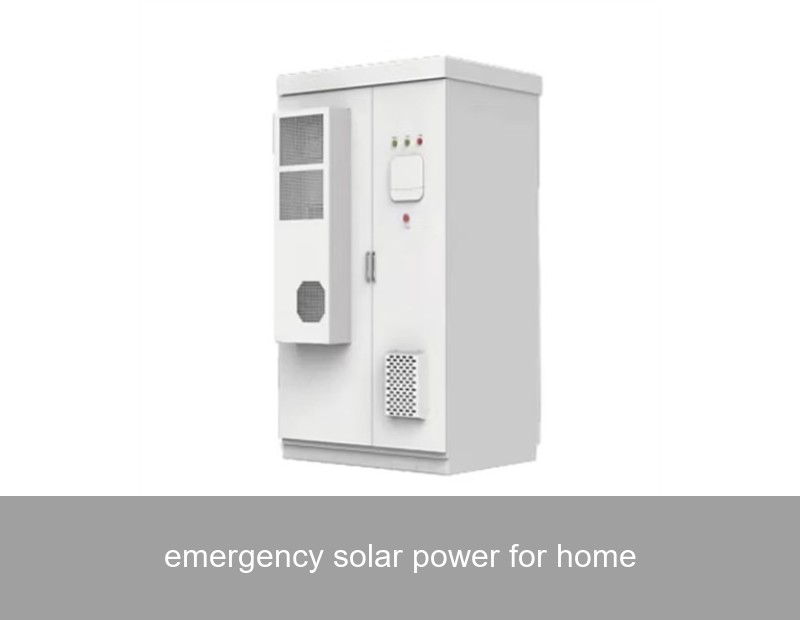
Image: A sleek, modern home battery storage unit, representing the core of emergency backup and daily energy management.
Our services extend from initial consultation and custom design to professional installation and remote system monitoring, ensuring our customers in Europe and North America have a partner for the long-term health and performance of their home's energy ecosystem.
The Future of Home Energy is Proactive, Not Reactive
The conversation is evolving from simply surviving an outage to thriving independently of grid fluctuations. With technologies like vehicle-to-home (V2H) integration on the horizon, your electric vehicle could become an additional backup power source, further enhancing resilience. The core principle remains: taking control of your power supply is the ultimate form of preparedness.
As you think about securing your home's energy future, what single event or concern makes you most consider taking the step towards energy independence today?
 Inquiry
 Online Chat