


Navigating the Energy Transition: Your Guide to Inverter Suppliers in Zambia
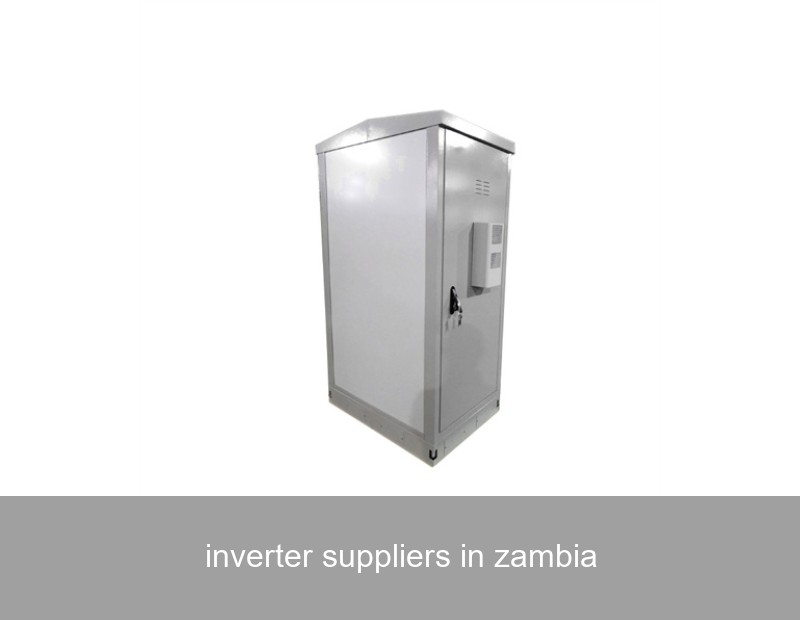
Zambia's journey towards a more resilient and sustainable energy future is gaining remarkable momentum. As the nation seeks to diversify its power mix beyond hydroelectricity, which is vulnerable to droughts, solar energy has emerged as a cornerstone of this strategy. However, the heart of any effective solar power system—whether for a bustling Lusaka business, a remote clinic, or a family home—isn't just the panel capturing the sun. It's the inverter. This critical device converts the direct current (DC) from solar panels or batteries into the alternating current (AC) that powers our lives. Choosing the right partner among inverter suppliers in Zambia is therefore not just a procurement decision; it's an investment in long-term energy security and system performance. This article explores the evolving Zambian energy landscape and what to look for when sourcing this essential technology.
Table of Contents
- The Zambian Context: Beyond Load-Shedding
- The Inverter's Role: More Than Just Conversion
- Key Criteria for Choosing Inverter Suppliers in Zambia
- Case Study: Solar-Powered Productivity in Zambia's Agricultural Sector
- Highjoule's Advanced Solutions for the Zambian Market
- The Future Outlook: Smart Grids and Energy Independence
The Zambian Context: Beyond Load-Shedding
For years, the narrative around Zambia's power sector has been dominated by load-shedding. While this remains a challenge, the conversation is maturing. The government, through the Rural Electrification Authority (REA) and supportive policies, is actively promoting off-grid and renewable energy solutions. The goal is not just to keep the lights on but to fuel economic growth, improve healthcare and education delivery, and empower communities. This shift creates a burgeoning market for solar components, placing inverter suppliers in Zambia at a pivotal point. They are no longer just equipment vendors; they are enablers of development, requiring deep technical expertise and an understanding of local conditions—from dust and heat to grid instability.
The Inverter's Role: More Than Just Conversion
Think of a modern inverter as the brain and central nervous system of your power setup. Its primary job is conversion, but its impact is far broader:
- System Efficiency: Top-tier inverters maximize the energy harvest from your solar panels, often achieving efficiencies over 98%. In a market where every kilowatt-hour counts, this directly impacts return on investment.
- Battery Integration: With energy storage becoming essential for 24/7 power, the inverter must seamlessly communicate with and manage battery systems. Not all inverters are created equal here.
- Grid Interaction: For commercial and industrial users, inverters with advanced grid-support functions can help stabilize the local network and potentially enable feeding excess power back under future schemes.
- Reliability & Durability: Zambia's climate demands robust hardware. Quality inverters are built to withstand high temperatures, dust ingress, and voltage fluctuations.

Image: A modern, wall-mounted solar inverter, the critical hub of any PV system. Credit: Unsplash
Key Criteria for Choosing Inverter Suppliers in Zambia
Selecting a supplier goes beyond comparing price sheets. You need a partner for the long haul.
| Criterion | Why It Matters | Key Questions to Ask |
|---|---|---|
| Technical Expertise & Product Range | Can they provide the right inverter for a small home, a large farm, or a factory? Do they understand hybrid (solar+battery+grid) systems? | What inverter brands and technologies do you specialize in? Can you provide detailed technical support? |
| After-Sales Support & Warranty | The real test begins after installation. Local service capability is non-negotiable. | Do you have trained technicians in Zambia? What is your warranty process and response time? |
| Proven Track Record | Experience in the Zambian or similar African markets indicates an understanding of real-world challenges. | Can you share case studies or references from projects in Zambia? |
| System Integration Capability | The best inverter underperforms if poorly integrated with panels, batteries, and load management. | Do you offer complete system design and commissioning services? |
Case Study: Solar-Powered Productivity in Zambia's Agricultural Sector
Consider the challenge faced by a large commercial farm in the Central Province. Reliant on diesel pumps for irrigation and experiencing daily power interruptions affecting cold storage, their operational costs were high and unpredictable. In 2023, they partnered with a reputable system integrator who sourced high-quality inverters from a global specialist to build a 500 kWp solar hybrid system with 1 MWh of battery storage.
The results, monitored over one year, were telling:
- Diesel Consumption Reduction: 85% decrease for water pumping.
- Operational Resilience: Cold storage and processing facilities now run 24/7 without interruption.
- ROI Period: Projected payback period achieved in under 5 years, factoring in saved diesel costs and avoided production losses.
- Carbon Impact: Estimated reduction of over 750 tonnes of CO2e annually.
This case underscores that the choice of the inverter and the supplier's expertise in system design were central to transforming an energy cost center into a pillar of competitive advantage.
Highjoule's Advanced Solutions for the Zambian Market
As a global leader in advanced energy storage systems since 2005, Highjoule understands that robust hardware must be paired with intelligent software. For stakeholders evaluating inverter suppliers in Zambia, Highjoule offers a distinct value proposition through its integrated systems. Our solutions are designed with markets like Zambia in mind.
Highjoule's product portfolio includes high-efficiency, utility-grade hybrid inverters that form the core of our Intelligent Battery Energy Storage Systems (BESS). These are not standalone components but part of a synergistic system:
- All-Climate Durability: Engineered for reliable performance in high-temperature environments, a critical factor for Zambian installations.
- Seamless Hybrid Management: Our inverters intelligently orchestrate power between solar arrays, battery banks, and the grid/generator, ensuring priority loads are always powered.
- Scalable Architecture: From commercial & industrial (C&I) applications to microgrids, our systems can be scaled to meet growing energy demands, protecting your initial investment.
- Remote Monitoring & Analytics: Through the Highjoule Energy Management Platform, operators can monitor system performance, energy flows, and savings in real-time from anywhere, enabling proactive maintenance.
For Zambian businesses and communities, this means partnering with Highjoule provides more than an inverter; it provides a pathway to predictable energy costs and unwavering operational resilience.

Image: A large-scale solar installation, where inverter choice critically impacts overall yield and reliability. Credit: Unsplash
The Future Outlook: Smart Grids and Energy Independence
The trajectory is clear. Zambia's energy ecosystem is moving towards decentralized, intelligent networks. The next generation of inverters will act as grid-forming assets, capable of creating stable microgrids that can operate independently of the national grid—a game-changer for remote areas. Suppliers who bring this technology, coupled with the software to manage virtual power plants (VPPs), will lead the market. According to the International Energy Agency (IEA), Africa's solar potential is colossal, and technology adoption is accelerating. The choice you make today in an inverter partner should position you for this smart, interconnected future.
Ready to Power Your Future?
The decision to invest in solar and storage is significant. The choice of your technology partner—the inverter supplier in Zambia who will ensure that investment delivers—is even more so. Are you looking to conduct a feasibility study for your specific site to understand the exact specifications and potential ROI a high-performance system could deliver?
 Inquiry
 Online Chat