


Navigating the Lithium Battery for Solar Price in Nigeria: A Guide to Value and Reliability
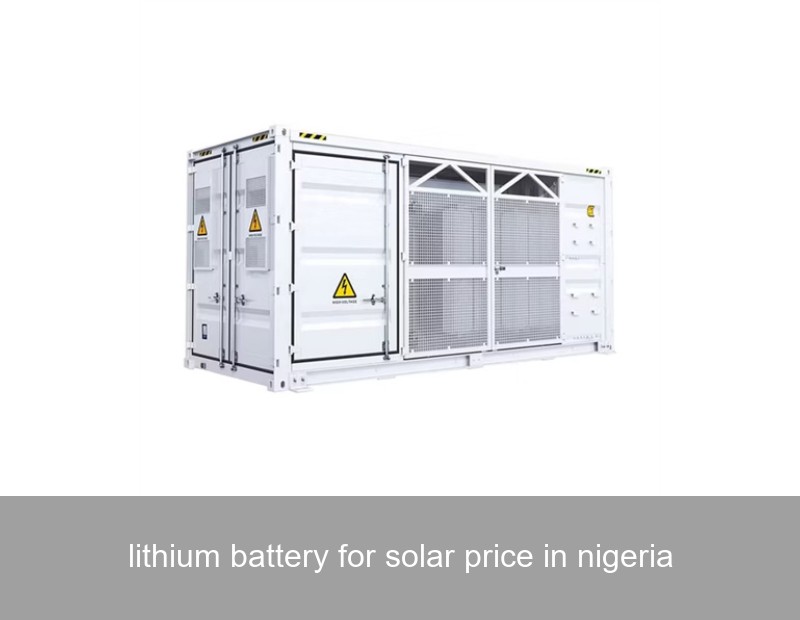
If you're exploring solar power in Nigeria, you've undoubtedly encountered a critical question: what determines the lithium battery for solar price in Nigeria? The initial quote can be a surprise, often viewed as the single biggest hurdle. But here's a perspective shift: that battery isn't just a cost; it's the cornerstone of your energy independence. In a market where grid instability is a daily reality and diesel costs are volatile, the right battery system transforms your solar array from a daytime accessory into a 24/7 power plant. This article cuts through the price confusion, examining the real factors behind the numbers and showcasing how strategic investment in advanced storage delivers undeniable long-term value for homes and businesses across Nigeria.
Beyond Sticker Shock: What Really Drives the Price of a Solar Lithium Battery?
The search for a simple price tag is understandable, but the figure you get is a composite of several key technological and commercial factors. Understanding these helps you evaluate value, not just cost.
Core Technology & Performance (The Engine Inside)
Not all lithium batteries are created equal. The chemistry and design dictate performance, safety, and ultimately, price.
- Battery Chemistry: Many entry-level systems use Lithium Iron Phosphate (LFP) cells, known for safety and long cycle life. Premium systems, like some from Highjoule, may utilize advanced NMC blends or proprietary formulations that offer higher energy density (more storage in a smaller space) and superior performance in high ambient temperatures—a crucial factor for Nigeria's climate.
- Usable Capacity & Depth of Discharge (DoD): A "10kWh battery" doesn't mean you can use all 10kWh. Cheaper batteries might have a recommended DoD of 80% (using only 8kWh) to preserve lifespan. High-quality systems allow 90-100% DoD, giving you more usable energy per dollar of initial investment.
- Power Rating (kW): Can the battery simultaneously run your refrigerator, air conditioner, and machinery? The power rating determines this. A high-capacity battery with a low power rating is like a large fuel tank on a low-horsepower engine; it stores a lot but can't deliver it quickly. Sufficient power is key for Nigerian homes and businesses with high starting loads.
System Intelligence & Integration (The Brain)
This is where leading providers differentiate themselves. A battery is just a container without smart management.
- Inverter-Battery Communication: Seamless integration between the battery and hybrid inverter ensures optimal charging/discharging, prolonging life. Proprietary communication (like Highjoule's SmartSync technology) often outperforms generic protocols.
- Energy Management Software (EMS): Can the system learn your usage patterns, prioritize solar self-consumption, and automatically switch during outages? Advanced EMS, accessible via a user-friendly app, turns a simple backup into an intelligent grid-management tool.
Total Cost of Ownership (The Long-Term Math)
The true "lithium battery for solar price in Nigeria" is spread over its entire lifespan. Consider this comparison:
| Cost Factor | Economy Battery System | Advanced Battery System (e.g., Highjoule HES Series) |
|---|---|---|
| Initial Purchase Price | Lower | Higher |
| Warranty Period | 3-5 years | 10+ years |
| Cycle Life (to 80% capacity) | 3,000 - 4,000 cycles | 6,000+ cycles |
| Round-Trip Efficiency | ~92% | ~96%+ |
| Required Maintenance | Higher (active cooling, more frequent checks) | Minimal (passive cooling, stable chemistry) |
| Cost per kWh over 15 years | Significantly Higher | Substantially Lower |
The data shows that a higher upfront investment in a robust, high-cycle-life battery from a trusted manufacturer often leads to a lower lifetime cost of stored energy. You're buying years of reliable service, not just a product.
Case Study: A Lagos Business Beating "Diesel Peak" with Smart Storage
Let's move from theory to practice. A medium-sized plastic manufacturing company in Ikeja, Lagos, faced crippling operational costs. Running on a 500kVA diesel generator for nearly 18 hours daily, their fuel bill exceeded ₦25 million monthly. They installed a 350kW solar array, but without storage, it only offset daytime grid/diesel use.
The game-changer was adding a Highjoule HCS-500 commercial storage system with 750kWh of lithium storage. The system's intelligent controller was programmed for peak shaving and time-of-use optimization. Here’s the impact after 12 months:
- Diesel Consumption Reduction: 85% decrease, saving ~₦21 million monthly.
- ROI Period: The entire solar + storage system paid for itself in under 3.5 years, based on diesel savings alone.
- Operational Resilience: The facility now operates seamlessly through grid outages, with no production downtime during switchovers.
Image: Industrial solar installation, similar to the case study. Source: Unsplash (Representative image)

This case underscores that the lithium battery for solar price in Nigeria must be evaluated against the cost of the alternative—ongoing, unpredictable expenditure on diesel. For this business, the battery was the key that unlocked the full financial potential of their solar investment.
Highjoule's Approach: Delivering Reliability, Not Just Products
At Highjoule, with nearly two decades of global experience in grid-edge storage solutions, we view the Nigerian market through a lens of partnership. We understand that our customers aren't just buying a battery; they are investing in business continuity, family security, and operational predictability.
Our product suite for the Nigerian market is engineered for this demanding environment:
- HES (Home Energy Storage) Series: Scalable from 5kWh to 30kWh, these all-in-one systems feature integrated cooling and our proprietary battery management system (BMS) calibrated for tropical climates. They are designed for easy installation and seamless integration with major inverter brands.
- HCS (Commercial Storage) Series: Modular, containerized solutions from 100kWh to multi-MWh scales. These systems are built for peak shaving, demand charge management, and providing critical backup for factories, hospitals, and office complexes. Their modularity means you can start with a base configuration and expand as your needs grow.
Beyond hardware, Highjoule provides comprehensive design support, remote monitoring, and a 10-year performance warranty on our core storage products. We partner with certified local installers to ensure proper system design, installation, and after-sales service, creating a sustainable ecosystem for renewable energy in Nigeria. For more on global best practices in battery storage, the International Renewable Energy Agency (IRENA) provides valuable resources.
Image: Advanced battery storage system monitoring. Source: Unsplash (Representative image)

The Future Outlook for Solar & Storage in Nigeria
The conversation around energy in Nigeria is rapidly evolving. With potential policy shifts, increasing diesel costs, and a growing cultural embrace of sustainability, solar-plus-storage is transitioning from a luxury to a strategic necessity. The initial lithium battery for solar price in Nigeria is a pivotal decision point. Will it be a short-term expense or a long-term asset?
Innovations like vehicle-to-grid (V2G) technology and AI-driven energy forecasting are on the horizon. Early adopters of quality storage systems today will be best positioned to integrate these future technologies, creating even more resilient and cost-effective personal energy networks. Understanding battery technology is complex; a great primer can be found at the U.S. Department of Energy.
Given the unique energy challenges and opportunities in Nigeria, what specific operational headache—be it unpredictable downtime, soaring diesel bills, or the simple need for household peace of mind—would you want a tailored solar-plus-storage solution to solve first?
 Inquiry
 Online Chat