


INVT On Grid Solar Inverter: The Intelligent Heart of Your Energy System
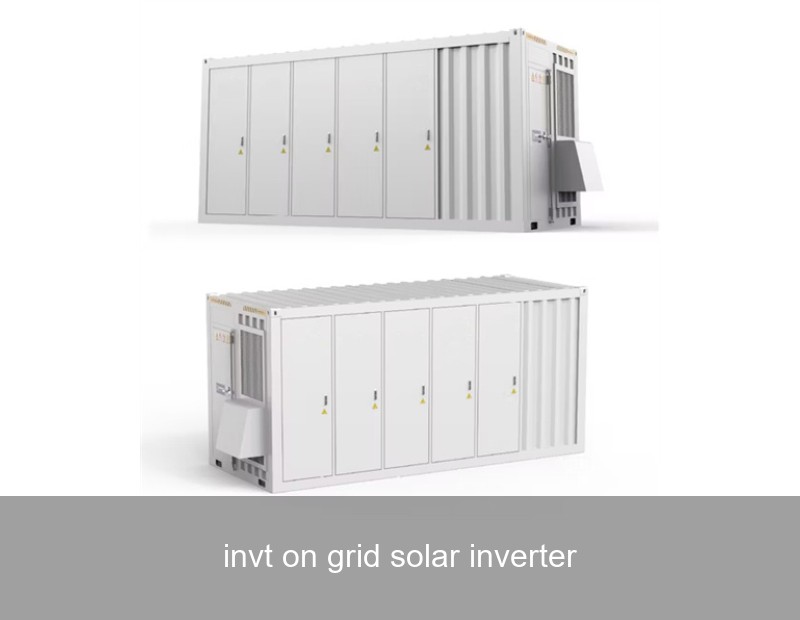
You've made the smart decision to go solar. The panels are up on your roof, soaking up the sun's abundant energy. But here's a question: how does that raw DC power from your panels become the clean AC electricity that powers your home or business and feeds back into the grid? The answer lies in a crucial, often overlooked component: the on-grid solar inverter. And not just any inverter—a high-performance, intelligent one like the INVT on grid solar inverter series, which acts as the true brain and heart of a modern photovoltaic system.
What is an On-Grid Solar Inverter?
In simple terms, an on-grid or grid-tied solar inverter is the device that converts the direct current (DC) electricity generated by your solar panels into the alternating current (AC) electricity used by your appliances and the public utility grid. Unlike hybrid or off-grid inverters, an on-grid inverter is designed to synchronize perfectly with the grid. It feeds excess power you don't use directly back to the utility, often earning you credits or payments through schemes like net metering. When the sun isn't shining, it seamlessly allows you to draw power from the grid. Its core mission is efficiency, reliability, and safe interaction with the public electricity network.
The Critical Role of Your Inverter: More Than Just Conversion
Think of your solar panels as the muscles of your system, producing the raw power. The INVT on grid solar inverter is the Olympic-level coach and nervous system. It doesn't just convert power; it optimizes, protects, and communicates. Here’s what a top-tier inverter does:
- Maximum Power Point Tracking (MPPT): This is its superpower. Solar panel output varies with sunlight intensity and temperature. The inverter constantly hunts for the optimal voltage and current (the "maximum power point") to extract every possible watt from your panels, boosting your overall energy yield by up to 30% compared to systems without advanced MPPT.
- Grid Synchronization & Safety: It matches the grid's voltage, frequency, and phase angle perfectly. Crucially, it includes anti-islanding protection. If the grid goes down for maintenance or repairs, the inverter automatically shuts off to prevent sending power back to the grid, protecting utility workers. This is a mandatory safety feature.
- System Monitoring & Diagnostics: Modern inverters like those from INVT offer detailed real-time and historical data on energy production, system health, and efficiency via user-friendly apps or web portals.

Image Source: Unsplash - A modern grid-tied inverter is the command center of a solar array.
Key Features of Modern On-Grid Inverters
When evaluating an on grid solar inverter, look for these essential features that define quality and longevity:
| Feature | Why It Matters | INVT On-Grid Inverter Example |
|---|---|---|
| High Conversion Efficiency (e.g., 98.6%) | Minimizes energy loss during DC to AC conversion, putting more solar power into your home and the grid. | INVT's iSolar series boasts peak efficiencies exceeding 98.5%, ensuring maximum return on investment. |
| Multiple MPPT Trackers | Allows panels facing different directions or under partial shading to perform independently, preventing total system loss from a single shaded panel. | Models with dual or triple MPPT channels optimize complex roof layouts common in European homes. |
| Wide DC Input Voltage Range | Enables the system to start earlier in the morning, operate later in the evening, and perform better in low-light conditions. | A broad operational range ensures stable energy harvest even on cloudy days. |
| Robust Design & Warranty | Inverters are installed outdoors or in harsh environments. They need robust protection (IP65/NEMA 4X ratings) and long warranties. | INVT inverters feature rugged designs and come with industry-leading warranties, reflecting their reliability. |
| Smart Grid Compliance | In markets like Germany and California, inverters must support grid management functions like frequency-watt response or volt-var control. | INVT inverters are designed to meet and exceed international grid codes, including VDE-AR-N 4105, G99/G100, and UL 1741 SA. |
A Real-World Case: The German Bakery Project
Let's move from theory to practice. Consider a mid-sized artisan bakery in Bavaria, Germany. The owner installed a 45 kWp solar array on the bakery's large flat roof to offset high energy costs from ovens and refrigeration. The initial installer proposed a standard, single-MPPT inverter.
The Problem: The roof had two sections at slightly different angles, and chimney shadows fell across parts of the array in the winter months. The single-MPPT inverter would have seen the entire array's performance dragged down by the shaded or less-optimally angled sections, significantly reducing annual yield.
The Solution with INVT: A Highjoule energy consultant recommended a system centered on three INVT 15kW on grid solar inverters, each with dual MPPT channels. This allowed the array to be split into six independent strings. Panels on different roof planes and those prone to shading were grouped separately.
The Data-Driven Result: By optimizing each string independently, the system's overall energy harvest increased by an estimated 18% annually compared to the initial single-inverter design. For the bakery, this meant generating approximately 8,100 kWh more clean electricity per year. At Germany's average commercial electricity price of around €0.28/kWh, this translates to an extra €2,268 in annual savings and a much faster payback period. The remote monitoring feature also allows the owner to track performance in real-time, ensuring the ovens keep running on sunshine.
Choosing the Right On-Grid Inverter for Your System
Selecting your inverter is a critical decision. Ask your installer these questions:
- Is the inverter certified for my country's grid requirements?
- What is its nominal and peak efficiency?
- How many MPPT channels does it have, and does my roof layout need them?
- What is the warranty period, and what does it cover?
- What monitoring platform is available, and is it user-friendly?
Remember, the cheapest inverter option can often lead to significant, unseen energy losses over its 10-15+ year lifespan. Investing in a high-efficiency, feature-rich model from a reputable manufacturer like INVT protects the performance of your entire solar investment.

Image Source: Unsplash - A home powered by a reliable solar energy system.
The Highjoule Integrated Solution: Beyond the Inverter
At Highjoule, with nearly two decades of experience since 2005, we understand that a superior INVT on grid solar inverter is just one part of a high-performing energy ecosystem. We provide integrated, intelligent solutions that maximize value for our commercial, industrial, and residential clients across Europe and North America.
Our approach includes:
- Expert System Design & Engineering: Our technical teams analyze your site, energy consumption, and goals to design a system that perfectly matches the right INVT inverter model and capacity to your specific solar array.
- Seamless Integration: We ensure the inverter works flawlessly not just with your panels, but with potential future additions like battery storage (using our hybrid inverters) or energy management systems.
- Highjoule Energy Monitoring Platform: We offer our proprietary, cloud-based monitoring platform. It gives you a clear, actionable dashboard to view production, consumption, grid feed-in, and system health, all in one place, going beyond the inverter's native app.
- Comprehensive Support & Warranty Service: As a global provider, we offer localized technical support and manage warranty claims, providing you with a single point of contact for peace of mind.
We don't just sell inverters; we deliver optimized energy outcomes. By choosing Highjoule, you're partnering with a specialist who ensures every component, especially the critical inverter, is working at its peak to deliver the highest possible return on your sustainable investment.
Ready to see how the intelligent heart of a solar system can transform your energy profile? What's the biggest challenge you face in maximizing the return from your current or planned solar installation?
 Inquiry
 Online Chat