


How Much Does an INVT Solar VFD System Really Cost? A Comprehensive Breakdown
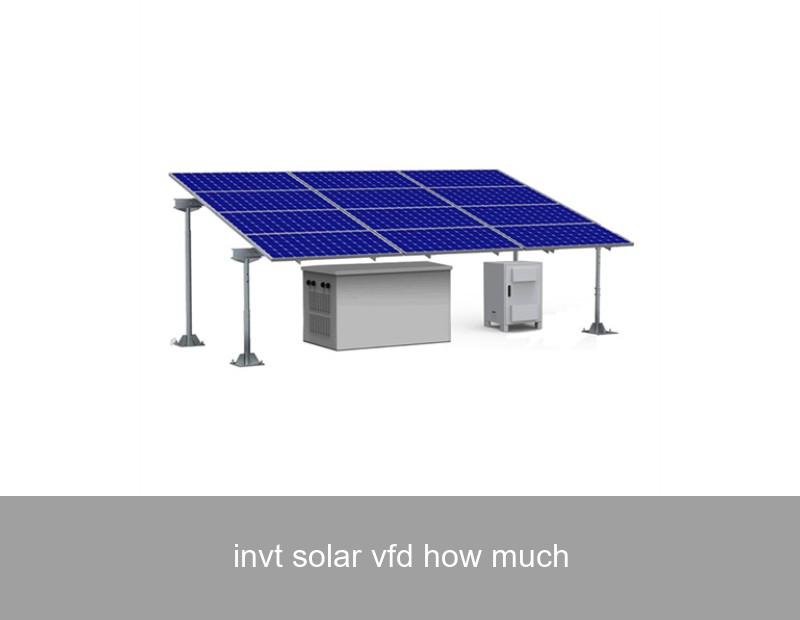
You're considering a solar-powered variable frequency drive (VFD) system, and the brand INVT is on your radar. It's a smart move for energy-intensive operations. But the burning question stopping your project in its tracks is likely: "How much does an INVT solar VFD setup actually cost?" The answer isn't a single number. It's a formula, where the hardware is just one part of a larger ecosystem for true energy independence. Let's demystify the total investment and explore how pairing solar VFDs with intelligent storage creates the ultimate modern power solution.
Table of Contents
The Real Cost Components: Beyond the Price Tag
When professionals ask about the cost of an "INVT solar VFD," they're often picturing just the drive unit. In reality, you're budgeting for a system. Think of it like buying an engine versus building an entire, efficient car. The total project cost encompasses several key layers:
- Core Hardware: The INVT solar-capable VFD itself, solar PV panels, and critically, a battery energy storage system (BESS).
- Balance of System (BOS): Mounting structures, solar inverters, cabling, switchgear, and protection devices.
- Integration & Software: The control system that seamlessly manages energy flow between solar, battery, grid, and the motor load.
- Installation & Labor: Costs vary significantly by region (e.g., U.S. vs. EU), site complexity, and existing electrical infrastructure.
- Permits & Grid Compliance: Interconnection fees, engineering stamps, and ensuring compliance with local codes like UL 9540 in the U.S. or IEC standards in Europe.
Neglecting any of these, especially storage and integration, is the most common pitfall that leads to underperforming systems.
The INVT Solar VFD's Role & Cost Range
An INVT solar VFD is a specialized drive that can directly utilize DC power from solar panels or a battery system to run an AC motor, typically for pumps, fans, or compressors. This direct DC coupling can improve overall system efficiency by 3-5% by eliminating unnecessary power conversion steps.
As a standalone component, the cost of an INVT solar VFD varies by power rating. For a common industrial range (e.g., 22kW to 75kW), you might be looking at a premium of 15-25% over a standard AC drive. However, this is just the beginning. The true value—and the rest of the cost—lies in what surrounds it to ensure reliability when the sun isn't shining.

Image Source: Unsplash - A professional solar PV installation, a core component of the system cost.
Why Storage is Non-Negotiable: The Hidden Key to ROI
Here's the pivotal insight many miss: A solar-only VFD system forces your critical operations to halt at night or on cloudy days. For commercial and industrial users, downtime is not an option. This is where battery energy storage becomes the cornerstone of your investment.
Adding a BESS like those from Highjoule transforms the system from a fair-weather helper to a 24/7 power asset. It allows you to:
- Shift Solar Energy: Store excess midday solar production to power the VFD in the evening, maximizing self-consumption.
- Ensure Uninterrupted Operation: Provide backup power during grid outages, protecting your processes.
- Reduce Demand Charges: In many U.S. and EU commercial tariffs, a significant portion of the bill is based on peak power draw. A BESS can "peak shave," saving thousands annually.
According to a 2023 NREL report, coupling solar with storage can increase the value of solar energy by up to 40% for commercial entities, primarily through demand charge management and resilience.
Case Study: A U.S. Agricultural Processing Plant
Let's look at real numbers. A mid-sized irrigation and processing facility in California was facing an average monthly demand charge of $8,500 and wanted to stabilize operations against rolling blackouts.
| System Component | Specification | Approx. Cost (USD) |
|---|---|---|
| Solar PV Array | 150 kW | $180,000 - $225,000 |
| INVT Solar VFD Units (Multiple) | Total 110 kW capacity | $25,000 - $35,000 |
| Highjoule BESS | 200 kWh / 100 kW | $100,000 - $130,000 |
| Balance of System & Integration | Including Highjoule Energy Management System (EMS) | $50,000 - $70,000 |
| Installation & Permitting | $40,000 - $60,000 | |
| Total Project Range | $395,000 - $520,000 |
The Outcome: By integrating the Highjoule BESS and EMS, the plant reduced its peak grid draw by over 90%, slashing demand charges by approximately $7,500/month. The solar + storage system also provided full backup for critical cold storage, preventing spoilage. The projected payback period, factoring in state incentives, fell under 6 years—a compelling business case beyond just green credentials.
The Highjoule Solution: Integrating Intelligence
This is where Highjoule's expertise transforms a collection of parts into a resilient, profit-generating asset. Since 2005, we've specialized in the very integration that makes solar VFD projects succeed long-term.
Our containerized and modular battery energy storage systems are designed for seamless integration with solar generation and critical motor loads. They come pre-assembled and tested, reducing on-site installation complexity and cost. More importantly, our proprietary AI-driven Energy Management System (EMS) acts as the brain of the operation. It intelligently decides, in real-time, whether to power the INVT VFD from solar, battery, or grid—optimizing for cost, carbon footprint, and reliability.
For businesses in Europe and North America, this level of smart control is essential to navigate complex time-of-use tariffs, participate in demand response programs, and meet stringent sustainability targets. We don't just sell batteries; we deliver guaranteed performance for your entire energy ecosystem.

Image Source: Unsplash - A modern, containerized battery energy storage system similar to Highjoule's solutions.
Calculating Your Total Viable Investment
So, back to your original question: "How much does an INVT solar VFD system cost?" You now know it's a more strategic question. A more accurate budget estimation follows this logic:
- Define Your Load: What is the power (kW) and energy (kWh) requirement of the motor(s) you want to run? How many operating hours per day?
- Size the Solar & Storage: Based on your load profile and site location, a professional will size the PV array and, crucially, the BESS capacity (Highjoule's team provides this analysis).
- Factor in Integration: Include the cost of a sophisticated EMS and system integration. This is Highjoule's core value-add.
- Research Local Incentives: In the U.S., the Investment Tax Credit (ITC) now covers standalone storage. In the EU, various national grants and rebates can offset 20-40% of project costs.
For a ballpark figure, a fully integrated, resilient commercial system with solar, INVT VFDs, and a Highjoule BESS typically starts in the range of $300,000 to $500,000+ for meaningful scale. The return, however, isn't just in energy bill savings—it's in operational resilience, sustainability leadership, and future-proofing your business against volatile energy prices.
Ready to Move Beyond a Simple Price Quote?
What specific motor-driven process in your facility would benefit most from the combined power of solar, advanced drives, and intelligent storage, and what is your primary driver: reducing operational costs, achieving energy resilience, or meeting corporate sustainability goals?
 Inquiry
 Online Chat