


How an IoT Energy Management System Unlocks Unprecedented Savings and Control
You’ve seen your energy bills creep up. You’ve heard the buzz about sustainability. Perhaps you’ve even installed solar panels, only to realize you’re not fully optimizing their power. The challenge isn't just generating energy—it's managing it intelligently. This is where the transformative power of a modern IoT energy management system comes into play. By connecting your assets to the cloud, these systems turn raw data into actionable intelligence, giving you control over your energy destiny. For businesses and homeowners in Europe and the US, this isn't just a tech upgrade; it's a strategic move towards resilience and cost-efficiency.
Table of Contents
- The Phenomenon: Energy Complexity in the Modern World
- The Data: The Quantifiable Impact of Smart Management
- Case Study: A European Logistics Hub Cuts Costs by 22%
- How an IoT Energy Management System Actually Works: The Core Components
- Highjoule's Role: From Hardware to Intelligent Cloud Platform
- Future-Proofing Your Energy Strategy: Key Insights
The Phenomenon: Energy Complexity in the Modern World
Gone are the days when energy management meant reading a monthly meter. Today, we have a dynamic mix: solar panels on roofs, battery storage in basements, electric vehicles in garages, and unpredictable grid prices. The problem? These elements often operate in silos. Your solar array might overproduce while your battery sits half-charged, sending excess power back to the grid at a low rate, only for you to buy it back hours later at a premium. This inefficiency is the silent profit drain a modern IoT energy management system is designed to stop.

Image: Modern facilities combine multiple energy assets, creating complexity that requires intelligent management. (Photo: Unsplash)
The Data: The Quantifiable Impact of Smart Management
The potential of IoT-driven energy management isn't theoretical. Studies and real-world deployments consistently show significant impacts. According to a report by the International Energy Agency (IEA), digital tools like IoT platforms can reduce energy costs in commercial buildings by 10-20%. Furthermore, when paired with on-site generation and storage, these systems can increase self-consumption of solar energy by up to 50%, dramatically improving the return on investment for renewable assets. The key is the system's ability to perform real-time analytics and automated control—tasks impossible for human operators alone.
Case Study: A European Logistics Hub Cuts Costs by 22%
Consider the example of a large logistics warehouse in Northern Germany. Facing volatile energy prices and ambitious corporate sustainability goals, the facility operated with a 500 kW rooftop solar array and a planned 1 MWh battery storage system. However, they were operating them with basic timers, missing significant optimization opportunities.
They implemented a comprehensive IoT energy management system. The results over 12 months were striking:
| Metric | Before Implementation | After Implementation | Improvement |
|---|---|---|---|
| Grid Energy Cost | €18,500/month (avg.) | €14,430/month (avg.) | 22% Reduction |
| Solar Self-Consumption | 35% | 89% | 54% Increase |
| Battery ROI Timeline | Projected 7 years | Projected 4.5 years | 2.5 years sooner |
The system achieved this by forecasting solar production and warehouse load, then automatically scheduling the battery to charge during peak solar hours and discharge during high-price grid periods. It also shed non-critical loads (like exterior lighting) for short durations during peak demand charges. This is the power of an integrated, IoT-driven approach.
How an IoT Energy Management System Actually Works: The Core Components
Let's demystify the technology. A robust IoT platform for energy is more than an app; it's a layered architecture.
1. The Sensing Layer (The "Nerves")
This includes smart meters, submeters, and sensors on critical equipment (chillers, HVAC, production lines). They collect granular data on energy consumption, production, and environmental conditions every few seconds.
2. The Connectivity & Control Layer (The "Spine")
Data flows via secure protocols (like Wi-Fi, cellular, or LoRaWAN) to a central gateway. Crucially, this layer also sends commands *back* to devices—telling a battery when to charge or a smart thermostat to adjust.
3. The Cloud Intelligence Layer (The "Brain")
Here, machine learning algorithms analyze historical and real-time data. They predict patterns, identify inefficiencies, and execute optimization strategies based on your goals (e.g., minimize cost, maximize green energy).
4. The User Interface Layer (The "Eyes & Hands")
A dashboard, accessible via web or mobile app, visualizes energy flows, costs, carbon savings, and system health. It puts control at your fingertips, allowing for manual overrides and detailed reporting.

Image: A user-friendly dashboard is the window into the complex intelligence of an IoT energy system. (Photo: Unsplash)
Highjoule's Role: From Hardware to Intelligent Cloud Platform
This is where Highjoule transforms from an equipment provider to a true energy partner. Our approach is holistic. We don't just sell batteries; we provide the IoT energy management system that makes them—and your entire energy ecosystem—smarter.
For our commercial and industrial clients across the US and Europe, Highjoule's HiveMind Energy OS is the central nervous system. This proprietary cloud platform integrates seamlessly with:
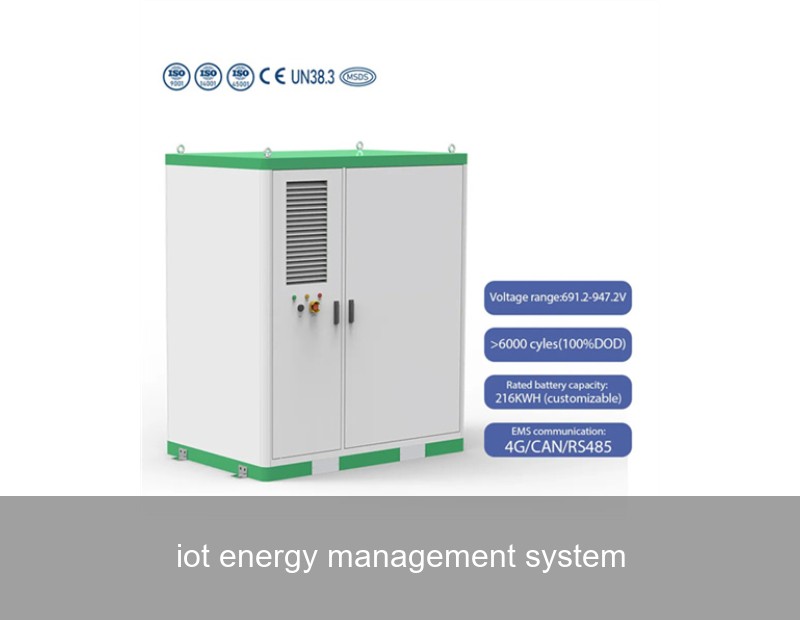
- Highjoule's own battery energy storage systems (BESS): Our high-density, liquid-cooled batteries are built for thousands of cycles and are natively compatible with HiveMind.
- Third-party solar inverters, generators, and building management systems: We believe in open architecture, ensuring our platform can communicate with your existing infrastructure.
- Grid and market signals: In regions with dynamic pricing or demand response programs, HiveMind can automatically participate to generate revenue or avoid steep charges.
The result is a turnkey solution. Highjoule handles the design, installation, and ongoing optimization of your entire system, ensuring your IoT energy management system delivers tangible financial returns from day one. For residential applications, our Highjoule Home system brings the same level of intelligence to homeowners, optimizing solar self-consumption and providing backup power during outages.
Future-Proofing Your Energy Strategy: Key Insights
Implementing an IoT-driven system is a strategic decision. Here are critical insights for any organization or homeowner considering this path:
- Start with Data, Not Just Hardware: Before adding more assets, install monitoring to understand your baseline consumption profile. You can't manage what you don't measure.
- Prioritize Openness and Interoperability: Avoid vendor lock-in. Ensure your management platform can integrate with multiple brands and future technologies, like EV charging fleets. The U.S. Department of Energy emphasizes interoperability as a key pillar for a resilient grid.
- Think Beyond Cost to Value: While savings are paramount, also consider value streams: carbon footprint reduction, enhanced sustainability reporting, improved power quality, and operational resilience during grid disruptions.
As energy markets continue to evolve, the agility provided by a sophisticated IoT energy management system will be the defining feature of a cost-effective and sustainable operation.
Ready to See Your Energy in a New Light?
What would a 15-25% reduction in your annual energy spend mean for your business or household budget? How much more value could you extract from your existing solar investment? Highjoule's experts are ready to analyze your energy profile and demonstrate the precise potential of a tailored IoT energy management solution for you.
 Inquiry
 Online Chat