


Understanding the Different Types of Solar Panel ESS (Energy Storage Systems)
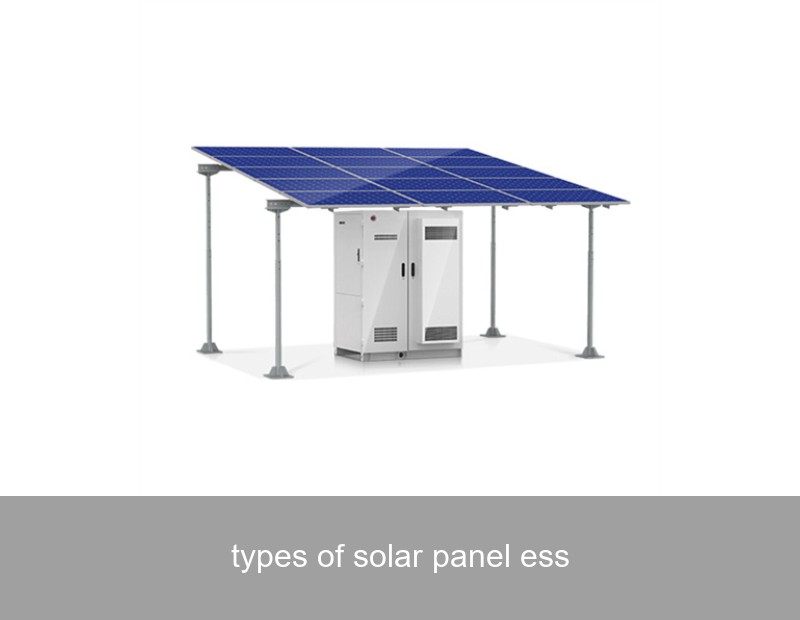
You've made the smart decision to go solar. Those panels on your roof are capturing clean, free energy from the sun. But what happens when the sun goes down, or on a cloudy day? This is where a Solar Panel Energy Storage System (ESS) becomes not just an add-on, but the brain and battery of your entire energy setup. The right type of solar panel ESS transforms your system from a daytime saver to a 24/7 power provider, maximizing your independence and savings. Let's explore the key types of systems available and how to choose the perfect one for your home or business.
Table of Contents
- The Core Phenomenon: Solar Intermittency and the Need to Store
- Key Data: How ESS Adoption is Reshaping Energy Grids
- The Main Types of Solar Panel Energy Storage Systems
- A Real-World Case Study: Peak Shaving in a German Manufacturing Plant
- Choosing Your ESS: Key Considerations and Highjoule's Smart Solutions
- The Future is Integrated: Your Next Step with Solar + Storage
The Core Phenomenon: Solar Intermittency and the Need to Store
Solar energy production is inherently variable. It follows the sun's daily arc and is affected by weather. This creates a fundamental mismatch: we often produce the most solar energy in the middle of the day when demand in our homes might be lowest, and we need power most in the evenings when production drops. Without storage, excess solar energy is often fed back to the grid for minimal compensation, and you're forced to buy expensive power from the utility at night.
An Energy Storage System solves this by capturing your surplus solar generation. Think of it as a sophisticated energy bank. You deposit your excess kilowatt-hours (kWh) during the day and make a withdrawal whenever you need them. This simple shift—from using solar power only when it's produced to using it on your schedule—is revolutionary. It's the difference between having a part-time energy assistant and a full-time power manager.
Key Data: How ESS Adoption is Reshaping Energy Grids
The global shift towards solar-plus-storage isn't just anecdotal; it's driven by compelling data. According to the International Energy Agency (IEA), the world added a record 42 GW of energy storage capacity in 2023, with grid-scale and behind-the-meter (like home/business) applications leading the charge. In markets like California and Germany, a significant percentage of new residential solar installations now include a battery from day one.
Why this surge? The economics have become undeniable. With rising electricity prices and evolving utility rate structures like Time-of-Use (TOU) tariffs, the financial payback period for a solar ESS has shortened dramatically. For instance, in parts of Europe where electricity prices soared past €0.40/kWh, a system that allows a homeowner to avoid buying grid power during peak hours can pay for itself in a fraction of its lifespan. The data clearly shows: pairing solar with storage is the key to unlocking true energy resilience and cost control.
The Main Types of Solar Panel Energy Storage Systems
Not all storage systems are created equal. The technology and configuration you choose will determine your system's capabilities, lifespan, and cost. Here are the primary types of solar panel ESS you'll encounter.
1. DC-Coupled vs. AC-Coupled Systems
This distinction is about where the battery sits in your system's electrical pathway.
- DC-Coupled Systems: The battery is connected on the Direct Current (DC) side of the system, between the solar panels and the inverter. Solar DC power can charge the battery directly with minimal conversion losses. This is often the most efficient design for new installations.
 Image Source: Wikimedia Commons, CC BY-SA
 - AC-Coupled Systems: The battery has its own inverter and connects to the Alternating Current (AC) side of your main electrical panel. This is often the preferred choice for retrofitting a battery to an existing solar system, as it doesn't interfere with the existing solar inverter.
Companies like Highjoule offer both configurations through intelligent, modular products. For example, the Highjoule H-Stack modular battery can be configured for efficient DC coupling in new builds or seamlessly AC-coupled in retrofit scenarios, thanks to its universal power conversion technology.
2. Battery Chemistry: The Heart of Your ESS
The battery's chemical composition defines its performance, safety, and lifecycle.
| Chemistry | Key Characteristics | Best For |
|---|---|---|
| Lithium Iron Phosphate (LFP) | Excellent safety (thermal stability), long cycle life (6,000+ cycles), lower energy density, cobalt-free. | Residential and commercial ESS where safety and longevity are paramount. Highjoule's core technology. |
| Nickel Manganese Cobalt (NMC) | Higher energy density, good cycle life, more sensitive to high temperatures and deep discharge. | Applications where space is extremely limited; common in EVs and some early ESS. |
| Lead-Acid | Low upfront cost, mature technology, heavy, shorter lifespan, requires maintenance, lower depth of discharge. | Budget-conscious off-grid systems, though being rapidly phased out by lithium-ion. |
At Highjoule, we have standardized on LFP chemistry across our product line, from the residential Highjoule HomePower to the industrial Megapack. We believe its inherent stability and 15+ year design life offer the best value and peace of mind for our customers, aligning with our mission for sustainable and safe energy solutions.
3. System Architecture: All-in-One vs. Modular
- All-in-One (Integrated) Systems: Combine the inverter, charger, and battery into a single, sleek unit. They are simpler to design and install, offering a "plug-and-play" experience.
- Modular (Stackable) Systems: Feature separate components or battery modules that can be stacked to increase capacity. This offers ultimate flexibility—you can start with a smaller system and expand your storage capacity as your needs or budget grow.
Highjoule's philosophy embraces smart modularity. Our H-Stack battery system allows homeowners to start with a base 5kWh unit and literally stack on additional modules to reach 20kWh or more. For businesses, our containerized GridBank solutions are scaled from hundreds of kWh to multiple MWh, providing a future-proof investment.
A Real-World Case Study: Peak Shaving in a German Manufacturing Plant
Let's look at how a specific type of solar panel ESS delivered tangible results. A mid-sized automotive parts manufacturer in Bavaria, Germany, faced a significant challenge: high "peak demand" charges from their utility. These charges are based on the highest 15-minute power draw each month, and they were costing the company tens of thousands of euros annually.
The Solution: The company installed a 500 kW solar carport system paired with a 750 kWh Highjoule Industrial ESS (using LFP chemistry in a modular configuration). The system's intelligent energy management software was programmed for one primary goal: peak shaving.
The Data & Outcome: During periods of high machinery usage, the ESS seamlessly discharged to supplement solar power, ensuring the facility's total grid draw stayed below a set threshold. The results after one year were compelling:
- 22% Reduction in peak demand charges.
- 68% of the facility's daytime energy consumption covered by solar + storage.
- ROI period of under 5 years, factoring in German subsidy programs for commercial storage.
- Added benefit: The system provided backup power for critical quality control labs during two brief grid outages.
This case perfectly illustrates how choosing the right type of solar panel ESS—in this case, a large-scale, modular, LFP-based system with advanced peak-shaving software—solves a specific business problem with a clear financial return.
Choosing Your ESS: Key Considerations and Highjoule's Smart Solutions
Selecting the ideal solar panel ESS involves asking the right questions. Here’s a framework to guide you, and how Highjoule’s expertise comes into play.
- What is your primary goal? (e.g., Backup power, maximizing self-consumption, reducing demand charges, grid services). Highjoule's EnergyOS software platform allows a single system to perform multiple functions, adapting to your changing needs.
- What is your capacity & power need? Capacity (kWh) is how much energy you can store; Power (kW) is how much you can use at once. Running an air conditioner requires high power; running lights all night requires more capacity. Our systems are rated for both, with clear scalability.
- How important is longevity and warranty? A system's lifespan is tied to its cycle life and operating environment. Highjoule provides a industry-leading 15-year performance warranty on our LFP batteries, guaranteeing a defined remaining capacity at the end of the term.
- Does the system have smart grid capabilities? In many regions, utilities offer incentives for systems that can support grid stability. Highjoule systems are designed with grid-interactive functions in mind, ready to participate in virtual power plants (VPPs) and other programs for additional revenue streams.
The Future is Integrated: Your Next Step with Solar + Storage
The conversation is no longer just about installing solar panels. It's about designing an intelligent, resilient, and efficient energy ecosystem for your property. The different types of solar panel ESS offer a toolkit, and the optimal choice depends on your unique energy profile, goals, and local landscape.
As you contemplate this decision, consider this: How would your daily life or business operations change if you could not only predict your energy costs but actively control and reduce them, all while contributing to a more stable and sustainable grid? The technology to do so is here, proven, and more accessible than ever.
What specific energy challenge—be it an unreliable grid, soaring bills, or a sustainability target—is most pressing for you to solve with your own solar and storage system?
 Inquiry
 Online Chat