


IP66 Protection for Sale: Your Essential Shield for Durable Outdoor Energy Storage
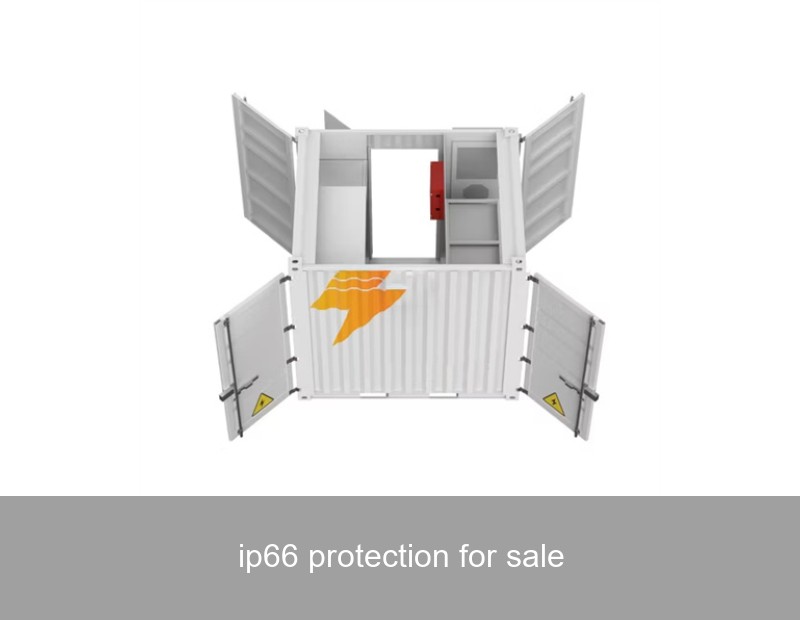
you've invested in a state-of-the-art battery storage system to secure your energy independence. Now, you need to place it outside to save space or meet safety regulations. A gentle rain starts, then a dust storm swirls, or perhaps freezing temperatures set in. Suddenly, a critical question arises: Will my investment withstand the elements? This is where the technical specification of "IP66 protection for sale" transitions from a line on a datasheet to the most critical guardian of your system's longevity and safety. For commercial, industrial, and residential users across Europe and North America, understanding and sourcing true IP66-rated outdoor energy storage isn't just an option—it's a necessity for resilient power.
What Does IP66 Protection Really Mean?
IP, or Ingress Protection, is an international standard (IEC 60529) that defines how well an enclosure defends against solids and liquids. The "66" is not arbitrary. Let's break it down:
- First Digit (6 - Solids): Complete protection against dust. A "dust-tight" seal that prevents any particulate ingress, which is vital for sensitive battery electronics and thermal management systems.
- Second Digit (6 - Liquids): Protection against powerful water jets. Water projected by a 12.5mm nozzle from any direction shall have no harmful effects. This means resistance to heavy rain, snowmelt runoff, and even the occasional blast from a pressure washer during cleaning.
It’s crucial to distinguish IP66 from common alternatives. IP65 protects against low-pressure water jets, but not the more powerful jets covered by IP66. IP67 adds immersion protection (up to 1m for 30 minutes), which is often overkill for standard outdoor mounting and can add complexity and cost. For the vast majority of outdoor installations exposed to weather, IP66 is the sweet spot of proven, robust defense.

Image Source: Wikimedia Commons - A visual guide to the IP Code system.
The Unforgiving Reality of Outdoor Energy Storage
The trend towards outdoor siting of Battery Energy Storage Systems (BESS) is driven by space constraints, safety regulations, and ventilation needs. However, the environment poses a relentless multi-factor attack:
| Environmental Factor | Risk to Unprotected Systems |
|---|---|
| Driving Rain & Snow | Water ingress leading to short circuits, corrosion, and electrical failure. |
| Dust & Sand | Clogging of cooling fans, insulation degradation, and potential thermal hotspots. |
| Temperature Extremes | Reduced battery efficiency, accelerated aging, and BMS (Battery Management System) malfunction. |
| Physical Debris | Damage to external components and compromised structural integrity. |
According to a DNV GL energy storage report, environmental stress factors are among the top contributors to long-term performance degradation in BESS. A system marketed with IP66 protection for sale directly addresses the first two—and most immediate—threats, forming the foundation for outdoor reliability.
Engineered for the Elements: The Highjoule Approach
At Highjoule, we don't just sell an enclosure with a rating. We engineer integrated storage solutions where IP66 is the baseline, not the pinnacle. Since 2005, our focus has been on delivering intelligent, sustainable power solutions that endure.
Our flagship Outdoor Resilient Series (ORS) battery cabinets are a testament to this philosophy. The IP66 rating is achieved through:
- Seamless, gasketed enclosures constructed from marine-grade aluminum and coated steel for corrosion resistance.
- IP66-rated cable glands and connectors for a complete protective ecosystem.
- A passive thermal management system designed to maintain optimal internal temperatures despite the sealed environment, effectively managing the heat generated by the batteries without compromising the ingress seal.
- Integrated HVAC (Heating, Ventilation, and Air Conditioning) options for extreme climates, all housed within the same robust IP66 shell.
This holistic design ensures that when you invest in a Highjoule system with IP66 protection for sale, you're getting a product validated for the challenging conditions of coastal installations, arid deserts, and alpine settings across Europe and the United States.
Case Study: Powering a Remote Telecom Site Through a Norwegian Winter
Challenge: A telecommunications provider needed a reliable backup power system for a critical but unmanned repeater station in the mountainous region of Western Norway. The site experienced heavy snowfall, wind-driven rain, temperatures down to -20°C, and significant seasonal dust from gravel roads.
Solution: Highjoule deployed a compact, containerized H-Joule Cube Microgrid system, featuring our ORS battery cabinets with certified IP66 protection. The system was integrated with existing solar panels to form a resilient hybrid power source.
Data & Outcome: Over two full years of continuous monitoring:
- Zero Faults attributed to environmental ingress (dust, water, ice).
- 99.7% System Availability, with downtime only for planned grid maintenance.
- Battery Capacity Retention: 95% of original capacity, outperforming the expected degradation curve for the climate, thanks to the stable internal environment maintained within the IP66 enclosure.
This real-world data from Scandinavia underscores that specifying true IP66 protection is a direct investment in uptime and total cost of ownership.

Image Source: Unsplash - Example of an outdoor energy storage installation.
What to Look for in an IP66-Rated Energy Storage System
Not all claims are equal. When evaluating systems with IP66 protection for sale, ask these pointed questions:
- Certification or Self-DecLaration? Demand proof of independent third-party testing (e.g., from TÜV, UL, or similar). A manufacturer's self-claim is insufficient.
- Complete System or Just the Box? Ensure all access points, vents (if any), and connectors share the same rating. A weak link breaks the chain.
- Thermal Design Philosophy? How does the system manage heat buildup inside a sealed enclosure? Passive cooling, liquid cooling, or low-power HVAC are key indicators of mature design.
- Material Quality: The rating assumes the enclosure remains intact. Assess the corrosion resistance and structural strength of the materials used.
Highjoule's documentation always includes the test certificates for our enclosures, providing transparent verification of our IP66 and other environmental ratings.
Beyond the Rating: Building a Resilient Energy Future
IP66 protection is a critical feature, but it's part of a larger resilience equation. The future of energy storage, especially for microgrids and critical commercial backup, lies in systems that are not only weatherproof but also intelligent and adaptive. This means integrating advanced battery chemistry (like LFP for wider temperature tolerance), AI-driven energy management systems that preemptively adjust to forecasted weather, and modular designs for easy maintenance and scaling.
As climate patterns become more unpredictable, the value of a storage system that you can confidently install outdoors—be it at a California winery, a German manufacturing plant, or a Scottish farm—increases exponentially. It provides flexibility, safety, and peace of mind.
Is your current or planned energy storage solution truly prepared to face the specific weather challenges of your location, year after year?
 Inquiry
 Online Chat