


Navigating the Solar ESS Price in Zambia: A Guide to Smart Energy Investment
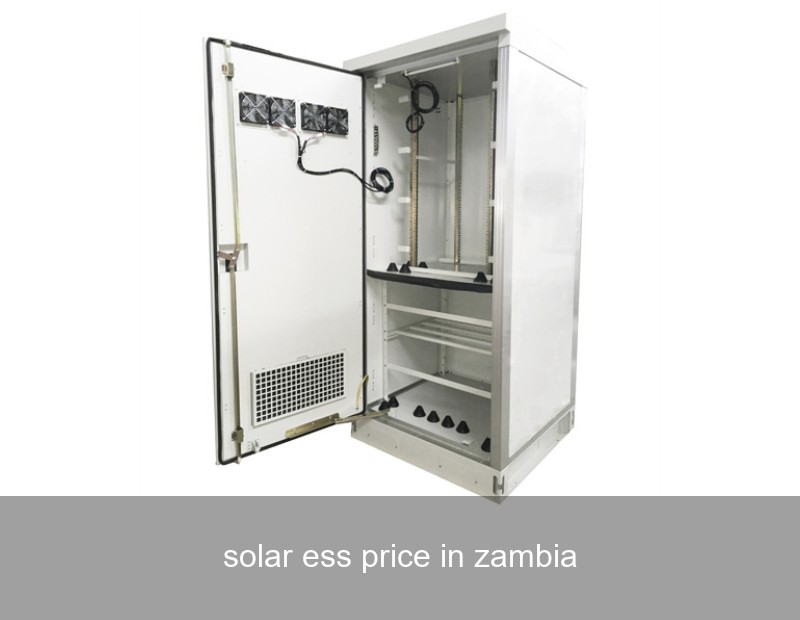
If you're exploring energy solutions in Zambia, you've likely encountered the term "Solar ESS" and its associated price tag. It's a common starting point, but frankly, focusing solely on the solar ESS price in Zambia can be misleading. The real conversation isn't just about cost; it's about value, reliability, and long-term empowerment. As power needs grow and grid reliability remains a concern for homes, businesses, and farms, understanding what drives the price of a Solar Energy Storage System (ESS) is the first step toward making an investment that pays dividends for years to come.

Image Source: Unsplash - Representative image of solar potential in Africa.
Understanding Solar ESS and Its Price Drivers
Let's demystify the acronym first. A Solar ESS is more than just batteries. It's an integrated system comprising solar panels, a battery bank, a hybrid inverter, a battery management system (BMS), and often smart energy controls. The final solar ESS price in Zambia is a sum of these components, influenced by several key factors:
- System Capacity & Scale: Are you powering a single-family home, a commercial bakery, or an irrigation system? A 5kWh system for basic backup has a fundamentally different price than a 100kWh industrial system.
- Battery Technology: This is a major cost driver. While lead-acid batteries have a lower upfront cost, Lithium-ion (Li-ion) batteries, particularly Lithium Iron Phosphate (LFP), offer longer lifespan, deeper cycling, and lower maintenance, providing better total cost of ownership.
- Quality & Certification: Equipment from tier-1 manufacturers with international certifications (UL, IEC) may carry a premium but ensures safety, performance, and durability in Zambia's climate.
- Logistics & Installation: Import duties, transportation to remote sites, and the expertise of the installing company significantly impact the final installed price.
Breaking Down the Solar ESS Price in Zambia
To move beyond a vague quote, let's conceptualize the investment. Think of it not as an expense, but as building your own mini-utility. The price typically includes:
| Cost Component | Description | Impact on Price & Value |
|---|---|---|
| Hardware (Modules, Inverter, Batteries) | The core physical equipment. | Higher quality = higher upfront cost but superior longevity and efficiency. |
| Balance of System (BOS) | Wiring, mounting structures, switchgear, protection devices. | Often overlooked; robust BOS is critical for system safety and reliability. |
| Software & Intelligence | Energy management systems for monitoring and optimization. | Adds cost but maximizes self-consumption of solar and ROI. |
| Design, Installation & Commissioning | Professional services for a turnkey system. | Essential for performance; poor installation can void warranties and cause failures. |
| After-Sales Service & Warranty | Long-term support, often 10+ years for batteries. | A comprehensive service package is invaluable for long-term peace of mind. |
Case Study: A Kalulushi Farming Cooperative's Success
Let's ground this with a real-world example. A Kalulushi-based farming cooperative, specializing in dairy and crop production, faced crippling daily load-shedding and exorbitant diesel generator costs. Their irrigation pumps and cooling systems were at risk.
- Challenge: 8-10 hours of daily grid outage, threatening productivity and perishable goods.
- Solution: A turnkey 120kWh solar ESS with LFP battery technology and smart load management.
- Data & Outcome: The system was commissioned in late 2022. Within the first year:
- Diesel generator usage reduced by over 90%.
- They achieved 24/7 power for critical operations.
- Their calculated payback period was under 5 years, based on diesel savings alone.
- Annual CO2 emissions reduced by an estimated 45 tonnes.
For this cooperative, the initial solar ESS price in Zambia was a strategic capital investment, not just a cost. It translated into operational resilience, cost predictability, and environmental stewardship. You can explore more on Zambia's renewable energy potential through the International Renewable Energy Agency (IRENA).
Looking Beyond the Initial Price Tag: The TCO Perspective
The smartest investors in Zambia are shifting their focus from Price Per kWh to Cost Per Cycle. Total Cost of Ownership (TCO) accounts for the system's entire life, including replacement costs. A cheaper lead-acid battery may need replacement in 3-5 years, while a premium LFP solution from a trusted provider can last 10-15 years with minimal degradation. When you factor in replacement costs, downtime, and lost productivity, the initially "higher" price often becomes the most economical choice.

Image Source: Unsplash - Example of a modern LFP battery rack system.
How Highjoule Delivers Value in the Zambian Market
This is where Highjoule's 18+ years of global expertise directly benefits Zambian clients. We don't just sell hardware; we provide intelligent, sustainable power solutions. For our clients in Zambia, this means:
- Adapted Product Design: Our containerized Highjoule GridMaster solutions for C&I applications and scalable Highjoule HomePower systems for residences are engineered for high-temperature performance and grid instability, common in the region.
- Focus on LFP Technology: We champion LFP chemistry for its safety, long life, and excellent performance in warm climates, directly optimizing our clients' TCO.
- Intelligent Energy Management: Our systems come with the Highjoule Smart Energy Hub, a platform that allows users to monitor performance, schedule loads, and maximize solar self-consumption via a simple smartphone app.
- Local Partnership & Support: We work through certified local partners to ensure professional installation, training, and accessible after-sales service, creating jobs and building local capacity. This partnership model is crucial for a sustainable energy ecosystem.
For a deeper technical understanding of battery safety standards, a key consideration, refer to the U.S. DOE's energy storage roadmap.
The Future of Solar ESS in Zambia
The landscape is evolving rapidly. As global battery production scales, we anticipate a continued decline in core hardware costs. However, the true acceleration for Zambia will come from innovative financing models—like solar leasing or Pay-As-You-Go schemes—and supportive policy frameworks that recognize storage as critical infrastructure. The conversation is moving from "Can I afford this?" to "Can I afford to be without it?"
Your Next Step: Asking the Right Questions
So, when you receive a quote for a solar ESS price in Zambia, what should you ask? Go beyond the bottom line:
- What is the expected cycle life and degradation rate of the proposed battery under Zambian climate conditions?
- Does the price include a full system warranty, and what is the service level agreement for support?
- Can you provide a TCO analysis comparing different technology options for my specific load profile?
- How does the energy management system integrate with my existing or planned solar PV?

Image Source: Unsplash - Professional consultation for energy projects.
Given your specific energy needs and challenges, what would a reliable 24/7 power supply enable you to achieve or create in the next year that currently seems out of reach?
 Inquiry
 Online Chat