


Is Owning a Solar Farm Profitable? A Comprehensive Guide for Investors
In the quest for sustainable and resilient energy, the question "Is owning a solar farm profitable?" is being asked by more landowners, businesses, and institutional investors than ever before. While the image of gleaming panels under the sun is compelling, the true profitability of a solar farm—or a utility-scale solar photovoltaic (PV) plant—hinges on a complex interplay of technology, economics, and market dynamics. As a global leader in advanced energy storage since 2005, Highjoule has witnessed the solar industry's evolution firsthand. We've seen projects thrive and learned that the key to unlocking long-term profitability often lies not just in the panels themselves, but in the intelligent systems that manage and optimize that energy. Let's dive into the real numbers and factors that determine your return on investment.
Table of Contents
The Phenomenon: Solar's Rise from Niche to Powerhouse
Over the past decade, solar energy has undergone a revolution. The International Energy Agency (IEA) reports that renewables are set to contribute 80% of new power capacity to 2030 under current policies, with solar PV alone accounting for more than half of that expansion. This isn't just about environmental goodwill; it's a fundamental shift driven by hard economics. The levelized cost of electricity (LCOE) from utility-scale solar has plummeted, making it one of the most cost-competitive power sources in many regions, especially across sun-rich parts of Europe and the United States.
So, is owning a solar farm profitable? The short answer is a resounding "yes, but." It's a viable and attractive asset class, but its profitability isn't automatic. It's a calculated venture that depends on meticulous planning, high-performance components, and increasingly, strategic energy management.
Credit: Unsplash / American Public Power Association
Crunching the Numbers: Key Profitability Drivers
To understand solar farm profitability, we need to move beyond the surface and examine the core financial levers. Think of it like farming a traditional crop: your yield (revenue) depends on the quality of your land (site), your seeds and equipment (technology), and the price you get at market (revenue streams).
Primary Revenue Streams
- Power Purchase Agreements (PPAs): The backbone of most solar farm projects. A PPA is a long-term contract (typically 15-25 years) where a utility or corporation agrees to buy your electricity at a fixed price. This provides stable, predictable revenue and de-risks the project for financiers.
- Wholesale Market Sales: In some deregulated markets, you can sell electricity directly to the spot market. This can offer higher prices during peak demand but introduces significant price volatility and risk.
- Government Incentives & RECs: Tax credits (like the ITC in the U.S.), feed-in tariffs (common in Europe historically), and revenue from selling Renewable Energy Certificates (RECs) can substantially improve the project's internal rate of return (IRR).
Major Cost & Efficiency Factors
| Factor | Impact on Profitability | Mitigation Strategy |
|---|---|---|
| Capital Expenditure (CapEx) | High upfront cost for land, panels, inverters, grid connection. | Strategic procurement, leveraging economies of scale, selecting durable technology. |
| Operational Expenditure (OpEx) | Ongoing costs for maintenance, insurance, land lease, and monitoring. | Predictive maintenance, remote monitoring, and high-reliability equipment to minimize downtime. |
| Solar Resource & Location | Directly determines energy yield (kWh/kWp). A 10% lower yield can mean a 20%+ lower profit. | Meticulous site selection using solar irradiance data (e.g., from Global Solar Atlas). |
| Grid Congestion & Curtailment | The grid operator may order you to reduce output, leading to lost revenue. | Co-locating with energy storage to capture and time-shift curtailed energy. |
Case Study: A 50MW Solar Farm in Spain – The Data Behind the Decision
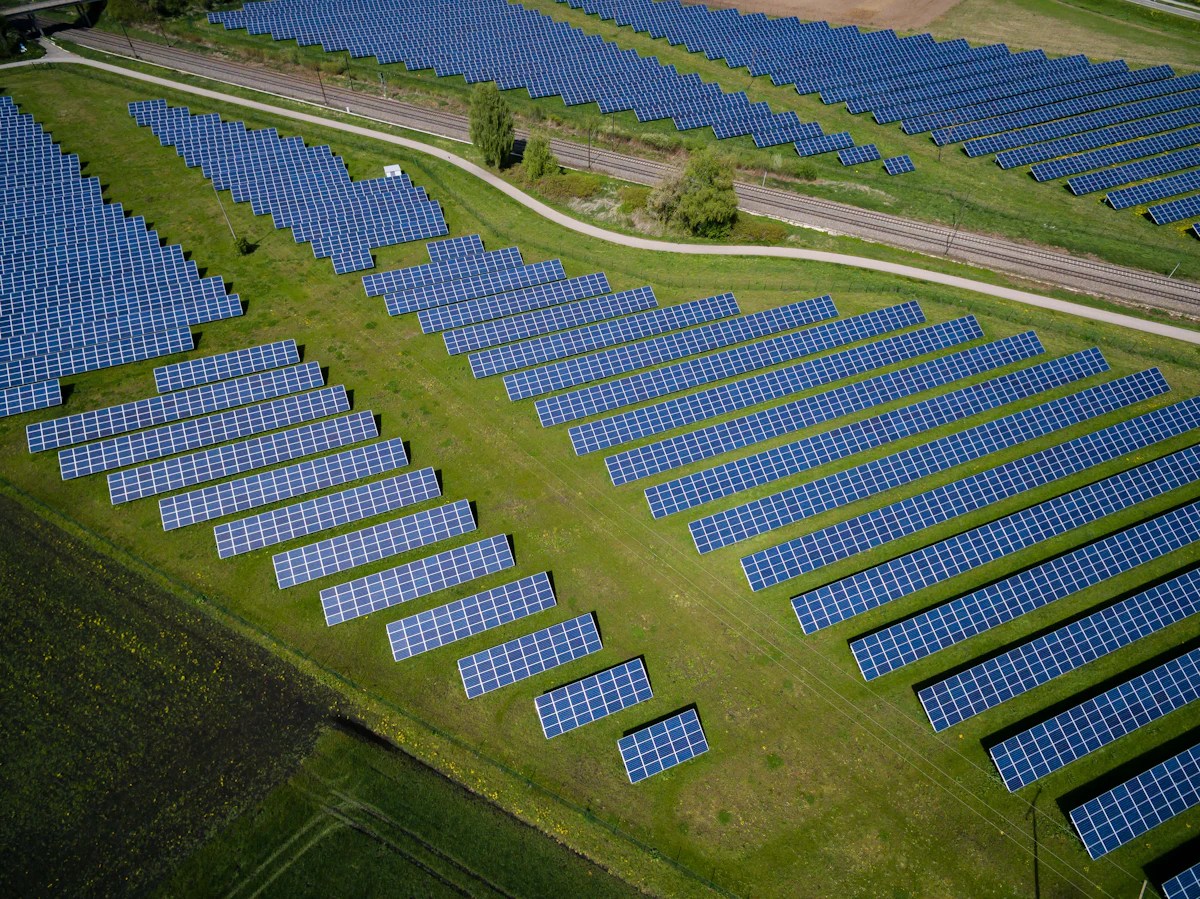
Let's look at a real-world scenario to ground our discussion. Consider a 50MW solar farm developed in Andalusia, Spain, a region with excellent solar resources.
- Project Basics: 50 MW capacity, occupying approximately 100 hectares. Commissioned in 2022 with a 20-year PPA secured with a regional utility at a fixed price of €45/MWh.
- Financial Snapshot (Simplified):
- Total CapEx: ~€30 million (€600/kW)
- Annual Estimated Generation: 90,000 MWh (assuming a 20.5% capacity factor)
- Annual PPA Revenue: €4.05 million (90,000 MWh * €45/MWh)
- Annual OpEx: ~€300,000 (0.5% of CapEx)
- Annual Net Cash Flow (Pre-finance): ~€3.75 million
This project would achieve an equity IRR in the attractive range of 8-12%, depending on the debt structure. However, the developers identified a critical challenge: grid curtailment forecasts. Due to high solar penetration in the area, the grid operator anticipated needing to curtail solar output during peak generation hours, especially in spring. This could have reduced annual revenue by up to 8%.
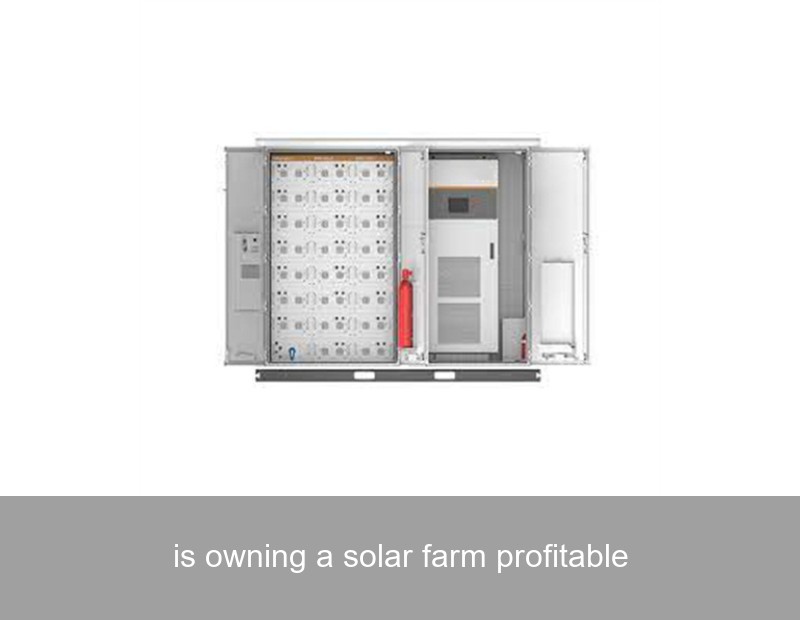
The Profitability-Enhancing Solution: The project integrator partnered with Highjoule to deploy a 12 MWh battery energy storage system (BESS) alongside the solar farm. Our HI-Stack Commercial battery system, managed by Highjoule's Aurora AI Energy Management Platform, was integrated. Instead of being curtailed, excess solar energy is now stored in the batteries. This energy is then dispatched in the evening when grid demand is higher and PPA prices for flexible power are more favorable. This single addition transformed a potential revenue loss into a new revenue stream, boosting the project's overall IRR and providing crucial grid stability services.

Credit: Unsplash / ThisisEngineering
Beyond the Panels: The Highjoule Advantage for Solar Farm Profitability
As the case study shows, the modern answer to "is owning a solar farm profitable?" increasingly involves hybridizing solar with smart storage. This is where Highjoule's expertise becomes a critical asset for project owners and developers.
Highjoule doesn't just supply battery containers; we provide intelligent, turnkey energy storage solutions designed to maximize the financial return of your solar asset. Our systems address the core profitability challenges:
- Mitigating Curtailment: Capture every kWh your panels produce, even when the grid can't take it.
- Energy Arbitrage: Buy low (store midday solar surplus), sell high (dispatch during peak evening rates).
- Providing Grid Services: In many markets (like the UK or parts of the U.S.), BESS can earn significant additional revenue through frequency regulation, capacity markets, and other ancillary services. Our Aurora AI platform automatically optimizes for the highest-value revenue stack.
- Enhancing PPA Negotiations: Offering "firmed" solar power (solar + storage) makes your project more attractive to off-takers, potentially allowing you to negotiate a better PPA price.
For a large-scale solar farm, our HI-Stack Utility product line offers the scalability, safety, and cycle life required for daily, heavy-duty operation. For commercial or industrial-scale solar projects, our integrated HI-Series All-in-One units provide a simpler, faster path to adding storage.
The Future Horizon: What's Next for Solar Farm Owners?
The landscape is shifting from simply selling kilowatt-hours to providing dynamic, grid-supportive services. The most profitable solar farms of the future will be those that act as intelligent power plants. They will use AI-driven forecasts (for weather, load, and market prices) to make real-time decisions on whether to store, sell, or even participate in demand response programs.
This evolution requires a technology partner that understands both the hardware and the complex software intelligence needed to navigate energy markets. Highjoule's ongoing R&D focuses on exactly this: increasing battery longevity, improving system efficiency, and refining our AI algorithms to squeeze every possible ounce of value from your renewable investment.
So, is owning a solar farm profitable? The potential is immense and growing, but the formula for success now demands a more sophisticated approach. It's about building a resilient, adaptable, and intelligent energy asset.
What specific challenge in your solar project's profitability equation—be it curtailment risk, market volatility, or seeking additional revenue streams—are you most interested in solving with smart energy storage?
 Inquiry
 Online Chat