


Jinko Solar in Malaysia: How Much Does It Cost and Is It Worth It?
If you're a homeowner or business owner in Malaysia researching solar power, you've likely come across Jinko Solar panels. As a global leader in photovoltaic manufacturing, Jinko is a prominent name. But the burning question is: Jinko Malaysia, how much? The price tag is just one piece of the puzzle. The real value lies in the complete system's performance, durability, and the intelligence behind it. In this deep dive, we'll move beyond the sticker price to explore what truly defines a worthwhile solar investment in Malaysia's climate, and how pairing premium panels with an advanced energy storage system can maximize your returns.
Table of Contents
The "Jinko Malaysia How Much?" Price Breakdown
Let's address the direct cost first. As of 2024, a standard 4kW to 6kW residential solar PV system in Malaysia using Jinko Solar panels (such as the popular Tiger N-type series) can range from RM 20,000 to RM 35,000 before incentives. This estimate typically includes the panels, inverters, mounting structures, wiring, and installation labor. For commercial-scale installations, the cost per watt decreases, but the total investment scales accordingly.
However, quoting a single figure is misleading. Several factors dramatically influence the final price:
- Panel Model & Efficiency: High-efficiency N-type panels command a premium over standard P-type modules.
- System Size & Complexity: Roof type, accessibility, and desired energy output.
- Inverter Choice: String inverters are cost-effective; microinverters or DC optimizers add cost but improve performance in shaded conditions.
- Installation Company: Reputation, workmanship warranty, and service quality vary.
The Malaysian government's Sustainable Energy Development Authority (SEDA) offers Net Energy Metering (NEM) programs, which can significantly improve payback periods. This incentive allows you to export excess solar energy to the grid for credits.
Beyond the Panels: The Real Cost of Solar Energy
Focusing solely on the installation cost of panels is like buying a high-performance car but ignoring the fuel and maintenance. The true "cost" of solar is measured in Levelized Cost of Energy (LCOE)—the average net present cost of electricity generation over the system's lifetime.
For Malaysia, with its abundant sun but also frequent grid instability and occasional haze, two critical factors affect LCOE:
- Self-Consumption Ratio: How much of your solar energy do you use directly? Without storage, excess noon-time generation gets exported at lower credit rates, while you draw expensive grid power at night.
- System Longevity & Degradation: Will your system perform at 85%+ capacity after 15 years? This depends on panel quality and, crucially, battery management if storage is added.

This is where the conversation must evolve from "Jinko Malaysia how much?" to "What is the optimal energy ecosystem for my needs?"
The Storage Imperative for Malaysian Solar
Net Energy Metering is helpful, but it has limitations. Feed-in tariffs can change, and the grid acts as a "battery" with inefficiencies. To achieve true energy independence and maximize savings, a Battery Energy Storage System (BESS) is no longer a luxury—it's a strategic upgrade.
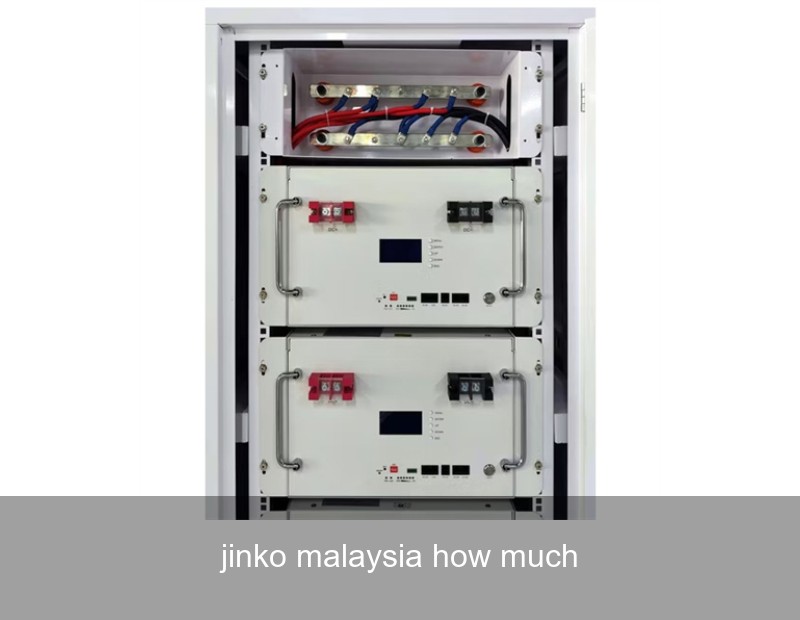
Think of it this way: your Jinko panels are excellent energy harvesters. A BESS like those from Highjoule is the intelligent energy manager. It stores surplus daytime energy for use during peak tariff evenings, provides backup during grid outages (a valuable feature in many Malaysian regions), and stabilizes your home's power quality.
The Highjoule Solution: Intelligence Meets Storage
At Highjoule, we don't just sell batteries; we deliver integrated energy resilience. Since 2005, we've specialized in designing systems where superior hardware meets sophisticated software. For a homeowner or business investing in Jinko Solar panels, adding a Highjoule BESS transforms a simple solar generator into a smart, autonomous power asset.
Our H-PowerStack residential and commercial systems are designed with Malaysia's climate in mind:
- Advanced Lithium Iron Phosphate (LFP) Chemistry: Safer, longer-lasting, and perfectly suited to tropical temperatures, offering a lifespan of over 6,000 cycles.
- AI-Powered Energy Management System (EMS): Our software learns your consumption patterns, weather forecasts, and tariff schedules to automatically optimize when to store, use, or export energy.
- Seamless Hybrid Integration: Our systems are designed to work flawlessly with leading inverters and solar panel brands, including Jinko, ensuring a plug-and-play experience for your installer.
- Scalability: Start with a modular unit and expand your storage capacity as your needs grow.
By integrating a Highjoule system, you protect your solar investment and increase its value, effectively lowering the long-term LCOE.
Case Study: A Penang Manufacturing Facility
Let's look at real data. A medium-sized electronics manufacturing facility in Penang installed a 500kW Jinko Solar system in 2022. While daytime electricity costs dropped, they still faced high demand charges and nighttime consumption.
In 2023, they integrated a Highjoule Industrial H-Stack 200kWh/100kW battery storage system. The results after one year:
| Metric | Before Highjoule BESS | After Highjoule BESS |
|---|---|---|
| Monthly Grid Energy Consumption | 72,000 kWh | 38,000 kWh |
| Peak Demand from Grid | 180 kW | 110 kW |
| Self-Consumption of Solar | 68% | 94% |
| Estimated Annual Savings | RM 240,000 | RM 410,000 |
The system paid for itself in under 4 years. Furthermore, it provided critical backup during several brief grid disturbances, preventing production line stoppages valued at tens of thousands of Ringgit per hour. This case moves beyond "Jinko Malaysia how much?" to demonstrate the transformative ROI of a holistic solar + storage solution. You can explore more global data on storage benefits from the International Renewable Energy Agency (IRENA).

Making the Right Decision for Your Property
So, when you ask "Jinko Malaysia how much?", you're starting an important financial and environmental journey. The next, more powerful questions to ask your solar consultant are:
- How do we design for maximum self-consumption from day one?
- What is the plan for energy resilience during grid outages?
- Is the proposed system future-ready for adding storage?
- What battery technology do you recommend for Malaysia's climate, and can you provide a lifecycle cost analysis?
As a global leader in advanced storage, Highjoule partners with certified installers across Malaysia and the region. We provide the technology that ensures your solar investment works harder, lasts longer, and delivers independence. The goal isn't just to generate power; it's to own and control your energy future intelligently.
Ready to Calculate Your True Energy Potential?
We've discussed how a Jinko Solar system paired with intelligent storage from Highjoule can redefine your energy costs and security. What would a 70%, 80%, or even 95% reduction in your grid dependency mean for your household budget or business operations over the next decade?
 Inquiry
 Online Chat