


Finding the Right JK BMS Inverter for Sale: Your Guide to a Smarter Battery System
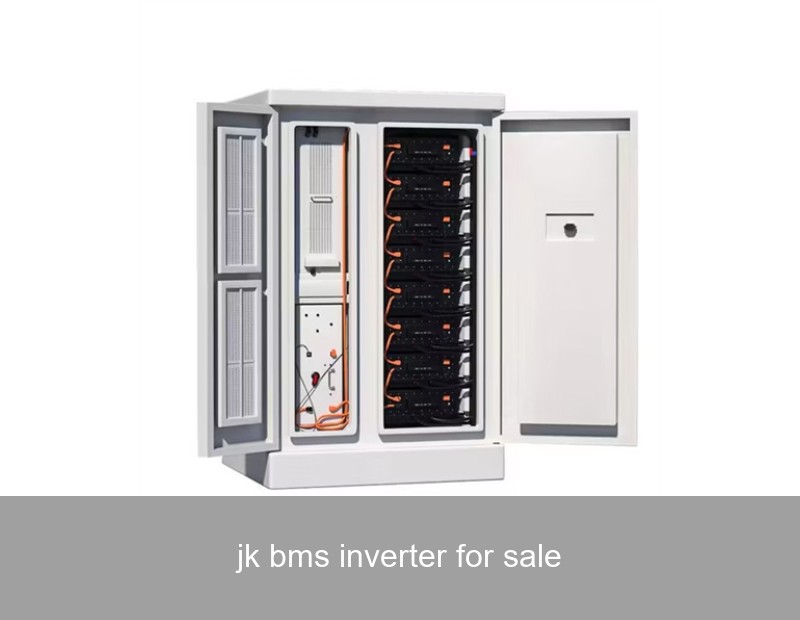
You're probably here because you've heard about the power of a well-integrated battery energy storage system (BESS). And if you're deep into the research, names like JK BMS have come up. But here's the thing: a top-tier Battery Management System (BMS) is only one piece of the puzzle. To truly unlock resilience and savings, you need the perfect partner for it – the inverter. Searching for a "JK BMS inverter for sale" isn't just about finding compatible hardware; it's about seeking the intelligence to make them work in harmony for your home or business. Let's explore what this really means and how to build a system that's more than the sum of its parts.
The Core Challenge: Why BMS and Inverter Harmony is Non-Negotiable
Imagine a world-class conductor (the BMS) leading an average orchestra (the inverter). The result? Mediocrity. Now, imagine that same conductor with a world-class orchestra. That's symphony. In energy storage, the BMS is the vigilant guardian of your battery pack, monitoring cell voltage, temperature, and state of charge. The inverter is the powerhouse, converting DC battery power to usable AC for your property. If they don't communicate flawlessly, you risk inefficiency, reduced battery life, or even safety shutdowns. A search for a "JK BMS inverter for sale" is, at its heart, a search for this critical synergy.
The Dynamic Duo: Understanding the BMS and Inverter's Role
Let's break down their responsibilities to see why integration is key.
| Component | Primary Role | Key Functions |
|---|---|---|
| JK BMS (Battery Management System) | Battery Protector & Brain |
|
| Inverter/Charger | Power Converter & System Manager |
|
The magic happens over communication protocols like CAN bus or RS485. When the JK BMS signals "battery at 20% SOC," a compatible inverter can immediately adjust, perhaps by starting a generator or gracefully shutting down before damage occurs. This isn't just a feature; it's the foundation of a reliable system.
Key Considerations When Choosing an Inverter for Your JK BMS
So, what should you look for beyond a simple "for sale" listing?
- Protocol Compatibility: This is paramount. Confirm the inverter explicitly supports the specific communication protocol (e.g., JK-B1A2 CAN) of your JK BMS model. Don't assume.
- Scalability: Are you planning to expand your battery bank later? Ensure the inverter can handle future voltage and current ranges, and that the BMS-inverter communication can scale with it.
- Grid Profile & Certification: For the US (UL 9540) and Europe (CE, VDE-AR-N 4105), certifications are mandatory for safe, legal grid interconnection. Your inverter must be certified for your region.
- Software & Monitoring: Can you see the rich BMS data (individual cell voltages, temperatures) within the inverter's app? Seamless software integration is a hallmark of a mature system.

Image Source: Unsplash (Representative image of energy system monitoring)
Beyond Compatibility: The Highjoule Approach to Integrated Systems
At Highjoule, we view the BMS and inverter not as separate purchases, but as core components of a unified intelligence layer. Our HeliosWave series of hybrid inverters and Aegis battery systems are designed with this philosophy. While we engineer our own high-performance battery packs with integrated BMS, we understand the DIY and custom market's interest in components like JK BMS.
Our value lies in systems that take integration further. The Highjoule Energy Operating System (EOS) acts as the overarching brain, taking data from *any* compliant BMS and inverter pair, and optimizing not just for protection, but for economics. It considers weather forecasts, real-time electricity prices (crucial in Europe's dynamic markets), and your consumption patterns to make autonomous decisions that lower your cost and carbon footprint. Think of it as moving from simple compatibility to strategic energy management.
Case Study: Peak Shaving for a German Manufacturing SME
Let's look at real data. A mid-sized metal fabrication shop in Bavaria faced high demand charges—fees based on their highest 15-minute power draw each month. Their 250 kW solar array helped, but production peaks still drove costs up.
The Solution: A 180 kWh custom lithium-iron-phosphate (LiFePO4) battery bank with a JK BMS (for its precise cell-level monitoring) was paired with three parallel Highjoule HeliosWave 50kW commercial inverters. The Highjoule EOS was programmed for aggressive peak shaving.
The Data-Driven Result: In the first year:
- Peak Demand Reduction: 22% average reduction in monthly peak load.
- Annual Savings: €8,400 saved on demand charges alone, plus increased solar self-consumption.
- ROI: Projected payback period of under 7 years, accelerated by rising energy costs.
The JK BMS ensured battery health and longevity, while the Highjoule inverters and EOS executed the complex, real-time power flow decisions. This synergy turned a component-based system into a strategic asset. You can read more about demand charge management from the U.S. Department of Energy.
Making Your Choice: From Component Buyer to System Owner
Your journey shouldn't end at finding a "JK BMS inverter for sale." The right question evolves from "Are they compatible?" to "How will this system create value for me?"
Whether you're a homeowner seeking energy independence, a business targeting operational cost reduction, or a developer building a microgrid, the principle is the same. The hardware is essential, but the intelligence layer that binds it is what delivers the promised benefits. As you evaluate options, consider partners who offer not just products, but proven system integration expertise and smart software.
What specific energy challenge—be it unpredictable utility bills, grid instability, or a desire to maximize your solar investment—is driving your search for a BMS and inverter solution today?
 Inquiry
 Online Chat