


Understanding the True Cost of a 20 kW Off-Grid Solar System
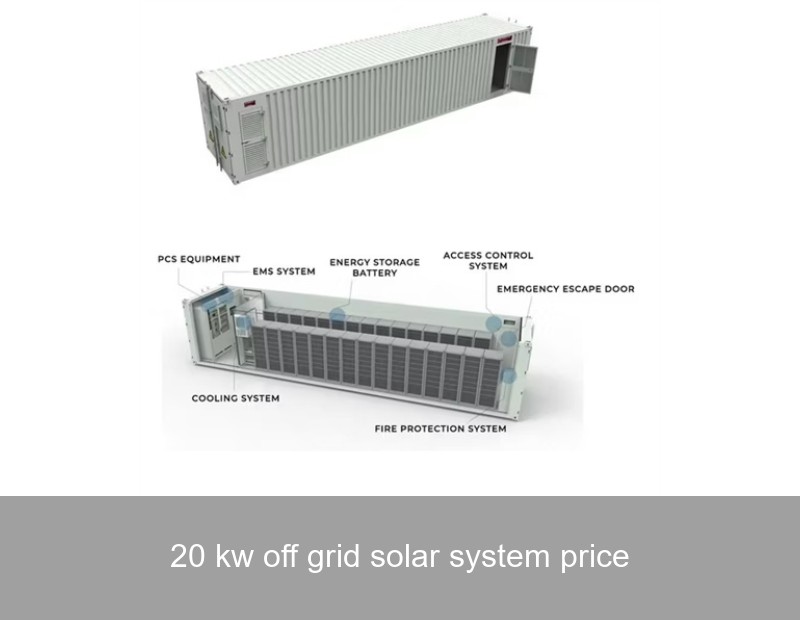
So, you're considering going completely energy independent with a 20 kW off-grid solar system. It's a powerful and popular choice for remote homes, agricultural operations, or businesses seeking true energy autonomy. But when you start researching the "20 kw off grid solar system price," you quickly find a dizzying range of figures. Why is that? The sticker price of the solar panels is just the tip of the iceberg. The real investment is in a reliable, intelligent system that ensures you have power 24/7, regardless of the weather. Let's demystify the costs and explore what truly makes a robust off-grid power solution.
Table of Contents
The Real Price Breakdown: More Than Just Panels
A common misconception is that the cost is simply the solar array. For an off-grid system, the panels typically represent only 30-40% of the total system cost. The heart of the system—and a significant portion of the investment—lies in the energy storage and management technology.
For a properly sized 20 kW off-grid system in a European or North American context, you can expect a broad price range of $45,000 to $80,000+ before incentives. This variance isn't arbitrary; it's dictated by the quality, capacity, and intelligence of the components you choose.
Typical Cost Components (Approximate)
| Component | Function | % of Total Cost |
|---|---|---|
| Solar Panels (20 kW) | Generate DC electricity from sunlight | 30-40% |
| Battery Energy Storage System (BESS) | Stores excess energy for use at night/cloudy days | 35-50% |
| Inverter/Charger & System Controller | Converts DC to AC, manages charging/discharging | 15-20% |
| Balance of System (Mounting, Wiring, etc.) | Physical installation and electrical components | 5-10% |
Key Components That Define Cost & Performance
Let's dive into the two most critical—and cost-defining—parts of your off-grid investment.
1. Battery Energy Storage: The Cornerstone of Reliability
This is where the "off-grid" promise lives or dies. You're not just buying batteries; you're buying usable, reliable energy days. The trend is decisively moving towards Lithium Iron Phosphate (LiFePO4) batteries due to their longer lifespan (6,000+ cycles vs. 1,200 for lead-acid), deeper safe discharge, and minimal maintenance.
The cost here is driven by usable capacity (kWh). A 20 kW solar array needs a battery bank large enough to store several days of energy for when the sun isn't shining. For a typical home or small business, this often means a storage system in the range of 30-50 kWh of usable capacity. Investing in high-cycle-life technology like LiFePO4 directly reduces your long-term cost per cycle, making it a smarter financial decision over 10+ years.

Image: Modern LiFePO4 battery banks, like those in Highjoule systems, offer compact, safe, and long-lasting energy storage.
2. The Inverter & System Intelligence: The Brain of Your Microgrid
The inverter does far more than just convert DC to AC. In a high-quality off-grid system, it's an integrated energy manager. It must:
- Seamlessly prioritize solar power for immediate use.
- Efficiently charge batteries with any excess.
- Manage backup generator integration (if present) to minimize fuel use.
- Protect equipment and ensure grid-quality power for sensitive appliances.
An advanced hybrid inverter with sophisticated software can increase overall system efficiency by 10-15%, significantly impacting how much of your solar investment you actually get to use.
Real-World Case: A Swedish Eco-Lodge
Let's look at a concrete example from Northern Sweden. A remote eco-lodge, open year-round, needed to replace its noisy, expensive diesel generators. Their load: heating circulation pumps, sauna, kitchen, and guest cabin electricity, peaking at around 18 kW.
Their Solution: A 22 kW solar array paired with a 48 kWh Highjoule HES-Series lithium storage system and a robust 20 kW hybrid inverter. The system was designed to provide 3 days of autonomy during the dark, low-solar winter months, with a diesel generator as a rarely-used backup for extended cloudy periods.
- Upfront Investment: ~€68,000 (excluding installation labor).
- Annual Savings: €12,000 in diesel fuel and maintenance (payback period under 6 years).
- Reliability: The generator now runs less than 50 hours per year, down from 8,000+ hours.
- Environmental Impact: Carbon footprint reduced by an estimated 95%.
This case highlights that the true "price" must be evaluated against lifetime operational savings and reliability gains. The lodge didn't just buy hardware; they bought predictable, clean energy costs for decades.
Looking Beyond the Sticker Price: Total Cost of Ownership
When comparing quotes, ask these questions:
- Battery Lifespan: What is the warranted capacity after 10 years? (e.g., Highjoule batteries are warranted for 70% capacity after 10 years).
- System Efficiency: What is the round-trip efficiency (AC to AC) of the storage system? (Aim for >90%).
- Software & Monitoring: Does it include remote monitoring and smart load management to optimize self-consumption?
- Scalability: Can you easily add more panels or storage later?
According to a 2023 NREL report on solar-plus-storage costs, ongoing software and operational intelligence is becoming a key differentiator in maximizing value.
The Highjoule Approach: Intelligence as Standard
At Highjoule, we believe a 20 kW off-grid system should be a turnkey solution for peace of mind. Our Off-Grid PowerStation solutions integrate premium components with our proprietary Energy Operating System (EOS). This isn't just a product list; it's a cohesive system where every part communicates intelligently.
For a 20 kW application, our package typically includes:
- High-efficiency bifacial or monocrystalline solar panels.
- Our HES-Series Modular LiFePO4 Battery Banks, scalable from 20 kWh to hundreds of kWh.
- A high-power hybrid inverter/charger with integrated MPPT charge controllers.
- The Highjoule EOS, which continuously learns energy usage patterns, forecasts weather, and automatically schedules high-load appliances (like water pumps) for sunny periods to preserve battery life.

Image: Advanced system monitoring and control, like Highjoule's EOS platform, is crucial for off-grid performance.
This integrated approach means our customers don't just get a "20 kw off grid solar system price" quote; they get a guaranteed performance profile and a partner in managing their energy independence for the long term. We provide detailed simulations and lifetime cost analyses, so you understand the investment holistically.
Is a 20 kW Off-Grid System Right for You?
The journey to energy independence is exciting, but it requires careful planning. The right system isn't the cheapest upfront; it's the one that delivers unwavering reliability and the lowest cost over 20 years. It's about investing in a system that thinks for itself, so you don't have to.
What's the one critical load you absolutely cannot afford to lose power to, and how would a truly intelligent off-grid system be designed to protect it?
 Inquiry
 Online Chat