


JNTech Solar Pumping Battery Systems: The Complete Guide to Reliable, Off-Grid Water Solutions
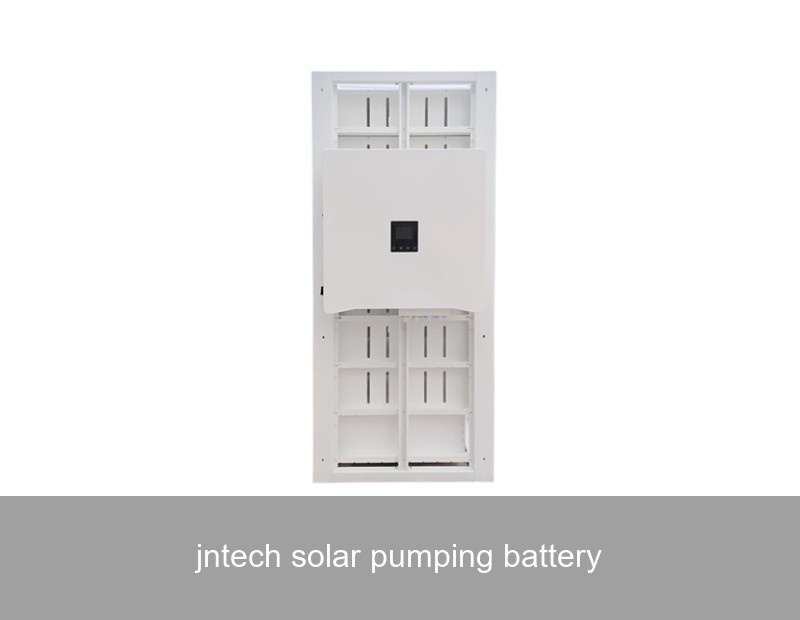
Imagine a farm or a remote community where access to a consistent water supply isn't a given—it's a daily challenge dictated by grid availability or costly diesel fuel. This is the reality for many, but a powerful shift is underway. The combination of solar energy and water pumping is revolutionizing agriculture and water access, and at the heart of this revolution lies a critical component: the solar pumping battery. Specifically, systems like those enabled by JNTech solar pumping inverters paired with advanced battery storage are creating resilient, independent water solutions. This article dives deep into why the right battery system is not just an add-on, but the cornerstone of a truly effective and reliable solar pumping setup, and how companies like Highjoule are elevating these systems with intelligent energy management.
Table of Contents
- What is a JNTech Solar Pumping Battery System?
- Why a Battery is a Game-Changer for Solar Pumping
- Key Components of a Reliable System
- Real-World Impact: A Case Study from Spain
- Choosing the Right Battery Technology
- Highjoule's Role: Beyond the Battery, Intelligent Storage
- Future Trends and Your Next Step
What is a JNTech Solar Pumping Battery System?
Let's break it down. A JNTech solar pumping system typically refers to a setup using specialized solar inverters from JNTech that convert direct current (DC) from solar panels to power an AC water pump. The "battery" part is the crucial evolution. A JNTech solar pumping battery system integrates an energy storage unit, allowing the pump to operate when the sun isn't shining—early morning, late evening, or during cloudy periods. It's a holistic solution comprising solar panels, a JNTech solar pumping controller/inverter, a battery bank, and the pump itself. This integration ensures water is available on demand, not just when the sun is at its peak, transforming solar pumping from an intermittent solution to a dependable one.
Why a Battery is a Game-Changer for Solar Pumping
The phenomenon is simple: crop irrigation needs often peak in the early morning and evening, precisely when solar irradiance is low. Without storage, you either oversize your solar array (costly) or face water shortages. The data speaks volumes. According to the UN Food and Agriculture Organization (FAO), agriculture accounts for 70% of global freshwater withdrawals. Efficient, solar-powered irrigation can drastically reduce the carbon footprint and operational costs of this sector.
Adding a battery changes the entire equation:
- Extended Operational Hours: Pump water before sunrise to prepare fields or after sunset for overnight irrigation.
- Enhanced Reliability: Mitigate the impact of passing clouds or poor weather, ensuring a steady water flow.
- System Optimization: Allows the solar array and pump to operate at their most efficient points, even if water demand is variable.
- Reduced Pump Cycling: Smoothens power delivery, protecting the pump from frequent starts and stops, extending its lifespan.

Image: A modern agricultural field powered by solar energy. Source: Unsplash
Key Components of a Reliable System
Building a robust system requires more than just connecting parts. Think of it as a symphony where each instrument must be in tune.
| Component | Role | Consideration for Battery Integration |
|---|---|---|
| Solar Panels | Primary energy source | Must generate enough excess energy to charge the battery bank during daylight. |
| JNTech Pumping Inverter | Converts DC to AC, controls pump speed | Must be compatible with battery DC input or work with a separate hybrid inverter/charger. |
| Battery Storage System | Stores energy for use on demand | The core of reliability. Requires correct voltage, capacity (kWh), and cycle life. |
| Water Pump | Moves the water | Load profile (power draw) dictates the battery's discharge rate requirements. |
| Energy Management System (EMS) | The "brain" | Intelligently manages energy flow between solar, battery, and pump. This is where true value is added. |
Real-World Impact: A Case Study from Spain
Let's move from theory to practice. A vineyard in Andalusia, Spain, faced increasing drought conditions and rising electricity costs. Their existing solar pumping system couldn't support the critical irrigation needed during the night to minimize water evaporation.
The Solution: The farm upgraded its system by integrating a 20 kWh lithium-ion battery bank alongside its existing JNTech inverter and solar array. The battery was charged during the day, and a sophisticated controller scheduled irrigation for the hours between 8 PM and 5 AM.
- Water Savings: Reduced evaporation led to a 30% decrease in water usage for the same irrigation effect.
- Cost Elimination: The farm completely eliminated grid electricity costs for irrigation, which previously amounted to over €3,500 annually.
- Yield Improvement: More consistent and timely irrigation contributed to a reported 8% improvement in grape quality and yield.
- ROI: The system paid for itself in under 4 years, factoring in available green energy subsidies in the EU.
Choosing the Right Battery Technology
Not all batteries are created equal for this demanding application. While lead-acid was once the default, lithium-ion, particularly Lithium Iron Phosphate (LiFePO4), is now the preferred choice for solar pumping due to its:
- Longer cycle life (often 6,000+ cycles)
- Higher depth of discharge (DoD) without damage
- Faster charging capability
- Lower maintenance and higher energy density

Image: A technician inspecting a modern battery energy storage system. Source: Unsplash
Highjoule's Role: Beyond the Battery, Intelligent Storage
This is where expertise matters. At Highjoule, we understand that a JNTech solar pumping battery system is more than hardware—it's an integrated energy solution. Since 2005, Highjoule has been at the forefront of advanced energy storage, providing smart, efficient, and sustainable power solutions for commercial, industrial, and off-grid applications.
For solar pumping projects, we don't just supply batteries. We provide:
- Highjoule LiFePO4 Battery Racks: Scalable, modular, and built for high-cycle applications, perfectly matching the daily charge/discharge needs of agricultural pumping.
- Integrated Hybrid Inverter/Chargers: Seamlessly manage power flow between PV, battery, and the pump, ensuring compatibility with your JNTech controller.
- Highjoule Energy Management System (EMS): The true intelligence. Our EMS can be programmed to prioritize solar charging, schedule pumping during optimal (cooler) hours to save water, and even provide system health monitoring remotely—a boon for managing remote farm assets.
- Microgrid Capability: For larger communities or agro-industrial complexes, we can design a system where the solar pumping battery is part of a larger microgrid, also powering lights, cooling, and other essential loads.
Future Trends and Your Next Step
The future of solar pumping is intelligent and connected. We're moving towards systems that can sync with weather forecasts, soil moisture sensors, and satellite data to make fully autonomous irrigation decisions. The battery, as the energy buffer, will remain central to this smart agriculture revolution.
So, as you consider a JNTech solar pumping battery system for your farm, community, or project, ask yourself: Is my goal simply to run a pump with solar, or is it to guarantee a reliable, efficient, and smart water supply that maximizes my resources and ROI? The distinction is critical, and the technology to achieve the latter is available today.
What specific water access challenge could a smart, battery-buffered solar pumping system solve for you in the next growing season?
 Inquiry
 Online Chat