


Demystifying the Lithium Battery 1 Kilowatt: Your Building Block for Energy Independence
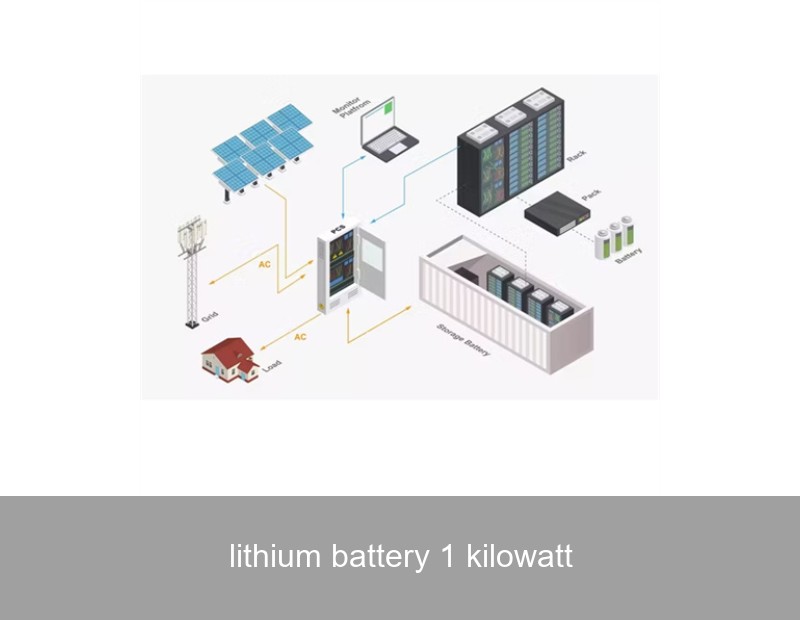
You've likely heard the term "lithium battery 1 kilowatt" buzzing around conversations about solar power, home backup, or going off-grid. But what does it really mean for you? Is it a modest start or a powerhouse in a compact form? Let's peel back the layers. In essence, a 1 kilowatt (1kW) lithium battery refers to its power rating—its ability to deliver energy at a given moment. Think of it as the size of the pipe: a 1kW pipe can deliver a strong, steady flow of electricity to run your appliances. But the total amount of water in the tank? That's its capacity, measured in kilowatt-hours (kWh). This crucial distinction between power (kW) and energy (kWh) is the first step to unlocking its potential.
For over 18 years, Highjoule has been at the forefront of translating these technical specs into real-world solutions. We see the 1kW lithium battery not just as a product, but as a fundamental, scalable unit of modern energy resilience. Whether it's the core of a residential Highjoule HomePower system or a modular cell within a massive industrial storage array, understanding this building block is key to taking control of your energy.
The Power Math: What Can a 1kW Lithium Battery *Really* Do?
Let's move from theory to practice. A 1kW continuous power output means the battery can simultaneously support a combination of appliances whose running wattage adds up to 1000 watts. Here’s a tangible breakdown:
| Appliance / Device | Typical Running Wattage | How Long on a 1kW/2kWh Battery*? |
|---|---|---|
| LED Lighting (Whole Home) | 100 - 200W | 10 - 20 hours |
| Refrigerator (Energy Star) | 150 - 400W | 5 - 13 hours |
| Laptop & Router | 50 - 100W | 20 - 40 hours |
| 55" LED TV | 60 - 100W | 20 - 33 hours |
| Furnace Fan | 300 - 800W | 2.5 - 6.5 hours |
*Assuming a common 2kWh energy capacity paired with the 1kW power output. Runtime is approximate and depends on specific models and conditions.
The critical insight? While a standalone 1kW/2kWh unit is perfect for essential loads or small applications, its true magic is revealed through scalability. This is where Highjoule's design philosophy shines. Our systems are built modularly. You can start with a foundation—like our Highjoule HomePower Lite—and seamlessly add more battery modules to increase your energy capacity (kWh) without necessarily needing to increase the power inverter size immediately, providing a cost-effective path to grow with your needs.
Beyond the Basics: The Smart System Advantage
A lithium battery 1 kilowatt unit is more than just chemistry in a case. Its value is exponentially increased by the intelligence that manages it. A basic battery might power devices, but a smart energy storage system like those from Highjoule orchestrates your energy.

Image: A modern, wall-mounted lithium battery system. Source: Unsplash (Representative image)
Consider these capabilities that transform a simple battery into a strategic asset:
- Peak Shaving: For commercial users, the system automatically switches to battery power during periods of high, expensive grid demand, slashing utility bills. Highjoule's Commercial Energy Platform specializes in this.
- Solar Self-Consumption Optimization: It stores excess solar energy generated at noon for use in the evening, dramatically increasing the ROI of your solar panels.
- Grid Services & Microgrid Integration: In advanced applications, aggregated batteries can provide stability to the local grid or form the heartbeat of a community microgrid, a core competency of Highjoule's GridScale solutions.
This intelligence is backed by robust safety. Lithium iron phosphate (LFP) chemistry, which Highjoule primarily utilizes, is renowned for its thermal and chemical stability, offering a longer lifecycle and superior safety profile compared to older lithium-ion variants.
A Real-World Case Study: The Berlin Bakery
Let's ground this in a European example. A traditional artisan bakery in Berlin faced a dual challenge: soaring energy costs and the need for an uninterrupted power supply for its refrigeration and proofing systems. A power outage would mean ruined inventory.
The Solution: They installed a tailored Highjoule system centered around a scalable battery bank with a 5kW inverter and 10kWh of capacity, effectively built from the reliable 1kW-class building blocks. The system was integrated with their existing rooftop solar.
- Energy Bill Reduction: By using stored solar energy during peak evening baking hours, they reduced their grid consumption during expensive tariff periods by over 40%.
- Backup Assurance: The system provides seamless backup power for critical loads for up to 8 hours, securing their production.
- ROI: Projections show a full return on investment in under 6 years, thanks in part to Germany's supportive energy transition policies.
This case isn't unique. It illustrates the compound value of starting with a reliable, scalable foundation—the principle behind every 1 kilowatt lithium battery module we design.
Choosing the Right 1kW Lithium Battery System: Key Questions
Not all systems are created equal. As you evaluate options, ask these questions:
- Is it truly scalable? Can you add more energy storage without complex, costly upgrades?
- What is the depth of discharge (DoD) and warranty? Highjoule systems offer a 95%+ DoD and a 10-year warranty, guaranteeing long-term performance.
- How intelligent is the energy management? Does it learn your habits and adapt to weather and tariff schedules?
- What is the installation and service ecosystem? Highjoule partners with a certified network of installers across Europe and North America for seamless support.
Your Energy, Your Future

Image: A professional consultation for a home energy system. Source: Unsplash (Representative image)
The journey to energy independence often begins with a single step—understanding a fundamental unit like the lithium battery 1 kilowatt. It's the seed from which resilience grows. Whether you're a homeowner looking to secure your family's comfort, a business owner aiming to control operational costs, or a community planner envisioning a sustainable microgrid, the principle is the same: start with robust, smart, and scalable foundations.
What's the first load you would power with your own 1 kilowatt of independence, and how would you envision scaling it from there?
 Inquiry
 Online Chat