


Your Solar Power Foundation: Demystifying the Solar Starter Kit
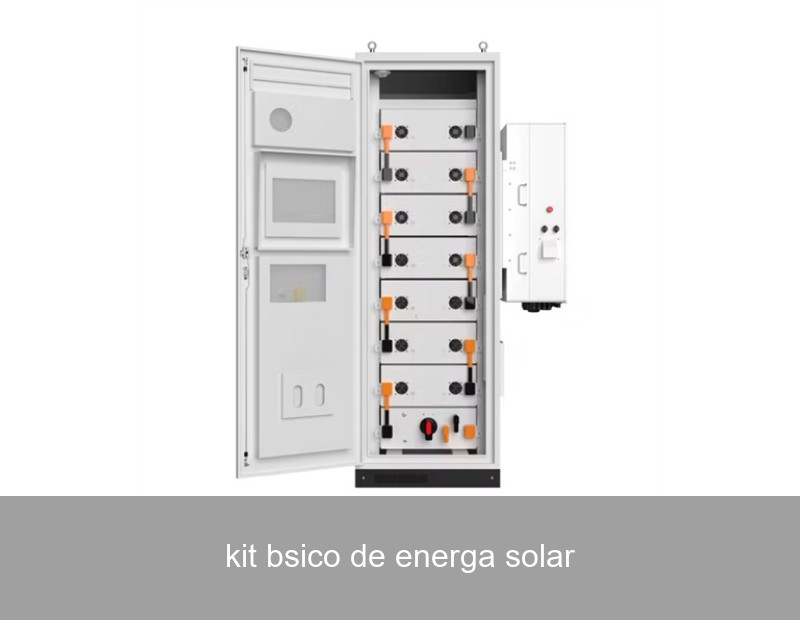
Have you ever looked at your rising electricity bill and wondered if there's a more sustainable, self-reliant way to power your home? You're not alone. Across Europe and the US, homeowners and small business owners are turning their gaze upwards, to the sun, seeking energy independence. The journey often begins with a fundamental question: "How do I even start?" The answer, for many, lies in a kit básico de energía solar – a solar starter kit. But what exactly is in this kit, and is it truly a plug-and-play solution for energy freedom? Let's unpack the reality, benefits, and key considerations to empower your decision.
What's in the Box? Key Components of a Solar Starter Kit
A quality solar starter kit is more than just a random bundle of parts. It's a carefully curated system designed to convert sunlight into usable electricity for your home. Think of it as the essential foundation of your personal power plant. While configurations vary, a robust kit typically includes the following core components:
- Solar Panels (Photovoltaic Modules): These are the workhorses, capturing sunlight and generating direct current (DC) electricity. The number and wattage determine your system's potential.
- Grid-Tie or Hybrid Inverter: This is the brain of the operation. It converts the DC electricity from the panels into the alternating current (AC) that powers your appliances. A grid-tie inverter syncs with the utility grid, while a hybrid model can also work with batteries.
- Mounting System: This is the skeleton—rails, clamps, and hardware that securely attach your panels to your roof or ground, designed to withstand decades of weather.
- DC/AC Cabling & Connectors: The circulatory system that safely carries electricity from the panels to the inverter and into your home's electrical panel.
- Basic Monitoring Hardware/Software: Allows you to track your system's production in real-time, often via a smartphone app.
It's crucial to understand that while a kit básico de energía solar provides the core hardware, a successful installation requires professional expertise for electrical integration, permitting, and ensuring compliance with local grid codes (like UL 1741 in the US or equivalent CE standards in Europe).
Image source: Unsplash. A typical residential solar installation showing panels, racking, and conduit.
The Real Cost & Savings: A Data-Driven Look
The initial investment in a solar starter kit is a primary consideration. Let's move beyond vague promises and look at some tangible numbers. According to the National Renewable Energy Laboratory (NREL), the average cost of residential solar photovoltaic systems has dropped by more than 60% over the last decade. A typical 6kW starter system for a home in the US might range from $15,000 to $25,000 before incentives.
Now, for the savings. This is where the picture gets exciting. The same system can offset 80-100% of an average household's electricity bill. With a 25-30 year panel lifespan, the long-term financial benefit is substantial. Consider this simplified table for a household in Southern Europe or the American Southwest:
| Metric | Estimate |
|---|---|
| System Size | 6 kW |
| Average Annual Production | 8,400 - 9,600 kWh |
| Average Annual Utility Savings* | $1,300 - $1,900 |
| Simple Payback Period (after tax credit) | 8-12 years |
| Lifetime Savings (25-year estimate) | $30,000+ |
*Savings vary drastically by local electricity rates, sun exposure, and net metering policies. Always get a site-specific assessment.
A Real-World Case Study: The Rodriguez Family in California
Let's ground this data in a real story. The Rodriguez family in Sacramento, California, installed a 7.2kW solar starter kit in early 2022. Their primary motivation was volatile electricity costs and a desire for predictable budgeting.
- Pre-Installation: Average monthly bill: $220. Annual total: $2,640.
- System Installed: 18x 400W panels with a hybrid inverter (planning for future battery addition).
- Post-Installation (First Year): Their annual electricity cost from the utility dropped to approximately $180 (for times of low production and grid usage). Their system generated 10,200 kWh in the first year.
- Net Result: They saved over $2,400 in the first year alone. Combined with the 30% federal Investment Tax Credit (ITC), their calculated payback period is under 7 years. "It's not just about saving money," Maria Rodriguez notes. "It's the peace of mind during heatwaves when everyone's AC is straining the grid, and our home just keeps running."
Choosing the Right Kit: Questions to Ask Before You Buy
Not all solar starter kits are created equal. To avoid a costly mismatch, ask yourself and potential providers these key questions:
- What is my primary goal? (Maximize bill savings, achieve backup power, reduce carbon footprint?)
- What is my roof's size, orientation, and shading situation? A professional site survey is invaluable here.
- Does the kit use tier-1, certified components? Quality panels and inverters from reputable brands offer better performance and longevity warranties.
- Is the inverter "battery-ready" or hybrid? This future-proofs your system, allowing you to add storage later without replacing the core inverter.
- What does the warranty and support look like? Look for comprehensive product and performance warranties, not just a short-term guarantee.
Beyond the Kit: Highjoule's Intelligent Energy Solutions
While a standard kit básico de energía solar is an excellent starting point, true energy resilience and optimization often require a more sophisticated approach. This is where Highjoule, with nearly two decades of experience, elevates the concept. We don't just sell components; we provide integrated, intelligent energy systems.
For the residential and commercial markets in Europe and North America, Highjoule's HelioSmart Hybrid Series represents the next evolution. These are not mere "kits" but engineered systems where the hybrid inverter, high-density lithium-ion battery (like our proprietary JouleCell batteries), and advanced energy management system (EMS) are designed to work in perfect harmony. Our EMS uses AI-driven logic to autonomously decide when to store solar energy, power your home, or sell back to the grid, maximizing your economic return.

Image source: Unsplash. A modern home battery storage unit integrated with electrical systems.
For a small business or a microgrid application, this intelligence is transformative. Imagine a farm in rural Spain or a convenience store in Texas: our systems can be configured to prioritize critical loads during an outage, ensure operations continue during peak tariff hours, and create a predictable energy cost structure, shielding the business from market volatility.
Key Installation & Maintenance Considerations
Purchasing the hardware is one step; proper installation is what makes it safe, efficient, and compliant. We cannot overstate this: involve certified professionals. A qualified installer will handle:
- Structural Assessment: Ensuring your roof can support the system.
- Electrical Integration: Safely connecting the system to your main panel and the grid.
- Permitting & Inspections: Navigating local building and electrical codes, as well as utility interconnection agreements.
- System Commissioning & Monitoring Setup: Turning the system on and ensuring you can track its performance.
Maintenance is generally minimal—primarily keeping panels clean and free of debris and monitoring system output. However, having a professional service agreement, like those offered by Highjoule's certified partner network, ensures any technical issues are resolved promptly, protecting your investment's long-term yield.
The Final Piece: Energy Storage and Your Future Grid
As grids evolve and the push for decarbonization intensifies, the role of the consumer is shifting from passive bill-payer to active "prosumer" (producer + consumer). A basic grid-tie solar kit is a great first step. But to truly harness the full potential of your solar investment—for backup power, increased self-consumption, and grid services—integrating storage is the logical next step. The U.S. Department of Energy highlights that storage is key to unlocking solar's value after the sun sets.
So, as you contemplate your kit básico de energía solar, we leave you with this question to ponder: Is your goal simply to reduce your bill today, or to build a resilient, intelligent energy asset for your home or business that will adapt and deliver value for the next 25 years?
 Inquiry
 Online Chat