


Your Complete Guide to Choosing the Best Residential Solar Energy Kit
Have you ever looked at your rising electricity bill and wondered, "What if I could generate my own power?" You're not alone. Across Europe and the United States, homeowners are increasingly turning to residential solar energy kits to gain energy independence, reduce costs, and contribute to a cleaner planet. But with so many options, navigating the world of solar can feel overwhelming. This guide is here to demystify the process, helping you understand what makes a great solar kit and how to select a solution that truly powers your home for decades.
Table of Contents
- What is a Residential Solar Energy Kit?
- Key Components of a Modern Solar Kit
- The Financial & Environmental Sense: Data Doesn't Lie
- A Real-World Case Study: The Johnson Family Retrofit
- Choosing the Right Kit: Beyond the Panels
- Making Your System Future-Ready
What Exactly is a Residential Solar Energy Kit?
Think of a residential solar energy kit as a sophisticated, integrated power plant for your home. It's far more than just panels on your roof. A complete kit is a harmonious system designed to capture, convert, manage, and store solar energy. At its core, it transforms your home from a passive consumer of grid electricity into an active producer and manager of its own clean energy. The goal is simple: maximize self-consumption of the solar energy you generate, slashing your bills and providing invaluable backup power during outages.
Key Components of a Modern Solar Kit
A high-performance system is built on several critical components working in unison.
- Solar Panels (PV Modules): The most visible part, they convert sunlight into direct current (DC) electricity. Efficiency and durability are key.
- Solar Inverter(s): The brain of the operation. It converts the DC electricity from the panels into the alternating current (AC) that your home appliances use.
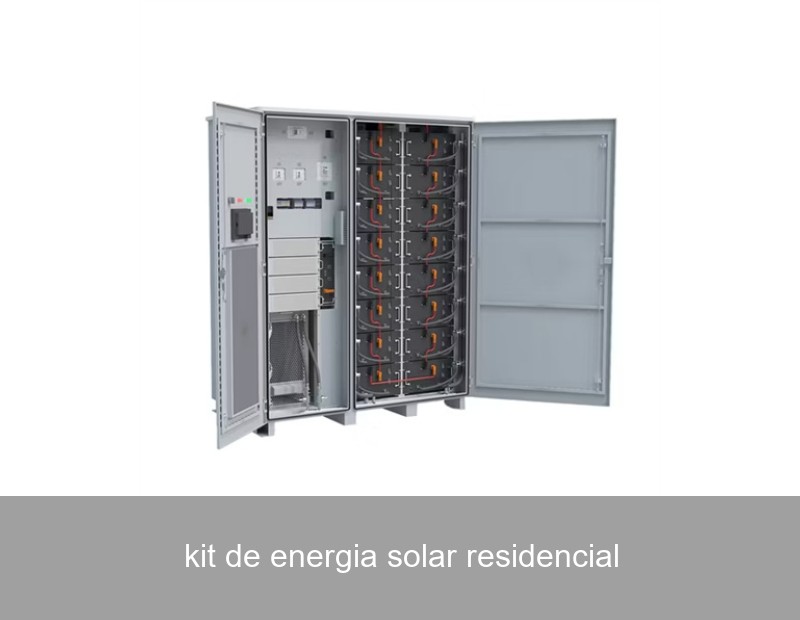
- Battery Energy Storage System (BESS): This is the game-changer. A battery stores excess energy produced during the day for use at night or during cloudy periods, dramatically increasing your energy independence.
- Mounting System & Hardware: The secure and often customizable framework that attaches the panels to your roof or ground.
- Energy Management System (EMS): The intelligent software that optimizes energy flow, deciding when to power the home, charge the battery, or export to the grid.

Image Source: Unsplash - A modern home solar installation with battery storage.
This is where the expertise of a provider like Highjoule becomes critical. Since 2005, Highjoule has specialized in integrating these components into seamless, intelligent systems. We don't just sell boxes; we provide complete, AC-coupled storage solutions that can be easily added to new or existing solar panel setups. Our H-Joule Home Energy Hub combines a powerful hybrid inverter, scalable lithium-ion battery storage, and advanced EMS into one compact unit, ensuring every watt of solar energy you produce is used efficiently.
The Financial & Environmental Sense: Data Doesn't Lie
Let's talk numbers, because the trend is compelling. In the U.S., the average residential electricity price has increased by over 30% in the last decade. Meanwhile, the cost of solar panels has plummeted by more than 70% in the same period. According to data from the International Renewable Energy Agency (IRENA), solar PV is now consistently cheaper than new coal or gas-fired power plants in most countries.
For a homeowner, this means the payback period for a quality solar and storage kit is shorter than ever—typically between 6 to 10 years in sunnier regions of Europe and the U.S. After that, you're essentially generating nearly free electricity for the remaining 15+ years of the system's life. Environmentally, the average residential solar system can reduce household carbon emissions by 3 to 4 tons annually—the equivalent of planting over 100 trees every year.
A Real-World Case Study: The Johnson Family in Arizona, USA
Let's make this concrete. The Johnson family in Phoenix, Arizona, installed a 10kW solar array with a 13.5kWh battery storage system in early 2022. Their goal was to eliminate peak-time charges and gain backup power during the frequent summer grid strains.
- Pre-Installation: Average monthly bill: $220 (with high A/C usage in summer pushing it over $400). Post-Installation (with Highjoule H-Joule Hub):
- Average monthly bill from the grid: $15 (basic connection fee).
- Solar self-consumption rate: Increased from 40% (panels only) to 85% (with storage).
- Grid Export: They earn small credits for excess energy sent back during optimal periods.
- Backup Power: During a 5-hour grid outage in July 2023, the system seamlessly powered essential loads, including refrigeration and A/C, with 35% battery capacity remaining.
"The system paid for itself in under 7 years on bill savings alone," says Mark Johnson. "But the peace of mind during outages, knowing our home is powered and we're protected from rate hikes, is priceless. It feels like we've taken back control."
Choosing the Right Kit: What to Look Beyond the Price Tag
Selecting a kit isn't just about the lowest cost per watt. Here’s a quick comparison of critical considerations:
| Feature | Budget/DIY Kit | Integrated Professional Solution (e.g., Highjoule) |
|---|---|---|
| System Design | Generic, one-size-fits-all | Customized to your roof, energy consumption, and local weather patterns |
| Component Compatibility | Can be mixed, risking suboptimal performance | Engineered for seamless integration (inverter, battery, EMS) |
| Software & Monitoring | Basic or separate apps | Unified, intelligent platform with real-time optimization and alerts |
| Warranty & Support | Separate warranties for each part | Single, comprehensive warranty and dedicated technical support |
| Safety & Certification | May lack full grid-interconnection certifications | Fully certified (UL, IEC, etc.) for safe, compliant installation worldwide |
Highjoule’s approach is to partner with certified installers across Europe and North America. We provide them with our H-Joule Home product line, which includes scalable battery cabinets (from 5kWh to 20kWh) and compatible inverters, along with our proprietary JouleMind AI energy management platform. This ensures your installer can deliver a system that's not just assembled, but expertly engineered for reliability and performance.

Image Source: Unsplash - Monitoring home energy production and consumption via an app.
Making Your Solar Kit Future-Ready
The energy landscape is evolving. With the rise of electric vehicles (EVs) and time-of-use electricity rates, your energy needs will change. A forward-thinking residential solar energy kit should be scalable and smart.
- EV Charging: Can your system manage the added load of an EV charger, potentially scheduling charging during peak solar production or from your battery?
- Scalability: Can you easily add more battery capacity if your needs grow?
- Grid Services: In some regions, you can participate in virtual power plants (VPPs) to earn revenue by allowing your battery to support the grid during peak demand.
Highjoule builds this flexibility into our systems. The JouleMind platform can integrate with EV chargers and smart home devices, and our battery cabinets are modular. This means your investment is protected, allowing you to adapt your home's energy ecosystem as new technologies and opportunities emerge.
So, as you contemplate taking control of your home's energy, what will be the first step you take to evaluate your path to energy independence? Will you start by analyzing your last 12 months of electricity bills, or by seeking a consultation with a certified installer who can provide a tailored solution for your unique home and goals?
 Inquiry
 Online Chat